Azerbaijan - Iran: Bound by Long-Term Projects
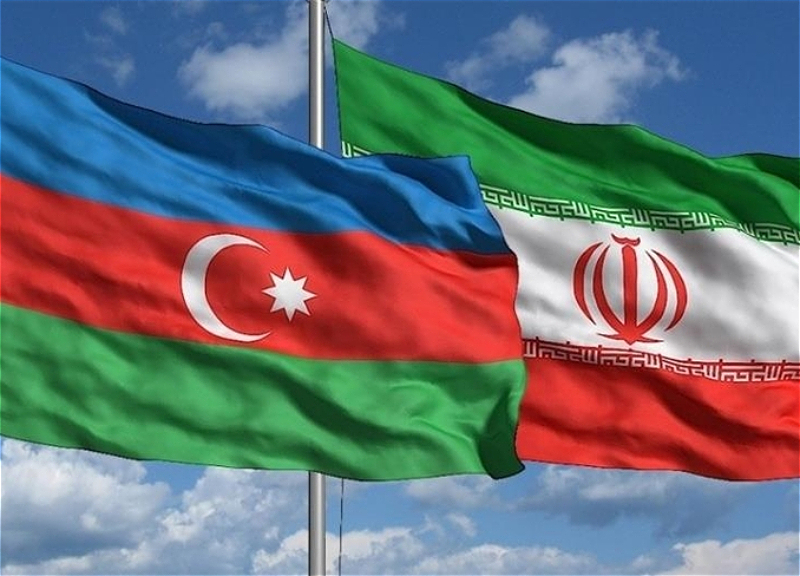
In recent months, perhaps over the past year, Azerbaijani-Iranian relations have been characterized by unprecedented activity for recent times.
Undoubtedly, the personal trust-based relationship between Presidents Ilham Aliyev and Masoud Pezeshkian plays a significant role in this. They are connected not only by ethnic commonality but also by a shared vision for the prospects of good-neighborly relations between their countries. Both sides believe that cooperation should be based on a solid foundation formed by joint projects that ensure mutual interests.
A clear example of this is the recent meeting of the Azerbaijani-Iranian Intergovernmental Commission on Economic Cooperation held in Baku. Its convening confirmed that maintaining a stable institutional dialogue between the two countries, despite the complex regional situation, is a key condition for regional stability.
It is no secret that the dynamics of Azerbaijani-Iranian relations have traditionally depended on the domestic political situation in Iran. It is precisely with the election of Masoud Pezeshkian as President of Iran, representing a more moderate political wing, that an intensification of bilateral dialogue across many areas has been observed. Notably, shortly before the intergovernmental commission meeting, Iran's Defense Minister visited Baku, indicating Tehran's desire to ensure a stable political backdrop for the development of economic cooperation amid external pressures.
Traditionally, transport infrastructure holds a central place in the bilateral agenda. The completion of the Aghband-Kelale bridge over the Araz River enhances Iran's role as a transit route between mainland Azerbaijan and Nakhchivan, while also fitting into the broader logistical connection between the Persian Gulf and the Black Sea region. Of particular importance is the Rasht-Astara railway line, the missing segment of the international North-South Corridor. Azerbaijan has been advocating for the completion of this project for many years, while Iran, only in recent years, amid sanctions pressure and the need to expand foreign economic ties, has begun to show greater interest in its implementation. For Baku, this strengthens its transit status; for Tehran, it represents a key channel to access Eurasian markets.
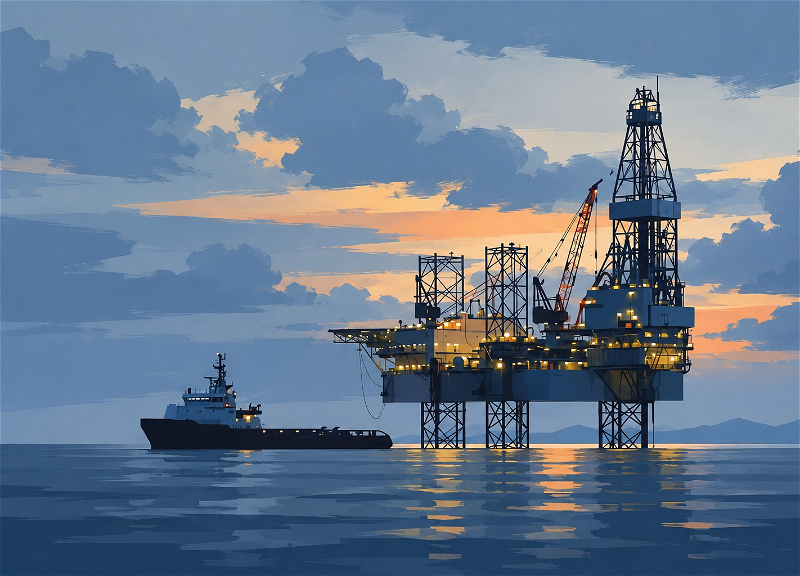
Energy cooperation remains an important direction. In 2024, the sides commissioned the Khudaferin and Giz Galasy hydroelectric facilities on the Araz River, which provide electricity generation and support the development of irrigation in border areas. In the future, the implementation of the Ordubad Hydroelectric Power Station project is planned, which should enhance the energy sustainability of the Nakhchivan Autonomous Republic and expand the joint use of water resources.
Regarding bilateral trade turnover, in recent years, it has shown an overall upward but unstable trend, reflecting both objective economic factors and the broader political and geopolitical context. According to data from the State Customs Committee of Azerbaijan, in 2024, the total volume of mutual trade reached approximately 650 million USD, one of the highest figures in the entire post-Soviet period of bilateral relations. Meanwhile, from January to October 2025, trade turnover amounted to about 518 million USD, indicating a slight slowdown in growth rates and suggesting possible stabilization or a moderate decline by the end of the year compared to the previous period. Nevertheless, even with this adjustment, current figures remain significantly higher than the levels of the early 2020s, when trade volumes fluctuated between 300 and 400 million USD.
Overall, despite the relative growth in recent years, both sides acknowledge that mutual trade volumes remain below their potential, given the geographical proximity of the countries, the extensive land border, and the presence of major joint infrastructure projects. At the same time, the structure of trade shows that economic interaction is predominantly border-focused and infrastructure-oriented.
In general, as of the beginning of 2026, bilateral relations are in a phase of steady development, key infrastructure projects are progressing, and institutional dialogue remains active. If the current momentum is maintained, the North-South Transport Corridor and energy projects on the Araz River could become the foundation of long-term interdependence, giving Baku and Tehran's cooperation a more structured and sustainable character.
At the same time, the further development of this interaction will largely depend on the overall geopolitical situation surrounding Iran, including the sanctions regime, the level of regional tension, and the configuration of its relations with external power centers.
Ilgar Velizade