New Megaproject in the South Caucasus and Baku's Role in It
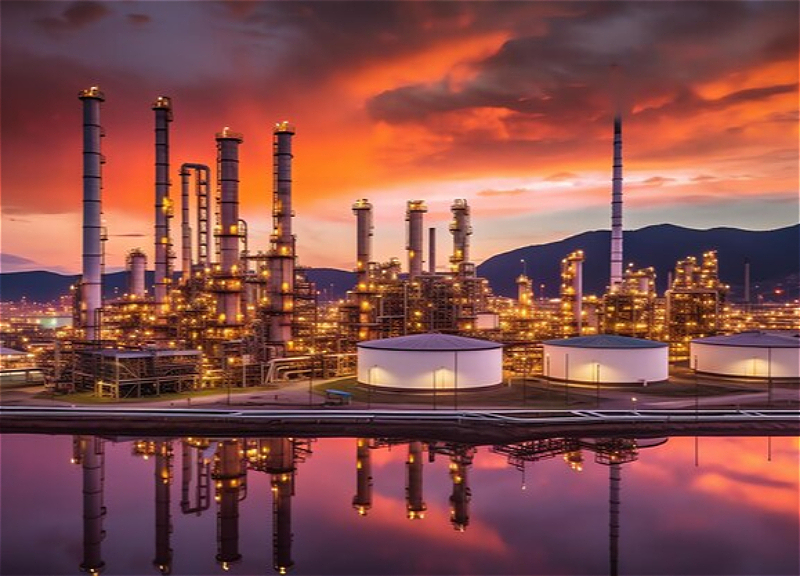
One of the notable events of the past week was the signing of an agreement between the American industrial conglomerate Honeywell International and the company Black Sea Petroleum for the construction of an oil refinery in the Georgian Black Sea town of Kulevi.
The future refinery is expected to produce aviation fuel, gasoline, diesel, and marine fuel in accordance with international standards. In subsequent stages, the parties intend to implement petrochemical solutions and deep oil processing technologies, which should increase the processing depth and commercial efficiency of the complex.
It should be noted that the refinery under construction in Kulevi is one of the largest industrial projects in modern Georgia. It is being implemented with the participation of the state-owned Georgian Development Fund and Kartu Bank.
The first phase envisages the processing of up to 1.2 million tons of crude oil per year, with a subsequent expansion of capacity to 4 million tons. The total budget of the project is estimated at approximately $600 million.
The political significance of the deal is heightened by the fact that its signing was announced amid discussions in the European Union about possible restrictive measures on operations through the Kulevi oil terminal as part of a new package of sanctions against Russia. This refers to the terminal owned and operated by SOCAR — SOCAR Kulevi Oil Terminal. The reason cited was operations involving Russian oil.
According to Bloomberg, Italy and Hungary, which take a more cautious stance on the sanctions line, oppose a harsh scenario. Notably, they are also among the main buyers of Azerbaijani oil and clearly do not wish to see disruptions in its supply.
At the same time, the Georgian side categorically rejects accusations of circumventing the sanctions regime. Prime Minister Irakli Kobakhidze stated that the Kulevi oil terminal is not used to bypass sanctions against Russia. According to him, the Georgian authorities strictly adhere to the sanctions regime, and numerous monitoring missions from the US, Europe, and the UK have confirmed the groundlessness of the accusations. In this regard, Tbilisi has provided European structures with full information on the terminal's operations.
Against this backdrop, the start of cooperation between the Georgian side and the American corporation appears as an unambiguous signal. On one hand, Tbilisi demonstrates to Brussels that the project is oriented toward Western standards and transparency — to the extent that Washington is actively participating in it, reducing the arguments of those advocating for sanctions pressure. On the other hand, Georgia signals to the US that it is ready to expand their economic and technological presence in the country's strategic infrastructure.
Amid discussions of a possible normalization of Georgian-American relations, Tbilisi is effectively using a model of 'engagement through infrastructure,' seeking to secure US interest in a critically important industrial project. In this context, the Kulevi refinery becomes an element of a broader geo-economic configuration in the Black Sea region.
Although it has not been officially announced which oil the plant will process, given the regional infrastructure, a scenario of orientation toward Caspian oil, primarily Azerbaijani oil, seems increasingly logical.
An important factor is that the SOCAR terminal, located near the site of the future facility, has long served as a key Black Sea hub for the transshipment of Azerbaijani oil and petroleum products.
The availability of a stable supply source could significantly impact the cost of production. The existing port infrastructure for storage and transshipment makes the option of operating the refinery on Azerbaijani oil the most economically rational compared to alternative sources.
Thus, the agreement between Honeywell International and Black Sea Petroleum can be seen not only as an indicator of cautious but noticeable rapprochement between Tbilisi and Washington but also as evidence of Azerbaijan's growing significance. Baku is gradually becoming not just a supplier of oil, but an important and reliable partner around which the infrastructure of economic and energy cooperation in the Black Sea region is being formed.
Ilgar Velizade