Fighting 'Disinformation' or Double Standards? The British Paradox Surrounding Azerbaijan
In international politics, situations where contradictions manifest instantly are rare.
As a rule, double standards reveal themselves gradually—through emphases, choice of wording, and the issues that are pursued with particular zeal while others remain in the shadows. This is especially evident in the realm of information policy, where loud declarations about combating disinformation coexist with a highly selective approach to one’s own media resources.
In recent years, London has consistently positioned itself as a key center for countering Russian information operations, emphasizing the need to protect democratic institutions and public opinion from external influence. Formally, this stance appears logical and even expected given the disinformation campaign Russia has unleashed worldwide. However, a closer look at specific decisions and how they align with the practices of British media reveals a far less clear-cut picture.
In this context, particular attention is drawn to the recent decision by the UK government to impose sanctions on Georgian television channels IMEDI and POSTV for spreading Russian disinformation. The move was presented as a demonstration of principle and consistency. Yet, simultaneously, a different narrative is unfolding within Britain’s own information space—a campaign targeting Azerbaijan, in which the public broadcaster BBC plays a leading role. This raises questions not about sanctions against others, but about the extent to which Britain’s own media environment is free from the very narratives London so resolutely urges others to combat.
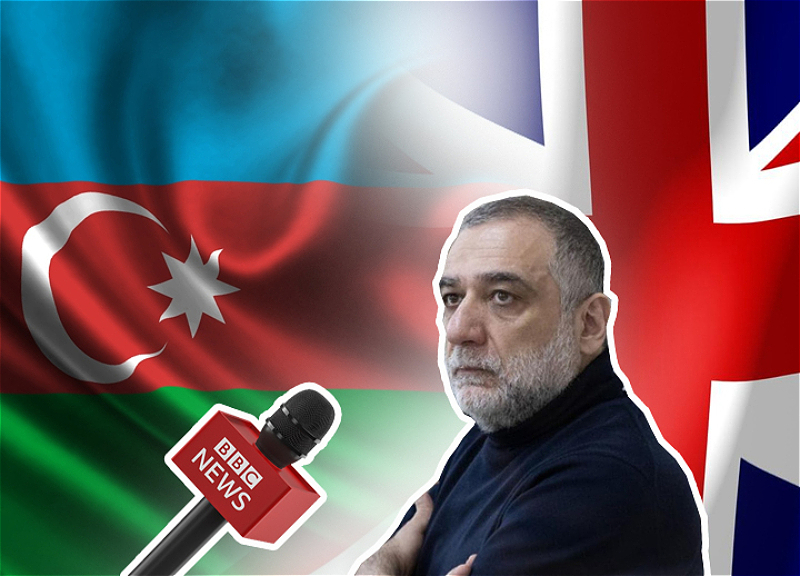
The paradox lies in the fact that, under the pretext of fighting Russian narratives, London penalizes Georgian channels, while its own media machine systematically propagates talking points that have been actively promoted by Russian propaganda circles and their allies among revanchists in Armenia over the past few years. This primarily concerns attempts to revive the notion of an 'unresolved Karabakh issue,' push the agenda of 'returning Armenians to Karabakh,' and portray the convicted Azerbaijani oligarch Ruben Vardanyan as a 'political prisoner.'
Following the conclusion of the Second Karabakh War in 2020 and the restoration of Azerbaijan’s territorial integrity based on internationally recognized borders, the legal question of Karabakh’s status was closed. This has been confirmed by international practice and subsequent political processes. Nevertheless, several reports by BBC World Service and BBC Azerbaijan regularly raise the issue of the 'future of Karabakh Armenians' in a context that effectively questions Azerbaijan’s sovereignty over the region. This approach strikingly aligns with the rhetoric of Armenian revanchist structures and certain forces in Russia that, albeit covertly, advocate for revisiting the outcomes of 2020.
A separate focus of this information campaign is the figure of Vardanyan. Following his detention and subsequent trial in Baku, the topic of 'Armenian prisoners' and a 'humanitarian problem' began to be actively promoted in international media. In February 2026, after Vardanyan was sentenced to 20 years in prison, BBC released a series of materials predominantly quoting pro-Armenian experts and human rights advocates who questioned the legitimacy of the trial. Meanwhile, the Azerbaijani perspective was either presented perfunctorily or accompanied by skeptical remarks. The result was a one-sided portrayal—not of a legal trial concerning a person accused of serious crimes, but of a 'political reprisal.'
Notably, BBC World Service provided a platform for Vardanyan’s lawyers and supporters, including his own appearances on the program HARDtalk before Azerbaijan conducted an anti-terrorist operation in Karabakh. Formally, this was framed as journalistic balance, but the context, selection of questions, and emphases created the impression of participation in a carefully orchestrated PR campaign.
Attention should also be drawn to the role of the French communications group Havas and its top executive, Stéphane Fouks. It was Havas Paris, a division of the group founded by Fouks, that was hired by Vardanyan’s family to conduct an international campaign to shape his image as a 'political prisoner.' This collaboration is an officially confirmed fact discussed in Western press.
Havas is one of the world’s largest communications groups, operating in PR, marketing, and strategic consulting. Stéphane Fouks holds the position of executive vice-president of the group and chairman of the H/Advisors network. Under his leadership, the agency develops global information strategies for clients. In Vardanyan’s case, the goal appears to be transforming the billionaire with a controversial reputation into a kind of 'martyr' and symbol of the 'fight for human rights.' When, following the launch of this campaign, Vardanyan became a central figure in BBC publications over the past year, the coincidence seems far too systematic to be accidental.
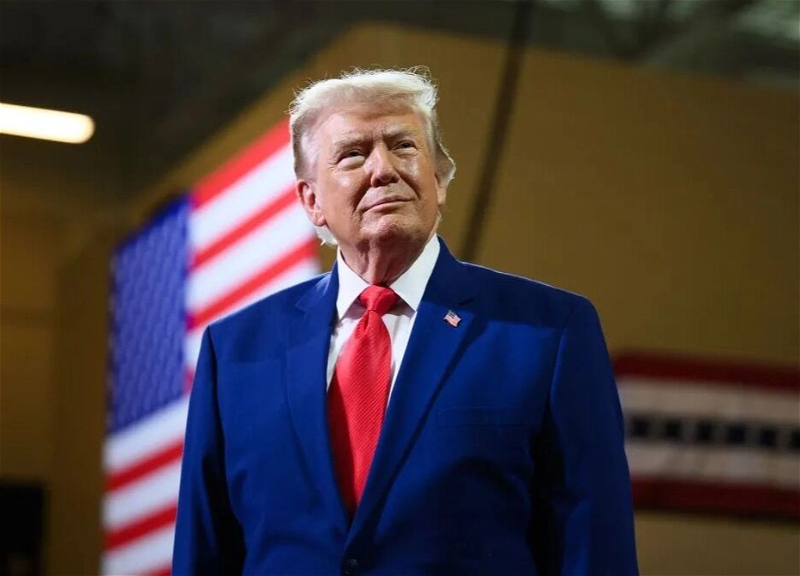
An additional layer to the question of BBC’s standards was added by a scandal involving the resignation of the corporation’s head amid controversy over the broadcast and interpretation of a speech by US President Donald Trump, as widely reported in the international press last November. This was not about a stylistic inaccuracy or a minor editorial error, but a crisis of trust in the broadcaster’s leadership caused by how a politically sensitive speech was presented and interpreted. The departure of the corporation’s head was an acknowledgment that the issues are systemic. If a media structure claiming to be a global benchmark for standards finds itself at the center of accusations of bias and manipulative reporting, its moral authority to act as an arbiter on disinformation inevitably comes into question.
BBC’s bias toward Azerbaijan has been evident before. During the Second Karabakh War, President Ilham Aliyev, in an interview with BBC, effectively exposed the interviewer’s one-sided approach and use of phrasing that reflected the Armenian position. This episode gained widespread attention in the international information space and became a telling example of how the Azerbaijani side is forced to publicly defend basic principles of objectivity.
Another distinct issue is the coverage of the preparation and hosting of the COP29 climate summit in Baku. BBC materials emphasized claims that Azerbaijan was allegedly using the forum to secure new oil and gas deals, highlighting a supposed 'inconsistency' between the host country’s status and its domestic policies. Critical analysis is permissible and necessary, but when a negative framing becomes dominant while positive aspects are either ignored or marginalized, it points to bias.
The history of Vardanyan’s ties to British elites adds further questions to this picture. His involvement in funding the restoration of the Scottish estate Dumfries House, overseen at the time by the then-Prince of Wales, now King Charles III, was widely covered in the 2010s. Between 2009 and 2011, over $200,000 was transferred to the prince’s fund through offshore entities linked to Vardanyan, alongside approximately £1.5 million raised for the reconstruction of one of the complex’s buildings, named the Dilijan Building. In 2014, Vardanyan attended a gala dinner at Dumfries House, where the prince personally thanked donors.
In 2019, following publications about the 'Troika Laundromat' scheme, media attention turned to donations channeled through the offshore company Quantus Division Ltd. Representatives of the royal family stated that due diligence was conducted when accepting the funds and that there were no suspicions at the time. Vardanyan himself emphasized the transparency of his charitable activities. Nevertheless, the offshore origin of the funds and subsequent investigations left unanswered questions. When a figure with such a background becomes the subject of sympathetic BBC coverage, and his case is framed as a 'humanitarian issue,' a legitimate question arises: where is the line between journalism and participation in someone’s PR strategy? And if the British government deems it acceptable to impose sanctions on foreign television channels for spreading Russian disinformation, then Azerbaijan has the right to consider legal mechanisms to respond to the activities of BBC Azerbaijan in cases of disseminating inaccurate information and provocative interpretations.
This is about the principle of equal standards. The fight against disinformation cannot be selective. If the propagation of narratives aligning with the Russian agenda is grounds for sanctions against Georgian media, the same logic must apply to any other media outlet, regardless of its status or country of origin. Otherwise, all claims of principle turn into tools of political expediency.
Azerbaijan consistently defends its territorial integrity and sovereignty, relying on international legal norms. Attempts to portray legitimate judicial decisions as 'political persecution' and a resolved conflict as an 'open question' serve to destabilize the region, undermine the established peace, and complicate the normalization of relations between societies that have been in conflict for 30 years. When such narratives are voiced from the platform of a state-funded media corporation, it goes beyond ordinary editorial debate.
Ultimately, the issue boils down to responsibility. Media with global reach shape the perception of countries and conflicts for millions of people. The level of trust in them depends on how conscientiously they handle facts. The history of recent years shows that a persistent negative framing of Azerbaijan has emerged in the British information space, where alignment with the interests of certain political and commercial groups appears too systematic to be considered coincidental.
Ali Mamedov