USA and Israel Against Iran, Region Faces Chaos: What Is Known So Far?
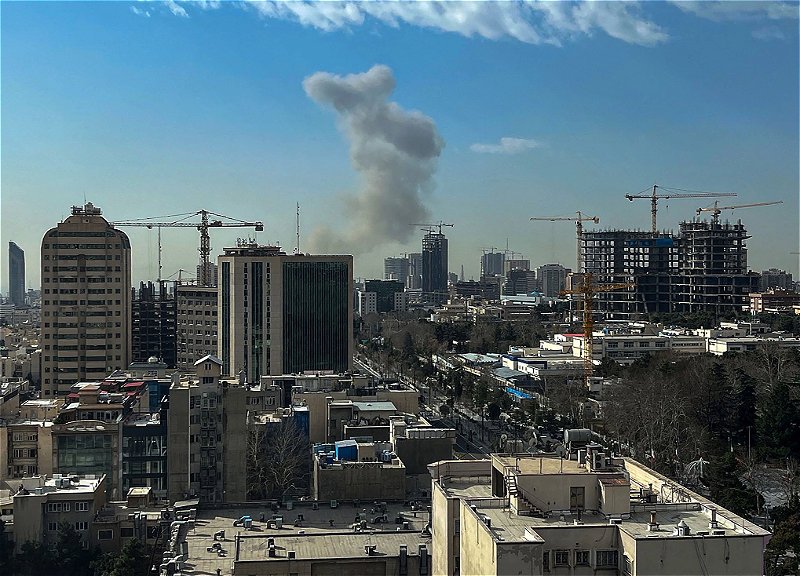
On Saturday, February 28, the United States and Israel launched a large-scale military operation against Iran, striking numerous targets across the country.
US President Donald Trump stated that the goal of the campaign is to destroy Iran’s nuclear program, eliminate its missile capabilities and naval forces, and bring about a change in the ruling regime.
Strikes on Tehran and Other Cities
Powerful explosions rocked the Iranian capital, where eyewitnesses reported seeing columns of smoke rising from the area near the presidential palace. Chaos erupted on the streets as residents, in panic, sought shelter, tried to retrieve children from schools, and fled the city. According to satellite imagery, significant destruction has been recorded in the vicinity of the residence of Supreme Leader Ayatollah Ali Khamenei, whose whereabouts remain unknown.
According to the Iranian Red Crescent, strikes targeted 20 of the country’s 31 provinces. Explosions were reported in Shiraz, the southeastern port city of Chabahar, and several other locations. Iranian state media reported dozens of deaths from a strike on a girls’ school in Minab, Hormozgan Province, near the strategically vital Strait of Hormuz, though these reports have not been independently verified.
Washington’s Position
In an eight-minute video address posted on Truth Social, Trump described the operation as “massive and ongoing.” He stated that the objective is to protect the American people by eliminating threats posed by the Iranian regime. The President also addressed the Iranian people directly, suggesting that the current situation could be an opportunity to overthrow the authoritarian government.
Dozens of strikes were carried out by combat aircraft based on carriers and military bases across the Middle East. Initially, the attacks targeted military facilities, but according to three Israeli security officials, strikes were also aimed at Iranian leadership.
Iran’s Response and Regional Escalation
Tehran vowed “crushing retaliation” and launched several waves of ballistic missiles at Israel. Israeli air defense systems largely succeeded in intercepting the attacks, with no significant damage or casualties reported among Israelis in the initial phase, except for one person sustaining minor injuries in the north of the country.
However, the strikes affected other countries in the region as well. The United Arab Emirates, Qatar, Bahrain, Kuwait, and Jordan reported attacks on their territories. In the UAE, at least one person was killed due to falling debris from an Iranian ballistic missile. In Syria, an Iranian missile, presumably aimed at Israel, struck a building in an industrial zone in the city of Suweida, killing four people.
Transportation Collapse
Dubai suspended operations at both of its airports—Dubai International and Al Maktoum International—which handle up to 2,500 flights daily. Qatar closed its airspace, and all Qatar Airways flights from Doha were canceled. The UAE imposed partial airspace restrictions. Turkish Airlines canceled flights to Lebanon, Syria, Iraq, Iran, and Jordan until March 2, and flights to the UAE, Qatar, Kuwait, and Oman for Saturday.
International Reaction
The international community is divided. Canada and Australia expressed support for the US actions, emphasizing the need to prevent Iran from acquiring nuclear weapons. French President Emmanuel Macron warned of “serious consequences for international peace” and called for an emergency meeting of the UN Security Council. Oman’s Foreign Minister Badr Albusaidi, who had acted as a mediator in negotiations, criticized the decision to escalate, stating that “serious talks have once again been undermined.”
Iran’s top diplomat, Abbas Araghchi, called the strikes “completely unprovoked, illegal, and illegitimate” and urged the UN Security Council to take immediate action.
Background to the Conflict
The current escalation follows a series of events. In early January, Trump voiced support for anti-government protests in Iran, which were harshly suppressed by authorities. In June of the previous year, the US had already struck Iranian nuclear facilities during a 12-day war between Israel and Iran, though it later emerged that the nuclear program was only weakened, not destroyed. In recent weeks, the parties held indirect talks mediated by Oman, but the latest round, held on Thursday in Switzerland, ended without results.
Economic Consequences
The Moody’s agency warned of potential impacts on the global economy, particularly if shipping through the Strait of Hormuz—a critical artery for global oil trade—is disrupted. Analysts caution that the conflict could escalate into a protracted war with no clear resolution.
The Iranian government stated it has sufficient reserves of food, fuel, and medicine, prepared in advance for potential military action.
The situation continues to evolve.