How Azerbaijan and the European Union Are Shaping a New Partnership Architecture
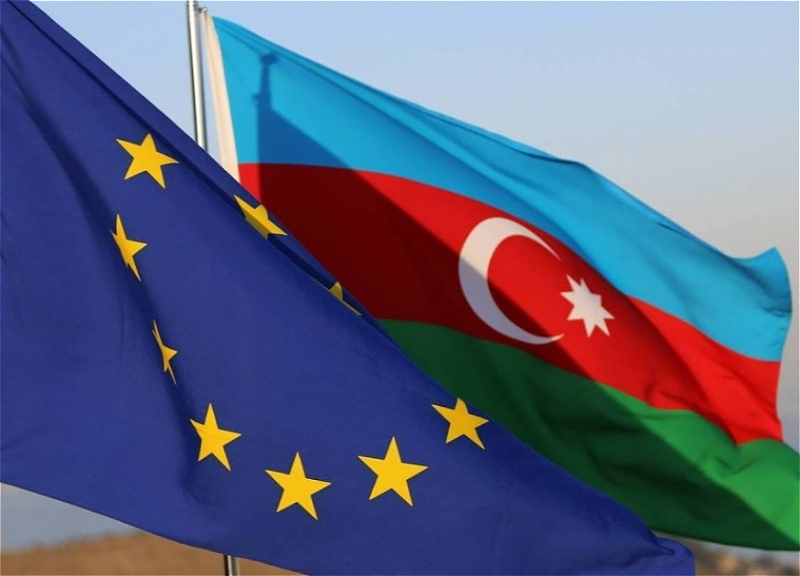
Constructiveness and pragmatism—these words can characterize the current relationship between Azerbaijan and the European Union.
In the preceding period, relations between Baku and Brussels faced various challenges, but today is marked by a mutual willingness to listen and understand each other. Azerbaijan has become one of the key partners of the EU in shaping a new energy architecture for Eurasia. Against the backdrop of recent large-scale geopolitical crises—wars in Ukraine and Iran, the resulting disruption of traditional logistical routes, and energy shocks in the European market—the cooperation between Azerbaijan and the EU has gained additional strategic depth.
Notably, this assessment is increasingly voiced at the level of European leadership. Arriving in Baku today, the President of the European Council, António Costa, commented on the development of relations between Brussels and Baku, directly emphasizing that Azerbaijan is a key partner for the EU. "Over the past year, we have given new momentum to our relations. We are determined to further deepen our engagement in the areas of security, energy, digital technologies, and transport," he wrote on his account on the social media platform X.
Such statements reflect a growing understanding in European capitals of the fact that Azerbaijan’s role in ensuring the energy and transport resilience of the region continues to strengthen consistently.
A crucial element of this dynamic remains energy partnership. For many years, Azerbaijan has systematically built infrastructure capable of ensuring stable energy supplies to the European market. Central to this system is the Southern Gas Corridor—a large-scale energy network that connects Caspian gas fields to European consumers. The total length of the corridor exceeds 3,500 kilometers and includes three key pipeline segments: the South Caucasus Pipeline, the Trans-Anatolian Pipeline (TANAP), and the Trans-Adriatic Pipeline (TAP).
Commercial gas supplies via this route to Europe began at the end of 2020, and in its first years of operation, the corridor proved its efficiency and resilience. The initial capacity of the system was around 16 billion cubic meters of gas per year, of which 10 billion were directed to the European market via TAP, and 6 billion were supplied to Turkey. However, the rapid shift in Europe’s energy landscape after 2022 led to accelerated discussions on expanding capacity. In July 2022, a Memorandum of Understanding on Strategic Partnership in the Energy Sector was signed between Azerbaijan and the European Union. Under this agreement, Azerbaijani gas supplies to Europe are set to increase to 20 billion cubic meters per year by 2027.
The practical implementation of this agreement is already underway. While in the early years of TAP’s operation, Azerbaijani gas was mainly received by Italy, Greece, and Bulgaria, the geography of supplies has gradually expanded due to the development of interconnectors in Southeast and Central Europe. Today, gas from Azerbaijan reaches a range of European countries, including Italy, Greece, Bulgaria, Romania, Hungary, Serbia, Slovenia, Croatia, and Slovakia. Recently, this list has been joined by Germany and Austria, whose interest in alternative gas sources has significantly increased following the radical transformation of the European energy market. In total, supplies now cover 16 European countries.
The stability of these supplies is largely ensured by the activities of the State Oil Company of Azerbaijan—SOCAR. Over recent years, the company has significantly expanded its presence in European countries. In several EU states, SOCAR owns networks of fuel terminals and gas stations, with a particularly notable presence in Southeast Europe and the Balkans. Thus, it is not just an export model for gas supplies being formed, but a much broader system of energy interaction that includes infrastructure for storage, distribution, and retail fuel sales.
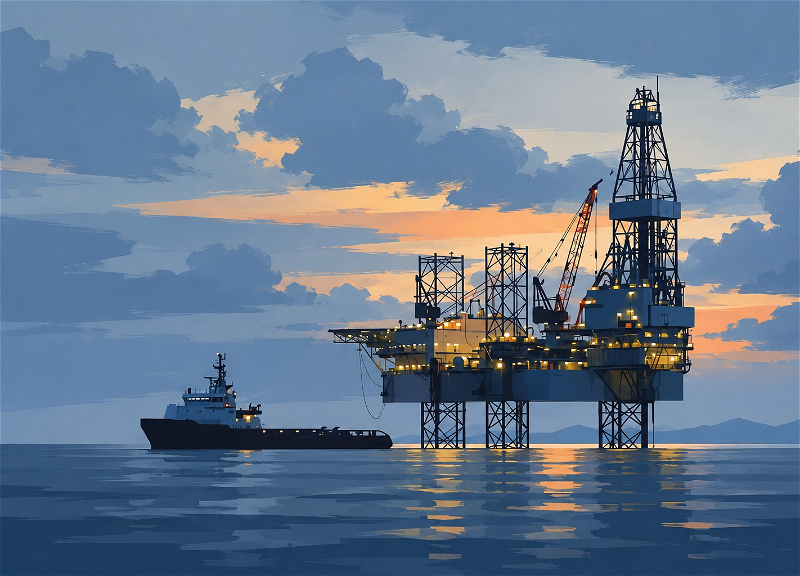
However, energy partnership between Azerbaijan and the EU has long ceased to be limited to hydrocarbons alone. Amid the global transition to a low-carbon economy, cooperation in the field of renewable energy sources has gained momentum in recent years. Of particular importance is the underwater energy cable project across the Black Sea, agreed upon in December 2022 in Bucharest between Azerbaijan, Georgia, Romania, and Hungary. This project envisages the creation of a system for transmitting "green" electricity from the South Caucasus to Europe. As part of this agreement, a high-voltage transmission line is planned to be laid along the bottom of the Black Sea. Upon completion, Azerbaijani electricity generated from wind and solar stations will be able to flow into the European energy system. The European Commission views this project as one of the key elements of the region’s future energy architecture.
A similar strategic logic is reflected in the agreements reached during international negotiations at the COP29 platform in 2024 in Baku. Within the framework of these negotiations, a new concept of energy interaction between Central Asia and Europe was outlined. According to the signed agreements between Azerbaijan, Kazakhstan, and Uzbekistan, electricity produced in Central Asian countries from renewable sources will be able to be transported to Europe via Azerbaijan’s territory.
Thus, a new energy configuration is being formed, effectively turning the South Caucasus into one of the key transit hubs for Eurasia’s "green" energy. This process fits organically into the broader strategy of developing the so-called Middle Corridor—a transport and logistics route connecting East Asia, Central Asia, the South Caucasus, and Europe.
This refers to the Trans-Caspian International Transport Route, often referred to internationally as the Middle Corridor. This route passes through China, Kazakhstan, the Caspian Sea, Azerbaijan, Georgia, and onward to European markets. Over the past few years, its significance has grown considerably. The reasons for this are evident. Following the start of the Russia-Ukraine war in 2022, traditional transport routes through Russian territory faced serious restrictions. Simultaneously, growing instability in the Middle East has heightened the interest of international companies in alternative logistical directions.
Under these conditions, Azerbaijan has found itself at the center of Eurasia’s new transport geography. In recent years, the country has implemented major infrastructure projects, including the modernization of its railway network, the development of seaports, and the creation of modern logistics infrastructure on the Caspian. A key role is played by the Baku International Sea Trade Port, which is gradually becoming one of the largest transport hubs in the region.
The growth in cargo traffic along the Middle Corridor confirms this trend. According to data from international transport organizations, the volume of shipments along the route has been increasing at an accelerated pace in recent years, as companies from Europe and Asia seek more reliable, shorter, and predictable delivery routes. For the European Union, this direction is of strategic importance, as it ensures a stable connection with the markets of Central Asia and China.
All these processes form a broader political picture. Azerbaijan is now perceived on the international stage as a state with a stable foreign policy and extensive partnership ties. Baku has built a system of strategic cooperation with a number of major international players, including countries such as Turkey, China, the United States, Uzbekistan, and others. These partnerships span energy, transport, industry, and investment.
Against this backdrop, relations between Azerbaijan and the EU take on special significance. They are built on pragmatic interests, mutual economic benefits, and an understanding of the strategic realities of the modern world. Europe is interested in stable energy sources, reliable transport routes, and predictable partners. Azerbaijan, in turn, seeks to expand economic cooperation, strengthen its role as a key transit hub, and integrate into new energy and logistics chains in Eurasia.
Therefore, the current dynamic of interaction between Baku and Brussels reflects a much larger process than the mere development of bilateral relations. It is about shaping a new architecture of cooperation between Europe and the Eurasian space, in which Azerbaijan occupies a central place. This is precisely why the European Union’s interest in partnership with Baku continues to grow, and joint projects are becoming important elements of the long-term strategy for both sides.