Middle Eastern Wars Through the Lens of Zbigniew Brzezinski's Timeless Analysis
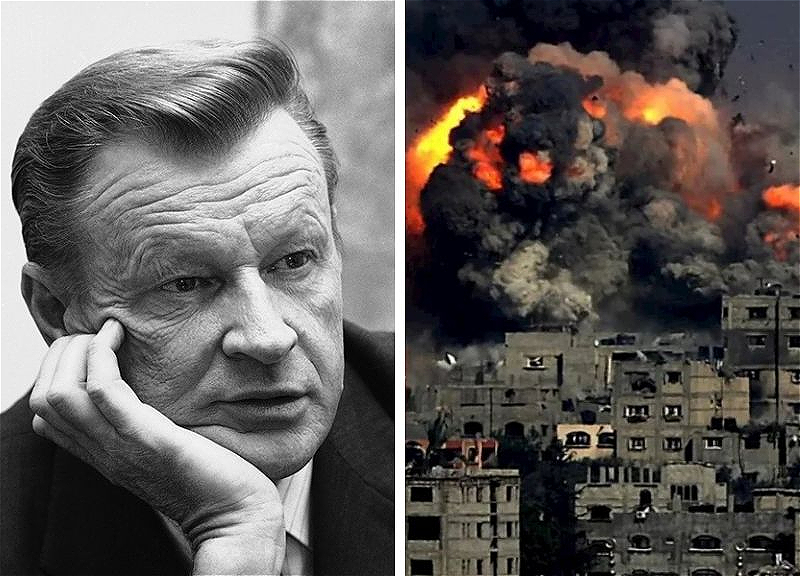
The events unfolding before our eyes in the context of the war between Israel and the United States against Iran are viewed by many analysts as a trajectory toward shaping a new world order.
However, experts of various stripes offer fundamentally opposing views on the post-war situation not only in the Middle Eastern region but also globally.
Yet, alongside forecasts, a significant number of observers question the extent to which the interests of Israel and the United States align in this war. This topic has gained considerable relevance within the United States itself, where, for instance, the head of the National Counterterrorism Center, Joe Kent, resigned, openly stating that he could not "with a clear conscience support the ongoing war in Iran." As he clarified, "Iran did not pose an immediate threat to our country, and it is evident that we initiated this war under pressure from Israel and its influential American lobby."
After all, Joe Kent was a member of Donald Trump's team and a long-time supporter.
Simultaneously, The Washington Post reported that Trump received, "even before his approval for a joint war with Israel," highly sobering reports from American intelligence, particularly "about the likelihood of increased influence of the IRGC" after the start of military actions. However, as of March 16, the report states, Washington has spent at least 12 billion dollars on waging the war, and there are 13 American military personnel killed. There are also no prospects for a "regime change" in Iran, a goal "mentioned by Israeli Prime Minister Benjamin Netanyahu and, at times, by President Trump."
This aspect has once again sparked interest among many experts in the views expressed on this matter by the outstanding analyst of the 20th and 21st centuries, Zbigniew Brzezinski. Notably, the National Leader Heydar Aliyev, calling him a close friend and a person he admired, described Brzezinski as a "realistically thinking" individual who assessed all events "from a realistic perspective." In Aliyev's words, "there is theory, there is abstract thought, and there are realities and real situations. Mr. Brzezinski stands out as a realist politician."
Thus, revisiting the insights Zbigniew Brzezinski shared 15-20 years ago becomes particularly relevant.
For instance, in his 2007 speech before the Senate Committee on Foreign Relations, while addressing certain aspects of the U.S. war in Iraq, "which they themselves unleashed," Brzezinski labeled these military actions a "historical, strategic, and moral catastrophe." He attributed the cause to "false assumptions undermining America's global legitimacy." As he specified, civilian casualties and "a series of abuses will tarnish America's moral authority," exacerbating regional instability.
As Brzezinski predicted, if Washington "becomes mired in a protracted bloody involvement in Iraq, the final destination on this downward path will likely be a direct conflict with Iran and with much of the Islamic world at large." The culmination would be a "defensive" military operation by the White House against Iran, which would plunge the U.S. into an expanding quagmire. Brzezinski emphasized that "claims of the U.S. being at war in the region with a broader Islamic threat, centered on Iran, promote a self-fulfilling prophecy."
As a result, "political isolation and widespread popular hostility toward the global position of the U.S." would grow, necessitating a change in course, particularly through vigorous efforts to achieve a final Israeli-Palestinian peace. Americans must convince the region of the U.S. commitment to both "ensuring Israel's long-term security and justice for the Palestinians, who have waited over 40 years for their own separate state." Without such a resolution, any Arab regime perceived as supporting U.S. regional hegemony would collapse.
Three years later, Brzezinski was asked about the possibility of "countering any potential Israeli attack on Iran." In response, he openly urged not to "get involved in a war you feel ambivalent about," as "the decision must be made with eyes wide open." Specifically regarding Iran, Brzezinski stated, "we must be patient, and deterrence can work." Expanding the "scale of conflict in the region would set the Persian Gulf ablaze, doubling, tripling, or quadrupling oil prices, and Americans would pay five to six dollars per gallon at gas stations. Europe would become even more dependent on the Soviet Union for energy supplies."
As Brzezinski concluded, "this would be a disaster for us more than for Israel—more than for Israel in the short term, and a fundamental disaster for Israel in the long term, because if the consequence is that we are ultimately forced to leave the region due to almost dynamic hatred, we will be left alone. The Russians will not be with us. The Europeans will not be with us. And if we are eventually pushed out, how much are you willing to bet that Israel will survive more than 5-10 years after all this?"
Moreover, Brzezinski specifically noted that China "is increasingly involved in the Iranian economy due to their need for energy, and they will not be particularly grateful if we provoke a conflict in the region." The outcome of this "for the global economy is hard to predict." Therefore, one should not fixate on the foolish idea: "Oh, we'll just bomb them, and the problem will be solved."
In 2012, Brzezinski stressed that if Israel "decides to start a war, simply assuming that we will automatically be drawn into it," then the duty of friendship lies in clearly stating one's position: "You will not make decisions for us regarding the protection of national interests." Fortunately, in Brzezinski's words, the U.S. "has the right to its own national security policy." Thus, he ruled out the possibility of a U.S. or Israeli attack on Iran, characterizing such a move as an "act of absolute irresponsibility" that would mean "the region would literally be engulfed in flames." Implementing a policy based on "such unrealistic options would undermine trust in the U.S."
Isn't it remarkable? Fifteen to twenty years ago, Zbigniew Brzezinski prophetically warned the White House about what could happen if the U.S. supported military actions against Iran. Today, all the negative consequences for the U.S., the region, and the entire world, which this outstanding analyst predicted with precision, are becoming evident.
Are additional comments necessary here?
The material reflects the author's point of view.
Teymur Atayev