Turkey unveils its first intercontinental ballistic missile: What does it mean for the region?
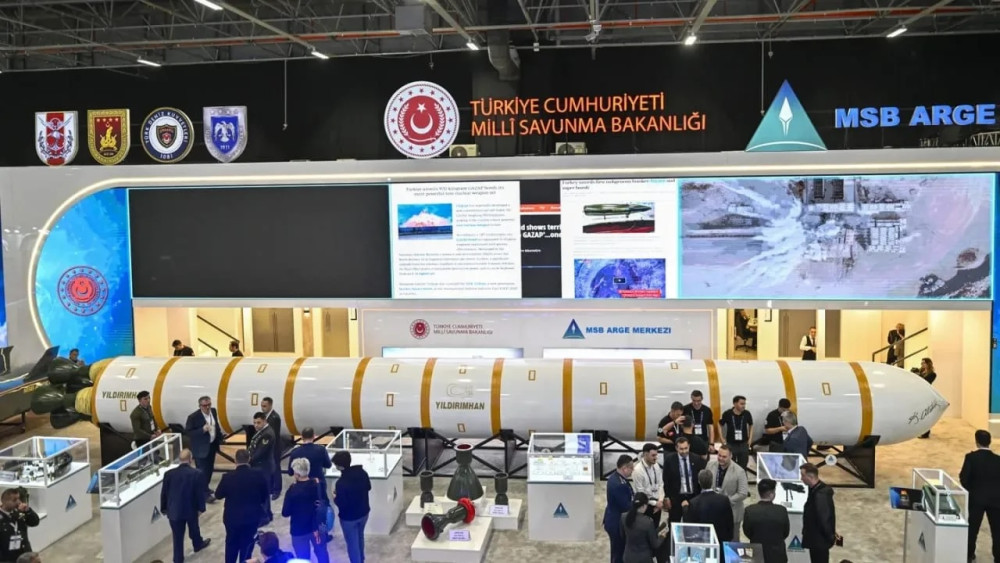
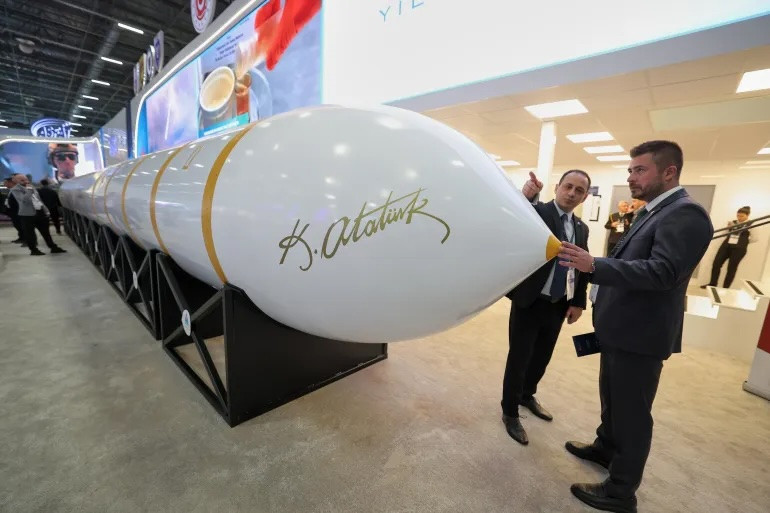
Turkey has unveiled a prototype of an intercontinental ballistic missile (ICBM) — a move that aligns with Ankara's strategy to achieve defense self-sufficiency and solidify its role as a key military player in the Middle East and among NATO allies.
The missile, named "Yıldırımhan" (from the Turkish yıldırım — "lightning"), was developed by the research center of Turkey's Ministry of National Defense and was presented on Tuesday at the SAHA 2026 defense and aerospace exhibition at the Istanbul Expo Center.
Why is the unveiling of this missile considered significant, and what does it mean for Turkey's defense industry? We explore these questions in this article.
What is known about the Yıldırımhan missile and why its emergence is so important
The range of the Yıldırımhan is 6,000 km. According to the classification by the Federation of American Scientists (FAS), ballistic missiles with a range exceeding 5,500 km are categorized as intercontinental. When launched from Turkish territory, the Yıldırımhan is capable of striking targets in Europe, Africa, and Asia.
According to the Turkish news agency Anadolu, the missile's maximum speed is Mach 25, meaning it is 25 times faster than the speed of sound. It is equipped with four rocket engines and operates on liquid nitrogen tetroxide. The payload capacity of its warhead is 3,000 kg.
Serial production of the missile in Turkey has not yet begun. As reported by Al Jazeera, speaking at the exhibition in Istanbul, Minister of National Defense Yaşar Güler stated: "In an era where economic cost has turned into an asymmetric weapon, Turkey offers its allies not only weapon systems but also technology and a sustainable security economy."
Experts describe the launch of Turkey's ICBM program as significant for several reasons.
Özgür Ünlühisarcıklı, regional director of the German Marshall Fund of the United States, commented to Al Jazeera: "In my view, Turkey does not need ICBMs to deter any immediate security threat it faces. Therefore, what is significant for Turkey is not the missile itself, but the ability to produce it."
Burak Yıldırım, an Istanbul-based security and defense analyst, emphasized that the development of an ICBM is indirectly important for Turkey's civilian space programs — particularly for the Delta-V project, which has a strictly civilian and commercial mandate and aims to launch Turkish satellites into orbit using domestically developed carrier rockets.
"The physics of reaching orbit and the physics of an intercontinental ballistic trajectory are closely related; the technologies overlap. In this sense, the potential of the ICBM class is a natural, though politically significant, byproduct of a serious space program," he explained.
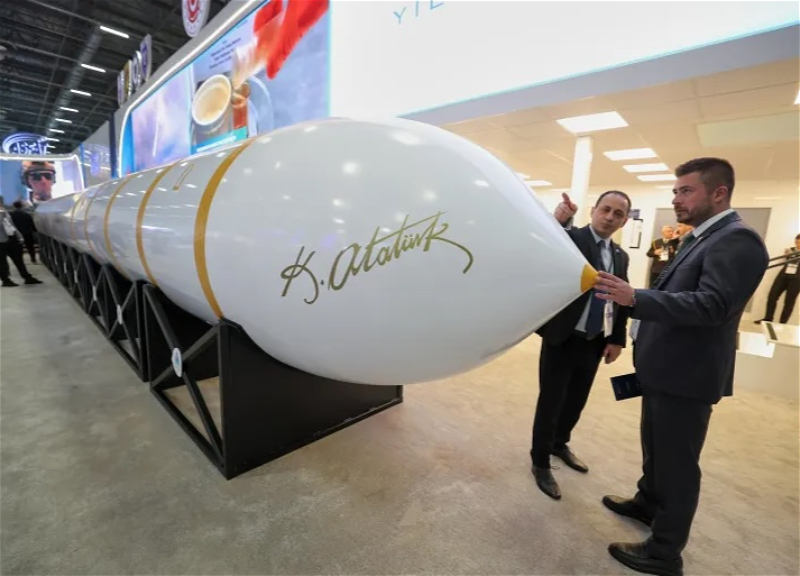
At the same time, Yıldırım cautioned against inflated assessments: "It should be clearly understood what exactly was presented at SAHA 2026: a concept in the form of a mock-up. There are no confirmed flight tests, technical specifications are limited, and critically important subsystems have not been publicly documented in any consistent manner. Even the most likely future test site — a base in Somalia — has not yet been built. These are declared ambitions, not an operational capability."
Ali Bakir, a senior non-resident fellow at the Middle East Council on Global Affairs, considers the prototype a serious breakthrough for Ankara.
"This symbolizes a leap in its missile capabilities and technological development, allowing Turkey to join the exclusive club of a few states possessing such advanced defense technologies," he told Al Jazeera.
"This milestone underscores Ankara's commitment not only to building military strength and defense potential but also to enhancing deterrence, positioning the country as a key super-regional power," Bakir added.
To put this into perspective: currently, only a handful of countries possess fully operational ICBMs — the United States, Russia, China, the United Kingdom, France, India, North Korea, and (by most estimates) Israel. If Turkey successfully advances its program to serial production and testing, it could become the ninth country in this club — and the only Muslim-majority nation alongside Pakistan, which possesses medium-range ballistic missiles but not ICBMs.
Why did Turkey develop the Yıldırımhan?
The unveiling of the new missile coincides with significant tensions in the Middle East. A fragile ceasefire between parties in the U.S.-Israeli war against Iran holds after six weeks of strikes, but a naval standoff is unfolding in the Gulf: Tehran continues to block the Strait of Hormuz, while the U.S. enforces a naval blockade of Iranian ports. Meanwhile, Israel continues to violate ceasefires reached in Lebanon and the Gaza Strip.
In March, when Iran launched retaliatory strikes on American military facilities and infrastructure in the Middle East, Ankara reported that NATO air defenses intercepted ballistic missiles targeting Turkey on March 4 and 9. Tehran denied attacking Turkey and suggested that Israel might be behind the launches as an act of provocation.
In February, just days before the start of the U.S.-Israeli war against Iran, former Israeli Prime Minister Naftali Bennett — whose party is predicted to perform well in national elections this year — became the latest prominent politician to label Turkey a threat to Israel. Speaking at a conference, Bennett stated that Israel must not "turn a blind eye" to Turkey, accusing it of belonging to a regional axis "similar to Iran's."
"A new Turkish threat is emerging," Bennett said. "We must act through various methods, simultaneously against the threat from Tehran and the hostility from Ankara."
Similar statements have been made by other Israeli politicians in recent months. Turkey, seen as growing closer to other regional powers including Saudi Arabia and Egypt, has sharply condemned Israel's genocidal war in Gaza as well as violence against Palestinians in the occupied West Bank by Israeli settlers — often with the support of the military.
While Israel and Iran have had openly antagonistic relations since the 1979 Islamic Revolution, Israeli-Turkish ties long followed a more pragmatic line. However, since coming to power in the early 2000s, Turkish President Recep Tayyip Erdoğan has increasingly criticized Israel.
"The bloodstained network of genocide continues to kill innocent children, women, and civilians without rules or principles, ignoring all human values," Erdoğan said about Israel during a speech at an international conference in Istanbul in April.
Bakir told Al Jazeera that concerns about Israel are not the primary driver behind the ICBM development, but the timing and nature of Turkey's ballistic weapon advancements are clearly intended to send signals to both allies and adversaries, including an "increasingly hegemonic, expansionist, and aggressive Israel."
"This fits into the long-term vision of the Justice and Development Party (AKP) and President Erdoğan: to reduce dependence on foreign defense equipment, increase self-sufficiency, and build a robust domestic defense industry that meets global standards," he noted.
"This initiative aims to meet national needs, strengthen the country's strategic autonomy, and counter regional and international threats to Ankara's national security and interests. This policy is proactive, not reactive," Bakir added.
Yıldırım, in turn, emphasized that Israel's readiness to strike long-range targets across the Middle East, including state entities, has not gone unnoticed in Ankara.
"Turkey and Israel have no official conflict, but their strategic interests have sharply diverged, and political relations have significantly deteriorated in recent years. When Turkish officials speak of systems capable of hitting distant targets, the geography speaks for itself," he said.
"But reducing [the ICBM unveiling] solely to Turkish-Israeli dynamics would be too narrow. Turkey is simultaneously dealing with post-war Syria on its border, unresolved issues in the Eastern Mediterranean, ongoing tensions with actors in Iraq, and, critically, recently faced ballistic missiles launched from Iran being intercepted by NATO forces over its territory. Turkey is surrounded by instability and is concluding that abstract allied guarantees are insufficient. It wants hard, sovereign deterrence," he added.
The announcement of the Yıldırımhan, according to him, is "not so much about a specific threat as it is about Turkey declaring its intent to be a country that no one, from anywhere, can coerce."
According to the Turkish newspaper Hurriyet Daily News, while presenting the ICBM, the defense minister stated that recent conflicts — Russia's war against Ukraine and the U.S.-Israeli war against Iran — have impacted the global security landscape.
"These conflicts and wars have provided critically important data for security doctrine while simultaneously increasing our responsibilities," Güler said.
Ünlühisarcıklı from the German Marshall Fund noted that regional volatility and the direct and indirect security challenges Turkey faces are the primary reasons for bolstering its military capabilities.
"Other factors include Turkey's commitment as a NATO ally to increase defense spending to 5% of GDP, an export-oriented industrial policy in the defense sector, the use of defense cooperation as a diplomatic tool, and the defense sector as a catalyst for increasing technological intensity in industrial production overall," he added.
Last June, leaders of the 32 NATO member states committed to allocating up to 5% of GDP to defense and related sectors by 2035, describing the move as a "quantum leap" in collective security. The commitment was enshrined in the communiqué of the NATO summit in The Hague, and U.S. President Donald Trump, who has repeatedly pushed for higher alliance defense spending, took credit for the change.
How significant is Turkey's military power?
Turkey boasts the second-largest standing army in NATO and has emerged as a notable arms exporter.
The country has long pursued military self-sufficiency — a gradual process that began with the establishment of the Defense Industry Development and Support Administration (SaGeB) in 1985.
For a long time, SaGeB focused on international cooperation in research and development. However, as Turkey faced restrictions on purchasing certain types of weapons and conditions on their use, it shifted to local production.
In the 2010s, the focus moved to domestic development, leading to a sharp increase in the production of military equipment within the country.
Yıldırım noted that with the announcement of the Yıldırımhan, Ankara is demonstrating that its military reach extends far beyond its immediate neighborhood.
"By associating itself with ICBM-class systems, Turkey is signaling that it sees itself as a global actor — capable of finding partners and projecting significance in regions far beyond its traditional strategic backyard. Today's message is less about the missile itself and more about the kind of power Turkey believes it is becoming," he said.
According to him, Turkey's broader defense expansion is driven by logic that predates any specific regional flashpoints.
"For decades, Ankara was heavily dependent on foreign suppliers — primarily the U.S. and Western Europe — for critical military systems. The current push for domestic capabilities is essentially a sovereignty project," he added.
Ünlühisarcıklı from the German Marshall Fund noted that Turkey is also doing "what all NATO allies agreed to do at the summit in The Hague — increase defense spending to 5% of GDP."
"Moreover, Turkey is a critically important ally on NATO's southern flank and a key country for securing connectivity between the Black Sea and the Mediterranean through the Turkish Straits. Therefore, a stronger Turkey means a stronger NATO," he added.
Today, thousands of Turkish defense companies cover land, air, and naval domains — and this is increasingly recognized internationally.
According to local media, the country's defense and aerospace exports reached a record $10.05 billion in 2025.
Turkey's most well-known unmanned aerial vehicle (UAV) is the Bayraktar TB2 — one of the most purchased Turkish defense products worldwide.
According to the Stockholm International Peace Research Institute (SIPRI), the main buyers of Turkish weapons between 2021 and 2024 were the United Arab Emirates, Pakistan, and Qatar.
As for the flagship export product, the medium-altitude, long-endurance UAV Bayraktar has reportedly been supplied to at least 31 countries, including Azerbaijan, Iraq, Ukraine, Kenya, Bangladesh, and Japan.