Diplomacy on the brink of adaptation: Outcomes of the Moscow dialogue in the mirror of Armenian elections
International politics often resembles a complex chess game, where every move conceals not only tactical calculations but also deep historical context.
The South Caucasus has always been a challenging region in this regard, where the interests of major global players intersect in unique ways, creating a distinctive dynamic of relations.
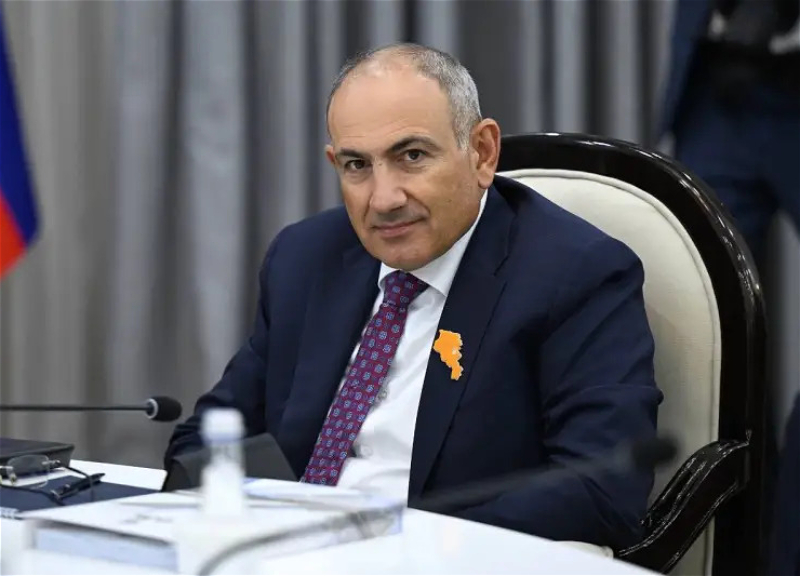
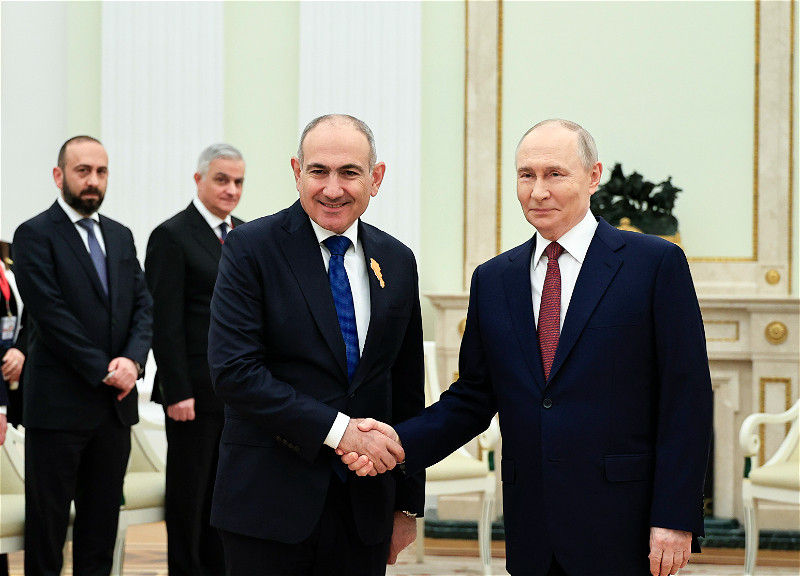
Changes in the relationship between Moscow and Yerevan are a storyline that undoubtedly attracts heightened interest from external observers and reflects broader trends in the transformation of the post-Soviet space. Against this backdrop, the working visit of Armenian Prime Minister Nikol Pashinyan to Moscow became an event that captured the attention of the expert community.
The beginning of the conversation in the Kremlin was notably courteous. Russian President Vladimir Putin, welcoming his guest, immediately outlined the priorities of the Russian side: "We are always satisfied with what benefits the Armenian people. We share a common civilizational bond that unites us, and this is extremely important." These words set the tone for the subsequent discussion, in which diplomatic phrasing revealed the parties' intent to define the boundaries of acceptable bilateral dialogue.
The economic segment of the talks, though shortened in favor of political issues, served as a necessary foundation for discussing more pressing topics. Putin cited figures showing that trade turnover between the two countries reached $6.4 billion, emphasizing that energy cooperation continues to rely on gas supplies at prices significantly below market rates.
However, this financial pragmatism quickly gave way to a discussion of the political realities that currently shape the climate in the region. Nikol Pashinyan, in turn, described the current stage of relations as a period of adaptation to new conditions. "Our ties are developing very dynamically in the context of new realities in the region, where, I believe, peace has finally been established," the Armenian prime minister noted, thereby underscoring his view of the situation following significant geopolitical shifts in recent years.
The central theme of the open part of the negotiations was the internal situation in Armenia, which is rapidly approaching the period of parliamentary elections. It was here that the most significant divergences in the leaders' positions became apparent. Vladimir Putin directly addressed the participation of various political forces in the electoral process, expressing hope that pro-Russian politicians would have the opportunity to fully compete for voters' support. The Russian leader pointed out that some of them, holding Russian citizenship, are currently deprived of freedom. He was likely referring to Russian businessman Samvel Karapetyan, owner of the Tashir Group, who has been under restrictive measures in Armenia for about a year on charges of public calls for seizing power and money laundering.
Putin's words, "We do not intend to interfere in Armenia's internal affairs, but we are interested in ensuring that pro-Russian forces have the opportunity to participate in the elections," sounded like a clear signal of Moscow's dissatisfaction with the current political landscape in Yerevan. In this context, critical remarks directed at Pashinyan are seen as an indicator that the Kremlin is seriously concerned about the shrinking pro-Russian field in the republic and perceives the actions of Armenia's current authorities as an attempt to artificially limit political competition.
Nikol Pashinyan's response was strictly aligned with national legislation but carried an equally firm undertone. He reminded that Armenia's Constitution unequivocally prohibits individuals with dual citizenship (which includes the aforementioned Karapetyan) from holding high state positions, including roles as deputies or government members. Regarding the issue of imprisoned opposition leaders, Pashinyan was unequivocal: "There are no participants in the political process in detention in our country. There are no political prisoners in Armenia." This divergence in the assessment of fundamental concepts of democracy and justice highlights the depth of the trust crisis between the allies. Such polemics effectively mean that Russia views the current processes in Armenia as a deliberate displacement of its influence, while official Yerevan interprets this as a sovereign right to state-building and establishing order within the country.
Particular attention during the meeting was devoted to Armenia's foreign policy drift. The Russian side does not hide its skepticism about the intensification of Yerevan's dialogue with Western structures, especially against the backdrop of the republic's suspension of participation in CSTO projects. Vladimir Putin articulated points suggesting that, despite the significant benefits Armenia gains from its alliance with Russia in security and energy, the republic's leadership increasingly looks to the West. In Moscow, this is perceived as a dangerous trend that could turn the region into a zone of prolonged instability. Observers note that Armenia has effectively become an arena for a new round of global confrontation. If Ukraine is experiencing a hot phase of conflict between Russia and the West, Armenia is witnessing a classic "cold war," where the primary weapons are information technology, diplomatic pressure, and economic levers of influence.
Western players, in turn, show heightened interest in Armenian affairs, often in a demonstratively selective manner. In Brussels and Washington, there is a tendency to ignore instances of harsh suppression of protests or persecution of political opponents in Yerevan if it aligns with the broader logic of distancing Armenia from Moscow. This "soft" approach to human rights issues in this specific case only confirms the theory that, for the West, Armenia is a tool in a larger geopolitical game rather than a valued partner in its own right. Using the Armenian platform to curb Russian influence turns the republic's internal elections into an event of international significance, where the stakes are not just the name of the future prime minister but the civilizational choice of the entire country.
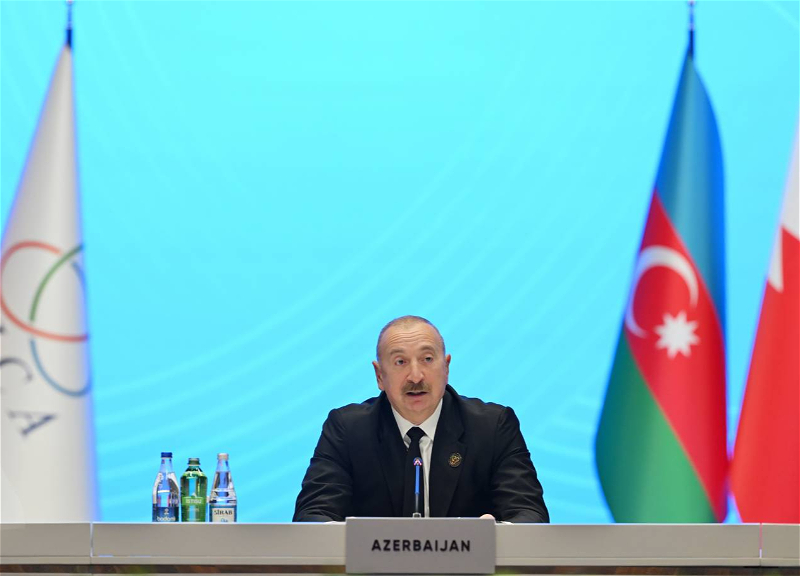
Against this backdrop, Azerbaijan's position stands out sharply. Over recent years, the country, led by President Ilham Aliyev, has managed to carve out a unique place in the system of international coordinates. Azerbaijan demonstrates an example of how a state can pursue an entirely independent and sovereign policy without becoming a hostage to the interests of global powers. Azerbaijani diplomacy has built pragmatic and equidistant relations with all centers of power, allowing the republic to maintain stability even amid global upheavals. Baku's firm stance and ability to defend national interests without harming partnerships with neighbors have ensured that Azerbaijan is perceived as a reliable and predictable player, unlike Armenia, whose course is subject to sharp fluctuations depending on foreign policy conjunctures. President Ilham Aliyev has repeatedly emphasized that the region's well-being is possible only if the Caucasus ceases to be a zone of struggle for external forces, and Azerbaijan's actions fully confirm this principle in practice.
Returning to the outcomes of the Putin-Pashinyan talks, it must be acknowledged that the meeting captured a state of profound transformation in bilateral ties. The leaders exchanged views in an atmosphere that Pashinyan described as "very trusting," thanking his Russian counterpart for the opportunity to openly discuss all pressing issues. Nevertheless, behind the words of gratitude lies the realization that previous formats of interaction no longer function automatically. Russia demands guarantees that its interests and the security of its supporters within Armenia are taken into account, while the current Armenian leadership attempts to maneuver between obligations to Moscow and ambitions in the West.
The further development of events will largely depend on the tactics chosen by Russia and the West during Armenia's election campaign. It is evident that attempts at external management of political processes in Yerevan will only intensify. In this sense, the "cold war" on Armenian soil risks transitioning into a phase of prolonged political paralysis if the parties fail to find a compromise. The experience of neighboring countries shows that abandoning multi-vector policies and becoming a tool of foreign geopolitics rarely leads to prosperity. The stability of the South Caucasus today, more than ever, depends on the ability of local elites to recognize their responsibility to their peoples and prevent their territories from becoming battlegrounds for global players. Pashinyan's visit to Moscow clearly outlined the key points of contention that the parties will need to address in the coming months. It remains to be seen where the pendulum of Armenian politics will swing next and how this will affect the fragile balance of power in this part of the world.