Armenia before June elections: From fragmentation to managed chaos
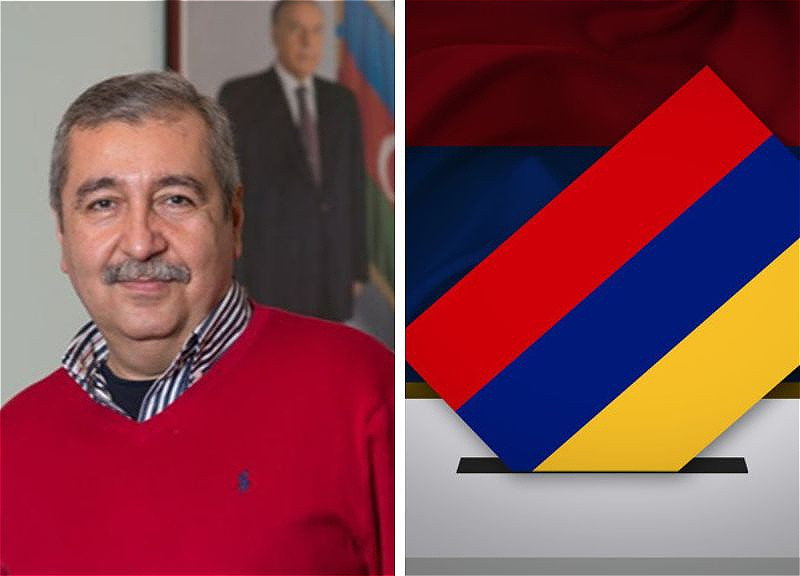
The visit of the Prime Minister of Armenia to Moscow and his meeting with the President of Russia highlighted the intensity of passions on the eve of the June elections in the Republic of Armenia.
If at the beginning of the election cycle in Armenia the key intrigue was whether the opposition would manage to overcome its own fragmentation, by the spring of 2026 it becomes clear: fragmentation itself is turning into a tool of political struggle.
Continuing the logic of the previously outlined dilemma — 'a game of fragmentation or a new configuration of power' — it can be stated: the Armenian opposition, apparently, is betting not on unification, but on managed voter division.
Fatigue as the main political backdrop
The election campaign is taking place amid a noticeable decline in public interest. Experts note that compared to the post-war 2021, the current electoral cycle lacks the previous emotional intensity. Society is tired of permanent confrontation, and the high level of distrust in the authorities does not automatically translate into support for alternatives.
Moreover, a paradoxical situation is emerging: a significant portion of citizens is dissatisfied with the current course but sees no convincing replacement. As a result, the focus shifts not so much to a battle of programs, but to competition for the disillusioned and undecided voter — and according to analysts, they constitute the majority.
Fragmentation as a strategy, not a problem
Classical logic would suggest opposition consolidation before elections. However, in Armenia, the opposite is happening: competition among opposition centers is intensifying.
Sociological surveys show that the electorate of former opposition blocs is being redistributed among new players — primarily around financially and media-supported figures. At the same time, none of the forces demonstrates the ability to become an undisputed center of attraction.
This situation leads to several effects: firstly, the dilution of the protest vote — it is split among several projects; secondly, a reduced threshold of responsibility — each force can attribute failure to the 'betrayal' of competitors; and thirdly, the growing importance of post-election coalitions — the struggle shifts from polling stations to behind-the-scenes negotiations.
In fact, the opposition is starting to play the long game: not to win the elections outright, but to create conditions for coalition bargaining afterward.
'Coalition afterward' as a hidden goal
If the ruling force maintains relative leadership but without a guaranteed majority, it is the configuration of coalitions that may determine the future government. A scenario is already emerging in which opposition forces are counting not on victory, but on a blocking package.
Sociological analysis indicates a high likelihood of such an outcome: the ruling party retains first place but risks not gaining full control over parliament.
In this context, 'fragmentation' takes on a different meaning. It: 1) increases the number of negotiating entities; 2) complicates the formation of a single-party government; 3) creates space for unexpected alliances.
In other words, chaos becomes a manageable resource.
Politics of fear as a mobilization tool
Against this backdrop, another trend is gaining strength — the opposition of 'peace versus war.' Representatives of the Armenian authorities explicitly frame the choice as existential: either continuation of the current course or the risk of escalation.
The intention of the 'Civil Contract' to hold a referendum on adopting a new Constitution of the Republic of Armenia, to exclude from it all territorial claims against Azerbaijan and Turkey, the unblocking of communications to Armenia initiated by Azerbaijan, the supply of Azerbaijani petroleum products there, and the transit of grain and other goods from Russia and Kazakhstan through Azerbaijani territory have been significant steps in the peace process.
Statements that the opposition's rise to power could lead to a new round of conflict are becoming part of the election rhetoric.
For the authorities, this is a way to mobilize the moderate electorate and solidify their status as a 'guarantor of stability.' For the opposition, it is simultaneously a challenge and an opportunity: radical rhetoric attracts the protest electorate but repels the undecided.
Crisis of agenda and deficit of meaning
One of the key problems of the campaign remains the lack of a clear substantive agenda from the opposition. Political struggle increasingly boils down to symbolic oppositions based on nationalist, revanchist rhetoric, while real socio-economic and institutional issues take a backseat.
This intensifies apathy and simultaneously increases the role of technological solutions: media campaigns, targeted mobilization, and work with narrow electoral groups.
In conclusion: A new configuration or reproduction of the old?
Thus, by June 2026, a complex picture is emerging in pre-election Armenia.
On one hand, the system is formally becoming more multipolar: new political parties and movements ('Strong Armenia' by Samvel Karapetyan, 'Noah's Ark' by Gagik Tsarukyan) are emerging, competition is intensifying, and the importance of coalitions is growing.
On the other hand, this multipolarity may be merely a surface effect. Within it, the old logic persists, expressed in weak party institutionalization, personalization of politics, and dependence on financial and administrative resources.
The main question of the elections now sounds different than it did a few months ago. It is no longer about whether the opposition can defeat the authorities, but whether it can turn its own fragmentation into a mechanism of influence.
And if earlier 'fragmentation' was perceived as a sign of weakness, now it increasingly resembles a deliberate tactic — risky, but perhaps the only one available under Armenia's current political conditions.
Author: Namik Aliyev,
Doctor of Legal Sciences, Professor,
Extraordinary and Plenipotentiary Ambassador,
Head of Department at the Academy of Public Administration under the President of the Republic of Azerbaijan