Space of peace, stability, and cooperation: Baku and Tbilisi shape a new configuration of the South Caucasus
On the backdrop of global instability and conflicts in various regions of the world, the South Caucasus is gaining a chance to establish itself as a space of peace, cooperation, and strategic partnership.
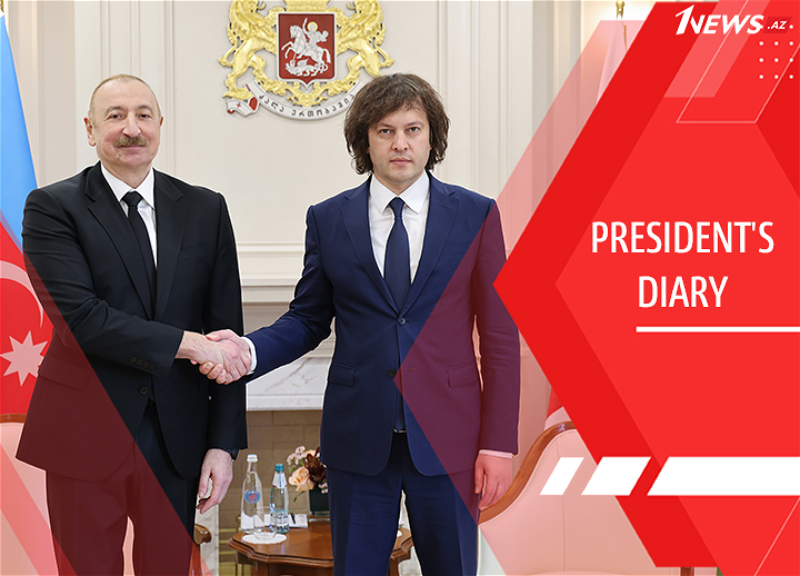
This message was conveyed during a meeting between Azerbaijani President Ilham Aliyev and Georgian Prime Minister Irakli Kobakhidze on April 6 in Tbilisi, receiving direct confirmation in the leaders' assessments. Today, the discussion is not only about bilateral relations but also about a broader regional transformation—essentially a rethinking of the South Caucasus' role: from a territory of conflicts to a space of new opportunities. Amid ongoing global crises, this transition takes on particular significance.
President Ilham Aliyev articulated this idea with utmost clarity: "Of course, at each of our meetings, we discuss many issues, including the regional situation and matters of regional security. Today is no exception. A completely new situation is emerging in the South Caucasus, and the countries of the region must not miss this opportunity. Because today, unfortunately, peace, security, tranquility, and stability are being violated in different parts of the world, resulting in bloody clashes, wars, suffering, and losses. A similar situation once existed in the South Caucasus as well. But today, the South Caucasus is becoming a space of peace, tranquility, security, and cooperation, and here I would like to particularly note the role of Georgia."
In turn, Georgian Prime Minister Irakli Kobakhidze, welcoming the ongoing peace process between Baku and Yerevan, emphasized: "Georgia strongly supports peaceful coexistence, constructive cooperation, and new initiatives in the region. If necessary, we are always ready to create conditions for dialogue and peace processes. Cooperation between the countries of the South Caucasus opens new prospects for the entire region. Global geopolitical changes further increase the importance of the Middle Corridor, as well as enhance the significance of the Black Sea and the South Caucasus as strategic regions."
Expanding on the agenda of normalizing Azerbaijani-Armenian relations, President Ilham Aliyev drew attention to practical mechanisms for strengthening it. The head of state is convinced that the sustainability of the peace process requires not only political statements but also concrete economic tools: "I can say that signed documents alone are not enough to strengthen this process. We must reinforce this peace at every stage, with every step, and the best direction for this is trade. Today, trade between Azerbaijan and Armenia is conducted through Georgia, and I would like to express my gratitude to the Georgian government for this."
The practical dimension of this interaction is clearly evident in the economic sphere, which is one of the key pillars of Azerbaijani-Georgian relations. Last year, bilateral trade turnover exceeded 800 million dollars, and as President Aliyev noted, growth in the first quarter of this year "remains quite high." "It is possible that at this pace, we will reach the one-billion mark by the end of the year," said Ilham Aliyev.
Investment cooperation also plays a significant role. The favorable investment climate in Georgia continues to attract Azerbaijani capital: to date, the volume of investments has reached 3.7 billion dollars. Moreover, new investment projects are not ruled out in the future. As Ilham Aliyev emphasized, "joint investments in third countries are also possible," indicating a gradual expansion of economic interaction beyond the bilateral agenda.
"Azerbaijan remains one of Georgia's largest trading partners, and we expect that economic relations will deepen further thanks to growing investments," said the Georgian Prime Minister on his part.
In addition to trade and investments, energy and transport remain crucial components of Azerbaijani-Georgian partnership. These sectors demonstrate how responsibly both countries approach the implementation of large-scale international projects.
In the energy sector, Azerbaijan has been taking steps for many years to strengthen the energy security of numerous countries. Today, Azerbaijani gas is exported to 16 countries. "However, this export again begins with Georgia, and Georgia is the first country here," emphasized President Ilham Aliyev. "Azerbaijani oil and gas are exported to global markets through Georgia, and oil resources from the eastern coast of the Caspian pass through Azerbaijan and Georgia. We have already spoken enough about the existing infrastructure. All this infrastructure is visible, and the Baku-Tbilisi-Ceyhan oil pipeline has been successfully operating for 20 years. Following it, the Southern Gas Corridor was also implemented. In fact, today this infrastructure is of great importance for a vast geographical space. Subsequently, based on these corridors, we have built transport corridors, and today work is underway to expand them. The Middle Corridor passes through Azerbaijan and Georgia, and this is a key transport artery for us. Additional efforts are being and will be made to expand it."
Irakli Kobakhidze, in this context, highlighted the importance of this infrastructure for regional logistics: "Our countries, as a bridge connecting Asia and Europe, play an important role in transportation. From this perspective, we attach special importance to the development and modernization of transport and logistics infrastructure. Georgia and Azerbaijan have repeatedly proven that they are reliable and responsible partners in the implementation of international energy and transport projects."
Such an assessment of regional prospects largely relies on the solid foundation of Azerbaijani-Georgian relations, at the center of which is mutual support for sovereignty and territorial integrity. As President Ilham Aliyev stated: "We have always supported, support, and will continue to support each other's territorial integrity, sovereignty, and the inviolability of borders."
Such approaches create a strong basis for further expanding cooperation in all areas—from economy and investments to regional security. The key factor here is good-neighborly relations and historical friendship—it is on this solid foundation that the strategic partnership between Baku and Tbilisi is built. "I can say that our relations can serve as an example for all neighbors," emphasized President Ilham Aliyev. "They are built on mutual respect, trust, mutual benefit, shared interests, friendship, and brotherhood. I am confident that we will continue to successfully follow this path."
Thus, the state visit of the Azerbaijani President to Georgia and the negotiations held provide a new impetus to bilateral relations and simultaneously confirm the strategic importance of the South Caucasus as a region of stability and cooperation. Today, this part of the world is gradually transforming into a space of sustainable dialogue, mutual security, and economic interaction. A special role here belongs to the strategic partnership between Baku and Tbilisi, thanks to which the South Caucasus strengthens its status as a bridge between Asia and Europe, creating a platform for integration, peaceful coexistence, and long-term regional development.