Ayten Efendiyeva on Dubai's real estate market: Between opportunities, risks, and reality

Dubai's real estate market remains one of the most discussed in the region — but today, any conversation about it must account for a new reality: the military escalation between the U.S. and Israel on one side and Iran on the other has directly impacted the Emirates.
Rocket attacks on UAE territory, linked to the presence of American military bases, have not only shifted buyer sentiment but also the broader narrative: the question is no longer just about the profitability of square footage, but also about safety.
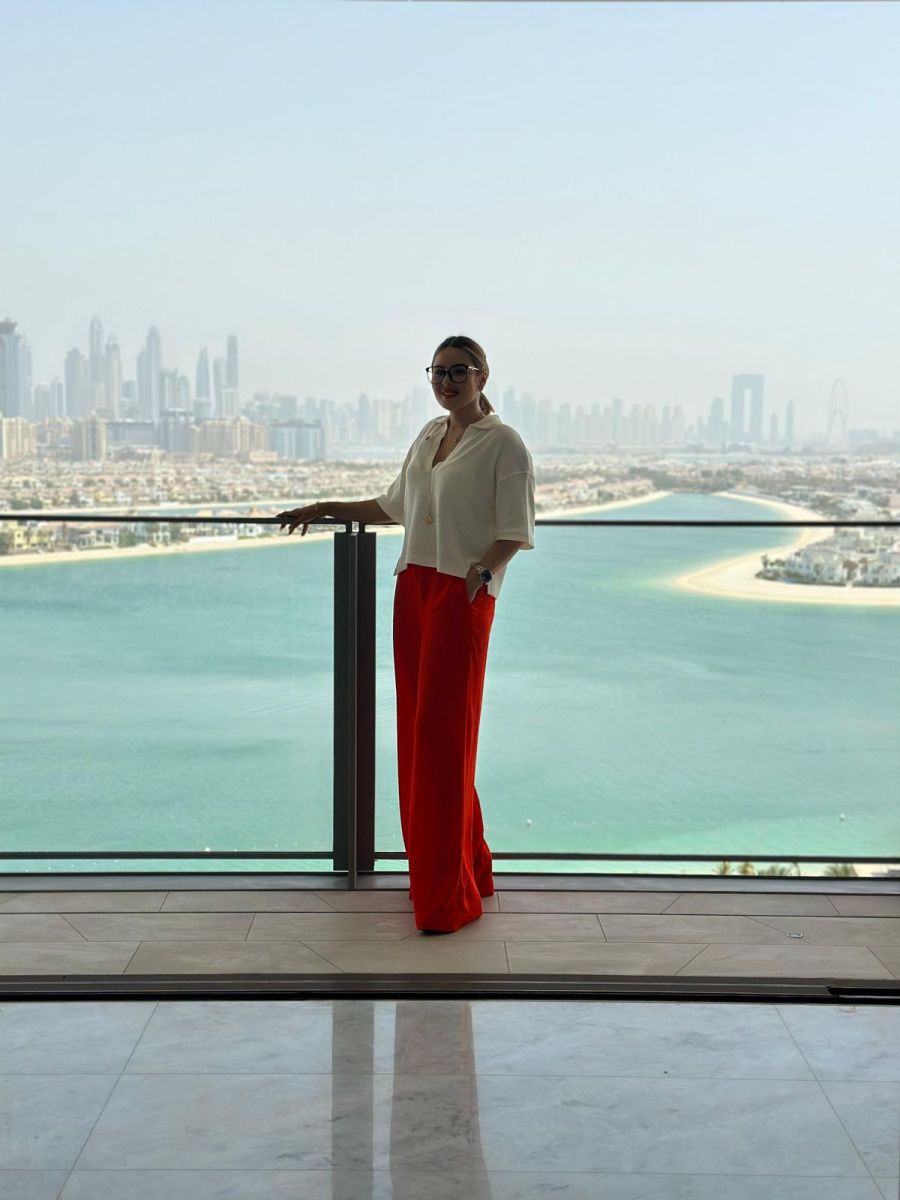
We spoke with Ayten Efendiyeva (@afandi_realestate), owner of Afandi Real Estate L.L.C, an expert who currently lives in Dubai and has been familiar with the emirate for over 25 years. During this time, she has navigated the market through the boom of the 2000s, the 2008–2009 crisis, the COVID downturn, and the subsequent recovery — and today, despite regional tensions, continues to work in Dubai.
Twenty years in Dubai: Personal journey and market evolution
- You arrived in Dubai about 20 years ago. What was the city like back then — and what has it become? What has changed not only in real estate but also in the way of life in the Emirates?
- I first came to Dubai about 26 years ago. My late father had a business here, so we visited often, and I have very warm memories associated with this city. Even back then, I felt a special atmosphere and literally fell in love with Dubai. Every time I flew here, I was in awe — it felt like a place with a unique energy that draws you in.
Of course, the city was completely different — calmer, with a slower pace of life. But even then, you could sense its enormous potential.
I remember driving along Sheikh Zayed Road, and where some of the city’s most popular districts stand today, there was just desert. It was hard to imagine what it would become. Changes happened right before my eyes — I’d come every few months and each time saw massive development.
Over these years, Dubai has undergone a colossal transformation. From a developing city, it has turned into one of the world’s key hubs — not just in terms of real estate, but also in quality of life, safety, services, and opportunities.
The way of life has also changed — it’s become faster, more international, and tech-driven. Yet Dubai has preserved what matters most: a sense of stability, safety, and confidence in the future.
More than 13 years ago, I moved to Dubai and immediately started working in real estate. From the very first days, I immersed myself fully in the profession, and my efforts paid off.
- And how has your own work evolved? What stages has the market gone through over these years, and how has the approach to clients changed?
- When I started, like any agent, I took on all kinds of requests — working with different budgets, handling rentals, and learning the profession from scratch. At the time, this was an important school: we truly learned the basics, which, unfortunately, many new agents today skip.
Over time, thanks to experience and results, I began building my own client base. People came back, recommended me to their acquaintances, and my work gradually reached a new level. At some point, I completely shifted from rentals to sales and focused on transactions that required a deeper approach and strategic thinking.
Speaking of the market, it has gone through several distinct phases. The 2008 crisis was a serious test for the entire industry. Then there were periods of slowdown, including around 2014, when the market became more cautious and restrained.
Before the pandemic, there were fairly calm periods, especially in the summer months, when the market practically froze. During COVID-19, on the other hand, there was panic — many sold properties below market value, unsure of what would happen next. I remember that period very well. However, Dubai recovered quite quickly, and after the pandemic, the market began to grow actively.
An additional boost came from the influx of international investors, especially after recent geopolitical events. This increased demand and took the market to a new level of activity.
As for my approach to clients — it hasn’t changed. From the very beginning, it was crucial for me to work honestly and transparently. I don’t play games with clients and don’t offer something I don’t believe in myself.
I truly understand people, their needs, and their energy. And I always offer only the options I would choose for myself. It may sound simple, but this approach has allowed me to build long-term relationships and trust, which are the foundation of my business.
Safety and geopolitics
- Let’s talk about the main issue. How have the rocket attacks affected daily life in Dubai — how noticeable is it in everyday routines, work, and logistics?
- To be honest, the first few days were, of course, difficult. There was fear, there was uncertainty — no one understood how the situation would unfold.
But what genuinely surprised me in a positive way was the level of protection in the UAE. The air defense system proved to be at a very high level: not a single missile reached its target; everything was intercepted. What sometimes appeared in the news was just debris from interceptions, not direct hits. And in my opinion, at that moment, not only the residents of Dubai but the whole world saw how strong the security system in the Emirates is.
As for daily life — yes, there are changes. In the first days, many tourists left, and the flow significantly decreased, especially with flight restrictions. The city became noticeably quieter.
But it’s important to understand: Dubai is not “empty,” as some foreign news outlets sometimes portray. I live in a tourist area, and almost every day I visit restaurants and hotels — they’re operating, people are there, life goes on. Yes, it’s not as busy as before, but to say everything has stopped is untrue.
In terms of everyday life — there are no issues. Stores are fully stocked, there’s no shortage of goods. There were brief attempts to raise prices, but the authorities reacted instantly — prices were brought back down. This once again shows the level of control and management in the country.
Even in such conditions, there are certain nuances — traffic jams have decreased, and the city feels calmer. In a way, it reminds me of Dubai 10–15 years ago. And honestly, many residents now find positives in this — there’s more time for family, for life outside of work.
As for the real estate market — it’s definitely not collapsing.
Yes, the market has slowed down a bit — this is a natural and expected reaction to current external events.
At the same time, it’s important to understand: there are individual weak projects that didn’t inspire confidence in investors even before. These are properties that were hard to sell even in stable times. And it’s precisely for such projects that we now see price reductions — owners are willing to sell below market just to exit these assets.
Personally, I don’t work with such projects — for me, reputation always comes before any deal.
Meanwhile, demand for quality projects remains, and prices for them are not dropping.
Speaking of forecasts — after the situation stabilizes, the market will need some time to regain its pace. But looking at Dubai’s history, it has gone through crises multiple times and each time emerged stronger.
I’m confident that this time, too, Dubai will not only reaffirm its investment appeal but also prove once again how safe a place it is to live.
And, as odd as it may sound, many people today say they feel safer in Dubai even in this situation than in some European cities.
.jpeg)
- How has this situation impacted the real estate market? Have there been cases where clients backed out of agreed deals due to safety concerns?
- Speaking of the real estate market, I’ve already touched on this — the market hasn’t collapsed. It has become slower and more selective, which is completely logical under the current conditions.
As for deal cancellations — in my practice, these are isolated cases. I had three deals signed just a few days before the events started, and none of these clients backed out. We’ve already closed one, and the other two are in progress.
Yes, there was one client who decided not to proceed with a deal. We were considering a purchase in a new project, and he chose to wait. This is a normal, balanced position.
But overall, there’s no panic or mass cancellations.
Currently, the market is clearly divided into two categories.
The first is people who have taken a wait-and-see approach. They’re not rushing to buy or sell; they’re just observing the situation.
The second category is investors who, on the contrary, understand that it’s precisely in such periods that the best opportunities arise. They’re actively looking for deals and are ready to make quick decisions if they see real value.
At the same time, it’s important to note that demand isn’t only from investors. There are still plenty of clients looking for properties to live in — and these deals continue to happen.
Yes, the market’s pace is slower than it was before the situation began — that’s a fact. I’m not one of those agents who will paint an “ideal picture.”
But at the same time, the market hasn’t stopped. It has simply become more deliberate: fewer impulsive decisions, more analysis, more attention to the quality of the property.
And it’s precisely in such periods that the strongest deals are formed.
- How are Dubai’s authorities responding — is there a sense that the city is systematically prepared for such a scenario?
- Speaking of the authorities’ response — it’s absolutely clear, swift, and systematic. No unnecessary words, no chaos. And this is evident to everyone who is in Dubai.
The city isn’t just prepared for such scenarios — it’s built for them from the ground up. Dubai has gone through periods of instability before, and each time it has come out stronger.
But the most striking thing is the contrast.
In a similar situation in many countries, we’d see panic, chaos, looting, rising crime, and system failures. That’s a reality we all know.
In Dubai, none of that exists. At all.
Here, order remains order. Laws work. The system doesn’t fail. And people feel it.
This isn’t luck — it’s the result of a very clearly structured management model, where everything is thought out in advance, not resolved at the last moment.
That’s why, even in such conditions, there’s control, stability, and a sense of safety within the city that’s hard to find in many other countries.
Dubai isn’t tested by crises — it proves through them why it’s trusted.
- There are assessments suggesting that property prices might adjust due to instability. Do you see this in practice? Is this a threat or, conversely, a window of opportunity for buyers?
- Yes, I admit that the market might temporarily adjust due to the current instability. But it’s important to understand what we mean by “adjustment.”
This isn’t about a price drop, but rather a slowdown in growth. That is, for a certain period — a few months, possibly up to half a year — prices may stabilize and not grow at the pace we saw earlier.
Yes, there may be isolated deals below market value — within 10–15%, sometimes up to 20%. But this isn’t a systemic phenomenon; it’s more like specific opportunities tied to individual owners’ situations.
So, I wouldn’t view this as a threat to the market. On the contrary — it’s a window of opportunity for buyers.
It’s precisely in such periods that you can enter the market most strategically: calmly, without hype, with the chance to choose the best property and, in some cases, lock in a more favorable price.
Strategically speaking, Dubai has gone through crises multiple times, and each time the market didn’t just recover — it reached a new level.
I’m confident that this time will be no different. Moreover, the current situation once again shows the world that Dubai isn’t just about comfort, zero taxes, and a high standard of living, but also about safety even amid global instability.
That’s why smart money isn’t leaving Dubai — it’s waiting for the moment to invest even more heavily.
- You’ve stayed in Dubai despite everything happening. Is this a conscious choice — and if so, what is it based on? What do you see from the inside that those observing the situation from abroad don’t?
- Yes, it was an absolutely conscious choice. My family and I stayed in Dubai and didn’t even consider leaving.
Because for us, this isn’t just a city — it’s home. This is where our life is, our children, their school, our rhythm, our plans.
But to be honest — the main thing that influenced our decision is the internal sense of safety.
Not what people say, not what’s written — but what you feel when you step outside, when you live your normal life.
And life here continues. People aren’t living in fear. There’s no panic, no chaos. There’s calm, there’s order, there’s a feeling that everything is under control.
And this is very different from how it looks from the outside.
When you’re looking from abroad, it seems like there’s tension, instability. But when you’re inside, you see something else: how the system works, how quickly decisions are made, how people trust what’s happening around them.
And I think that’s what gives internal confidence — that you’re in the right place.
Not because there are no challenges. But because here, they know how to handle them.
And, for example, speaking about myself — yes, I’ve stayed and continue to live in Dubai as before. But at the same time, whenever my schedule allows, I always try to fly to Baku. Sometimes even for a couple of days — just because I miss our cuisine, the atmosphere, that feeling of home.
And this summer, most likely in June, I’m also planning to go there for a couple of weeks — to relax, recharge, enjoy the nature and our air. And then, as always, return to Dubai.

Investment reality: Numbers and comparisons
- Let’s get specific. What kind of returns does renting out property in Dubai realistically bring today? What’s the average annual yield, and how long does it take for an investment to pay off?
- Speaking of rental returns in Dubai, it’s important to understand that there’s no single fixed number — it all depends directly on the project, location, and the investor’s strategy.
On average, returns can range from about 5–6% to 8–9% annually.
But the key point is that it’s not just about the rental figure, but about the right investment strategy.
There are projects that offer more stable but moderate returns — for example, 5–6% annually. Their strength lies in resale potential. That is, an investor might rent out the property for a year and then exit the deal profitably due to price growth.
And there’s another category of projects — with higher rental yields, around 8–9% annually. But typically, the price growth for such properties is more restrained, and they don’t always show significant increases upon resale.
So, it’s always important to ask the right question: What is the investor’s goal — stable passive income or capital growth?
As for the payback period, on average across the market, it’s about 10–12 years, but again — it depends on the chosen strategy and specific asset.
I usually explain to clients: In Dubai, it’s not those who simply buy who make money, but those who choose wisely.
In Dubai, returns aren’t just a number; they’re a strategy.
- Many potential buyers from Azerbaijan compare Dubai with Baku and Istanbul. In terms of numbers — how much more profitable or, conversely, riskier is an investment in Dubai real estate compared to these two cities?
- This is a very common question, and here it’s important to compare not just the numbers, but the market model itself.
In terms of numbers, in Dubai, the average rental yield today is about 5–9% annually.
For comparison:
In Baku, it’s around 3–5% annually on average,
In Istanbul, it’s about 4–6%, depending on the district and type of property.
But the key difference isn’t even in the percentages.
In Dubai, an investor gets not only rental income but also the potential for asset value growth, thanks to the constant inflow of international capital and population.
Over the past decades, the city has become a global hub for business, investors, and families. International companies, entrepreneurs, professionals move here, and with them — families, creating sustained demand for real estate.
In comparison, each market has its own characteristics and advantages. Baku and Istanbul are more localized markets with their own dynamics and development logic.
Dubai, on the other hand, is more integrated into the global economy, and that’s what drives its investment appeal.
In terms of risks — there’s risk in any investment. But practice shows that during periods of global instability, capital often redistributes to cities like Dubai.
Yes, the current situation may cause temporary slowdowns, but fundamentally, interest in the market remains.
That’s why many investors view such periods not as a threat, but as an opportunity to enter.
- What’s more profitable today — buying for rental, reselling at the construction stage, or are there other investment models that work in this market?
- It’s important to understand: You can’t definitively say whether rental or resale is more profitable. These are different investment strategies.
There are investors who prioritize stable passive income — they choose rental.
There are those focused on capital growth through resale.
But the market has changed: Quick resales within 6–8 months, as was common before, are almost gone. Today, you need to enter with a horizon until the project’s completion stage — and the key is always choosing the right property.
Speaking of segments, townhouses and villas are showing very strong dynamics right now — they’re seeing the main demand.
And it’s important to note that we’re no longer talking just about Dubai.
Abu Dhabi is also growing very actively. Today, it’s one of the fastest-developing markets in the region.
Powerful infrastructure and lifestyle are being formed there:
Yas Island, Ferrari World Abu Dhabi, Warner Bros. World Abu Dhabi, major concerts by global stars at Etihad Arena.
Plus — the Disneyland Abu Dhabi project has been officially confirmed, which will be the first Disney in the region and will further boost investment flows and interest in the market.
Also important — transportation is developing: a high-speed rail link between Dubai and Abu Dhabi is planned, which will reduce travel time to about 30 minutes.
And all of this directly impacts the real estate market — we’re already seeing high demand and a large number of transactions in Abu Dhabi, especially in the villa and townhouse segment.
So, the question isn’t about what’s more profitable.
The question is how correctly the strategy and asset are chosen.
Today, it’s not those who pick a format who make money — it’s those who see where the market is heading in time.
Practical aspects of buying: Risks, pitfalls, nuances
- What risks and pitfalls are potential buyers usually not warned about?
- Honestly, listing all the pitfalls in a single interview is simply impossible. The real estate market in Dubai isn’t just about buying an apartment. It’s about a deep understanding of the market, processes, legislation, and nuances that aren’t visible at first glance.
There’s often an illusion that everything is simple: pick a project, buy, wait — and sell at a higher price. In practice, it’s not like that at all.
There are countless nuances here — from choosing a developer and entry stage to legal procedures, liquidity, and exit strategy. And believe me, there are indeed many pitfalls.
Moreover, not all brokers fully understand these risks themselves. Because such things come only with experience — from deal to deal, through real situations where you learn to see what isn’t written in brochures.
I’ve been in this market for over 13 years, and my experience comes from hundreds of cases, including complex ones. And even with that, if I have even 1% doubt, I always double-check. I have a wide network of professional contacts — from lawyers to developers — and I never make decisions “by eye.”
And there’s another important point that’s rarely discussed:
One of the biggest risks is choosing the wrong agent.
Because it’s the agent who will either guide you through all these nuances and protect your interests, or, conversely, just sell a property without thinking about the consequences for the client.
It’s important to understand: In Dubai, you can lose not because of the market — but because of the wrong choice of strategy, property, and the person you work with.

- What mistakes do foreign buyers most often make — and can they be avoided at the preparation stage?
- Yes, these mistakes can be avoided — but only if the approach is set up correctly from the start.
The most common mistake is buying on emotion. People come, see a beautiful showroom, a view from the window, the atmosphere — and make a decision without thinking about numbers, liquidity, and exit strategy. In the end, they buy an impression, not an asset.
The second mistake is focusing solely on price or a “hot deal.” Many think that if a property is “below market,” it’s automatically a good deal. But in Dubai, a low price often has a reason: location, project quality, weak future demand. And without deep analysis, this is easy to miss.
The third is a lack of understanding of market cycles and entry points. People either enter too late, when the market is already overheated, or conversely — hesitate and miss the moment when they should buy. And this directly affects returns.
And one more critical mistake is choosing the wrong agent or working with multiple agents without a system. As a result, the person gets fragmented information, pressure, and chaos instead of a strategy.
Can this be avoided? Yes.
But it’s important to understand: Preparation isn’t just “reading online.”
It’s:
- market and project analysis
- understanding your goal (investment, capital preservation, living)
- a clear entry and exit strategy
- and most importantly — working with someone who can foresee risks in advance
- How important is it today to choose a developer and vet a project before buying? What should you pay attention to?
- Choosing a developer is one of the key factors in an investment.
But I’d even say broader: It’s not just about the developer’s name, but the specific project and entry terms.
Today, Dubai’s market is very active, with a huge number of new developers emerging. And unfortunately, not all buyers realize that behind beautiful advertising, there isn’t always quality.
I won’t name specific names, but there are developers who invest huge budgets in marketing and simultaneously raise commissions for agents — to push their projects aggressively.
As a result, the market is filled with promises, not real value.
What happens next?
Delays in construction, quality below what was promised, or projects that simply don’t meet investor expectations.
And it’s very important to understand here:
An agent may be motivated to sell, but not always to protect the client’s interests.
On the other hand, there are large, proven developers — and that’s indeed a safer choice. But even here, there’s a nuance:
Not every project from a well-known developer is automatically a good investment.
Sometimes the entry price is already inflated, and growth potential is limited.
In such cases, you can find a less-known but reliable developer — and enter a project with much stronger economics.
That’s why I always look not at the brand, but at a combination of factors:
- the developer’s reputation and history
- the real quality of already completed projects
- the project’s financial model
- entry price relative to the market
- and most importantly — liquidity upon exit
It’s the combination of these factors that determines whether it will be an investment or just a purchase.
The key point here is different: In Dubai, it’s not about “who to buy from” but “what exactly to buy and on what terms.”
And that’s where experience plays a decisive role — because many risks can’t be seen without practice and real cases.
- Are there cases where you recommend a client not to enter a deal — and how does that usually look?
- Yes, and quite often.
I tell my clients right away: I don’t sell to just anyone.
My goal isn’t to close a deal at any cost, but to ensure the client either profits or at least doesn’t lose.
So, everything starts with the main question:
What is your purpose for buying property?
If a client comes to me and says: “I want to buy now and resell in a year with high returns,” but I understand that the market or the specific project won’t deliver that result — I say straight out: It’s better not to enter.
Even if it means there won’t be a deal.
If the budget doesn’t match expectations — for example, someone wants a top location or a sea view, but within their budget, it would be a weak, illiquid property — I won’t “force” the deal.
I’ll say: Save up, wait, but enter correctly.
Because you can buy anything.
The question is how to exit that asset later.
And one more fundamental point — deal vetting.
Before signing, I always dive deep into the details: documents, terms, potential risks.
And yes, I’ve had situations where everything is ready for signing, but I see potential issues — fines, legal nuances, a weak deal structure.
And at that moment, I stop the process and say:
We’re not signing this.
Even if the client is already emotionally ready to buy.
Because my reputation and the client’s result are more important to me than one deal.
I make my position clear from the start: I don’t sell to everyone. My principle is simple: In Dubai, the danger isn’t in not buying — the danger is in buying wrong.
And that’s why I don’t work on the principle of “sell at any cost.”
I work on the principle of “do it right or don’t do it at all.”
Azerbaijani buyers
- Do you have many clients from Azerbaijan among your buyers? What’s the specificity of their requests compared to other foreign buyers?
- Yes, I do have many clients from Azerbaijan.
And importantly, a large portion comes through recommendations — for me, that’s the main indicator of trust.
I always say: In my work, confidentiality comes first.
Who my client is, what properties they buy, what deals we make — that’s private information.
And that’s why people work with me for years and recommend me further.
Speaking of specificity, I wouldn’t strictly categorize clients by nationality.
Dubai’s market today is international, and overall, investors think in terms of returns, liquidity, and safety.
But of course, there are nuances.
Sometimes there are expectations that don’t quite match market reality — for example, when with a limited budget, someone wants the maximum: a top location, sea view, and quick returns.
And here, my task is to honestly align expectations and explain how the market really works.
As for working with clients from Azerbaijan — I find it really easy with them.
First, I’m from Azerbaijan myself and understand the mentality, decision-making logic, and priorities well.
I know that some agents of other nationalities say it’s hard to work with clients from Azerbaijan.
But in my opinion, it’s not about difficulty, but about the level of understanding of the client.
Eastern mentality is subtle. Here, it’s important not just to operate with numbers, but to feel the person, their motivation, and thinking style.
And when you understand that, the work becomes not difficult, but on the contrary — very comfortable and effective.
And probably that’s why I always have strong results with this audience.
Because at the core is trust, respect, and mutual understanding.
- For someone from Baku considering a purchase in Dubai, what’s a realistic entry budget, and what can they expect? Are there legal and financial nuances that are important for an Azerbaijani citizen to know — visas, taxes, fund transfers?
- To be honest, I don’t like giving a single “universal” entry budget — because it all depends on the strategy: primary or secondary market, buying for investment (resale or stable rental income) or for living.
If we’re talking about quality projects on the primary market, not weak offers that are hard to sell later, I’d orient toward a budget starting from 400,000 USD. Yes, you can find cheaper on the market, but I deliberately don’t work with such properties — because the investor might just “get stuck” in that asset without growth.
If we’re talking about the secondary market, a budget of 300–400 thousand USD is more of a “buy and rent out” option, without strong resale potential.
For more liquid properties with the potential to profit from growth, I’d recommend considering a budget of 450–500 thousand USD and above.
As for legal and financial nuances for Azerbaijani citizens — it’s quite straightforward here.
In Dubai:
- there are no annual property taxes
- upon purchase, a one-time fee of 4% of the property value is paid
On visas:
- for purchases up to 548,000 USD — a 2-year resident visa is issued
- from 548,000 USD and above — a 10-year golden visa
It’s also important to understand that:
- residency isn’t mandatory for purchasing
- a bank account can be opened and the entire process managed remotely
Overall, we fully handle all legal, banking, and organizational matters — from property selection to deal registration and support.
So, I usually say: If there’s a specific goal and budget — everything else can be resolved.
Prospects
- How do you assess the market’s prospects for the next one to two years — considering everything happening now?
- If we speak objectively, the market has indeed slowed down a bit — this is a natural reaction to external factors and overall geopolitical tension.
But it’s important to understand the main thing:
There’s no outflow of investment from Dubai.
Deals continue.
Both investors and end-users are buying — people who live and work here and view real estate as a basic asset for living and capital preservation.
Yes, in the short term, we might see more so-called distressed deals — properties below market value.
This is a normal part of any cycle, especially during periods of uncertainty.
But I wouldn’t view this as a market weakness — rather as a window of opportunity for savvy investors.
What’s important:
Dubai has gone through crises multiple times and each time emerged stronger.
Processes are built quickly here, decisions are made, and dynamics are restored.
And what’s telling is that even in the current situation, the city continues to live in its usual rhythm —
people work, invest, run businesses, feel calm.
And this sends a very strong signal to external capital.
So, my forecast is as follows:
In the next 6–12 months, we’ll see a phase of a calmer, more selective market,
and in the 1–2 year horizon — a return to growth.
And I’m confident that in two years, the market will be at higher levels than before.
It’s important to understand here: If you’re waiting for a collapse in Dubai — you’re looking at the wrong market.
- Who should really consider buying property in Dubai today, and who should wait?
- Speaking on the level of reality, not emotions — Dubai’s market isn’t falling right now. It’s just quieter.
Yes, due to the current situation, some investors have taken a wait-and-see position.
But importantly: Quality hasn’t gone anywhere, demand for strong properties remains.
Today, we see two categories of buyers:
The first is people buying for themselves and their families (because Dubai still remains a place of stability and quality of life).
The second category is experienced investors.
Those who understand that it’s precisely in periods of quiet that the most precise entry points appear.
Not en masse. Not loudly. But very qualitatively.
As for prices — there’s no collapse.
There are only rare, specific offers below market that don’t reach a wide audience.
Waiting might be worth it for those who:
don’t feel the market,
aren’t ready to make decisions calmly,
and are guided by external noise.