Baku – Riga: Strategic 'link' from the Caspian to the Baltic
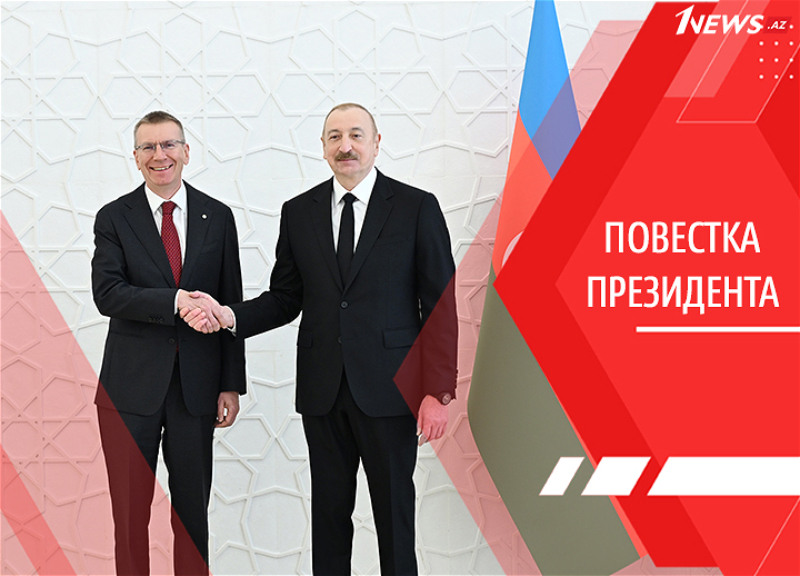
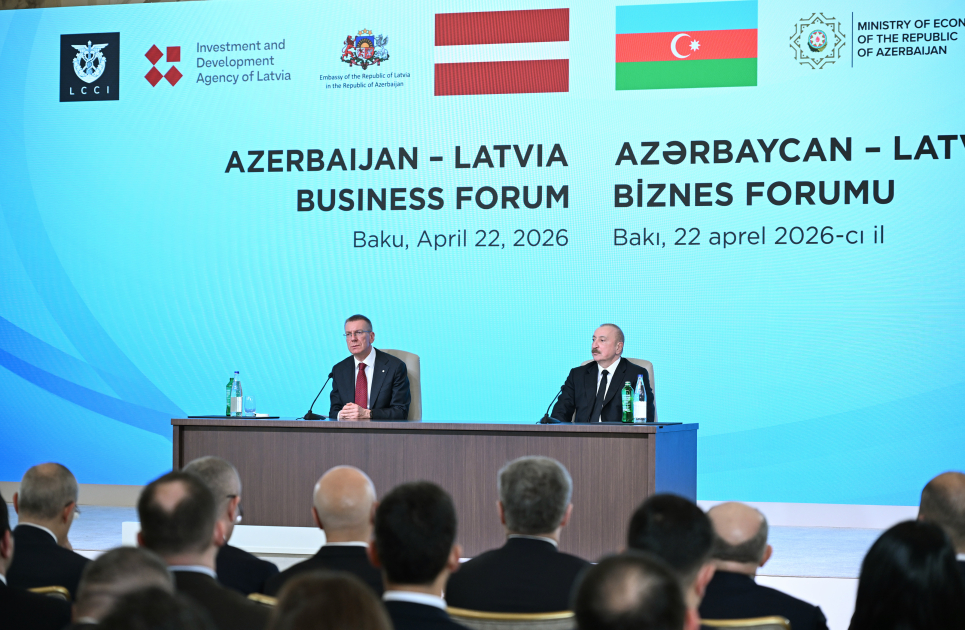
The negotiations between Azerbaijani President Ilham Aliyev and Latvian President Edgars Rinkēvičs in Baku, accompanied by the signing of a substantial package of documents and the holding of a bilateral business forum, marked a qualitatively new stage in the relations between the two countries.
They cemented the transformation of relations from merely friendly to concretely pragmatic, where the focus is now on forming a sustainable axis of cooperation, combining Azerbaijan's economic strength and energy resources with Latvia's technological expertise and European status.
Today, amidst global uncertainty, Baku's image as a reliable partner, stable investor, and a country with a favorable business climate is gaining increasing significance on the international stage.
An important signal in this context is Ilham Aliyev's statement on Azerbaijan's financial stability: "Financial stability is also crucial for any investor, whether local or foreign. And here we can note good achievements. Our financial system is stable. We have consistently, according to our strategic plan, reduced dependence on borrowing. Today, we resort to borrowing only for the implementation of projects requiring a high level of technological execution. And we borrow only from leading international organizations such as the World Bank, the European Bank for Reconstruction and Development, the Asian Development Bank, the Asian Infrastructure Investment Bank, and some others," said the head of state. "As for our plans, we continue to invest both in Azerbaijan and abroad, primarily in energy facilities in neighboring countries, as well as in the EU region, which is also supported by the European Commission. We have several formats of cooperation with the European Commission. One of them is energy cooperation."
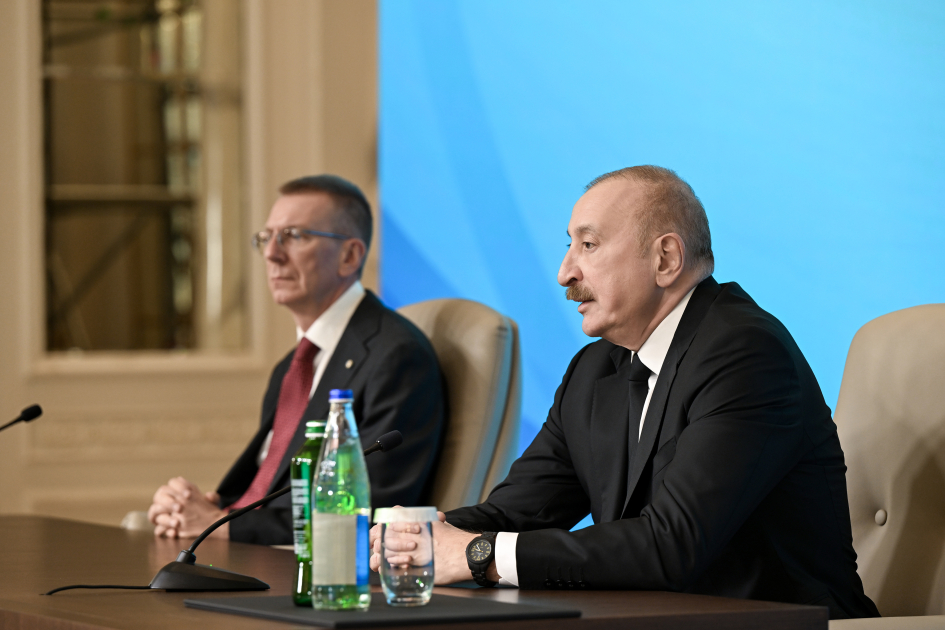
By now, Azerbaijan has clearly articulated its role in global energy—to become a reliable hub for Europe. Another strategy of Baku is to replace domestic gas consumption with renewable sources to redirect the freed-up gas for export. "As for our plans, we continue to invest both in Azerbaijan and abroad, primarily in energy facilities in neighboring countries, as well as in the EU region, which is also supported by the European Commission. We have several formats of cooperation with the European Commission. One of them is energy cooperation."
The European Commission, in its public statements, always refers to Azerbaijan as a reliable partner in the energy sector. And this cooperation continues to grow. We started with oil sales, now we export natural gas, electricity, petrochemical products, and plan to export green energy. Thus, one of the areas of investment in our portfolio is renewable energy sources, where there is enormous potential for solar and wind energy," emphasized Ilham Aliyev.
"We are already seeing significant interest from major players. Our plan, based not only on our aspirations but also on signed contracts—legally binding contracts—envisages achieving a capacity of 8 gigawatts of solar, wind, and hydropower by 2032. And this is absolutely realistic. We will largely replace natural gas used for electricity production with renewable energy sources, which will allow us to save several billion cubic meters of gas, which is so needed now on international markets. It has always been in demand over the past few years, and even more so in the last couple of months. We plan to increase production and, of course, boost exports. Today, ten member states of the European Union receive natural gas from Azerbaijan. In total, there are sixteen such countries. And by this indicator, we hold the first place in the world. Yes, we are not the largest producer and exporter; there are much larger players. But among countries exporting pipeline gas, in terms of the geography of supplies, we rank first. And for many European Union countries, Azerbaijani gas and oil constitute the largest part of their energy portfolio," he noted.
An important message regarding the development of economic interaction specifically with Latvia was the Azerbaijani leader's statement about "enormous potential in the sphere of doing business, seeking opportunities for mutual investments, creating joint productions, and much more": "We agreed that we will inform each other about plans, programs, and investment opportunities so that companies from both countries have access to information and can plan their activities. Investments in both countries, I think, will bring quite tangible results. Azerbaijani investors, both state and private, are ready for this type of activity, and I hope that the business forum will truly become a breakthrough in increasing the volume of our mutual trade turnover, which, unfortunately, remains somewhat modest."
For its part, Latvia is also focused on increasing mutual trade. "Our rather modest trade turnover needs to be increased. And I truly believe that there are many opportunities in the fields of defense industry, transport, and pharmaceuticals. We also discussed some very practical ways of exchanging experience. As you know, Latvia is a country of forests, and we discussed the plans that you, Mr. President, have outlined for increasing forest cover both as part of the modernization and restoration of Karabakh and in a broader sense. And here I believe that our advice, as well as our experience, can be useful," said Edgars Rinkēvičs.
Another key area for interaction could be transport connectivity. President Ilham Aliyev speaks about it as follows: "Here, geographical location is complemented by our investments and long-term policy to turn Azerbaijan, a landlocked country, into an international transport hub. This has already happened—transport corridors are functioning both from east to west and from north to south and vice versa. On the territory of Azerbaijan, all construction work has been completed. Now we are only engaged in investments in modernization, creating new physical infrastructure, digitization, including opportunities provided by artificial intelligence, to make transportation through Azerbaijan not only the safest in the current geopolitical situation but also competitive in terms of fees, transport tariffs, and time. And there is great scope for investments here because connectivity between East and West today is quite problematic without Azerbaijan. As I noted, we have already invested significant funds. In cooperation with friendly countries, with our immediate neighbors and the neighbors of our neighbors, we have managed to ensure a safe and reliable transport route for cargo. By the way, the volume of cargo passing through Azerbaijan is growing year by year."
An interesting aspect was the discussion of deep cooperation between the sides in the sphere of the military-industrial complex. Latvia, as a NATO member, and Azerbaijan, with its unique experience in applying modern technologies "on the ground," are seeking points of convergence in the production of high-tech weapons.
The President of Azerbaijan believes that the defense industry "will likely become a potential area of cooperation" with Latvia. "We found out that both countries are actively developing their potential in this area. Azerbaijan already exports products of its defense enterprises—both private and state-owned—to a large number of countries. So, I think we can also pay attention to issues related to joint production, cooperation, creating synergy, and much more," said the head of state.
In turn, the Latvian leader noted a huge interest in developing cooperation in this sphere: "We see that technologies in the defense industry are developing very rapidly. Artificial intelligence, various solutions are being invented literally in real time. I know that here in Azerbaijan, there is very good potential, but I can also note that Latvia has a rapidly developing defense industry. Drones, anti-drone systems—these are just the visible elements; our defense industry is working on other projects as well, and there is interest from our defense sector to find partners or deepen ties with partners both in Europe and beyond. And here, knowing that we have representatives from this industry, I hope that we will soon see tangible, real results."
The content of the negotiations demonstrated that Latvia sees Azerbaijan not just as a supplier of important resources but as a key regional partner with whom it is time to move from "diplomatic sympathies" to deep integration. For Azerbaijan, Latvia is another "gateway to Europe," a comprehensible investment market, and a time-tested friend whose voice in international organizations holds significant importance for Baku. Thus, Edgars Rinkēvičs confirmed that Riga is ready to convey Azerbaijan's position at the level of the EU and the UN.
"Latvia, as a non-permanent member of the UN Security Council, is ready to work and listen to all countries, including the voice and wisdom of Azerbaijan," he said. "Latvia, as a member of the European Union, OECD, and NATO, is fully ready to work and support cooperation between Azerbaijan and these organizations, as well as bilateral structures, and to use all our experience to develop economic relations. Moreover, we highly value the fact that Azerbaijan is a strategic partner not only for Latvia but also for many European countries, whether in the political or economic sphere, but—most importantly—in the energy sector. Mr. President has already spoken about what Azerbaijan is currently doing. And believe me, this is highly valued in Europe, as well as in our region. In these unstable times, having reliable partners is a very important advantage." In this context, the President of Latvia noted positive steps in cooperation between Azerbaijan and the European Union: "We discussed one specific issue, regarding which I want to emphasize our full support—this is the liberalization of the visa regime. Because we can discuss many things, and we reached a conclusion regarding connectivity, transport, direct flights, but it is important that Azerbaijani citizens have freer access to the European Union, and also that European citizens have access to your beautiful country, as there is enormous potential not only for business but also for interpersonal contacts and tourism. And, of course, we see Azerbaijan's role, especially in the Trans-Caspian Transport Corridor and the energy sector, as strategically important not only for Latvia but for the European Union as a whole."
A crucial political moment is Latvia's official support, including as a member of the EU and NATO, for the peace process between Azerbaijan and Armenia. "We very much hope for the speedy advancement of this process. We fully support it, as well as your position in this regard, and we very much hope to witness the conclusion of a treaty important for the security not only of the region but of the whole world," stated Edgars Rinkēvičs.
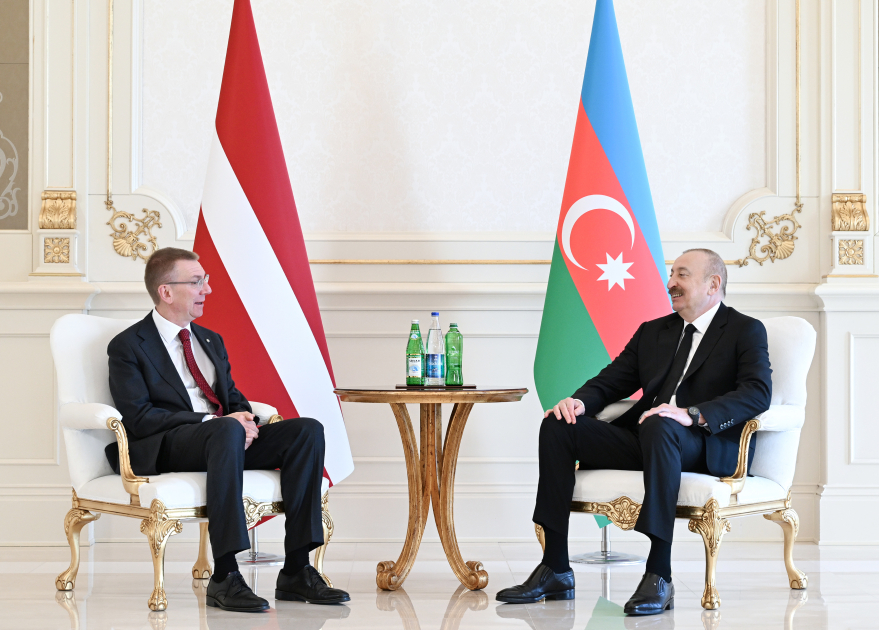
Thus, Baku and Riga, by implementing the Declaration on Strategic Partnership in practice, are taking relations beyond traditional diplomatic interaction, giving them the characteristics of systemic cooperation. It is no longer just about increasing trade turnover or expanding political dialogue but about forming a sustainable architecture of interaction in which energy, transport, investments, and technologies mutually reinforce each other.
Against the backdrop of global transformations, such a "link" from the Caspian to the Baltic reflects a broader trend—the search for reliable and predictable partners, as well as the formation of new economic and logistical connections between regions. Azerbaijan, strengthening its role as an energy and transport hub, and Latvia, acting as a conduit to the European space, objectively complement each other.
Provided the agreements reached are practically implemented, the current stage of interaction could become a starting point for the formation of a long-term strategic alliance capable of influencing not only the bilateral agenda but also the configuration of cooperation between East and West as a whole.