Russia demands Kyrgyzstan abandon term 'colony' in history textbooks
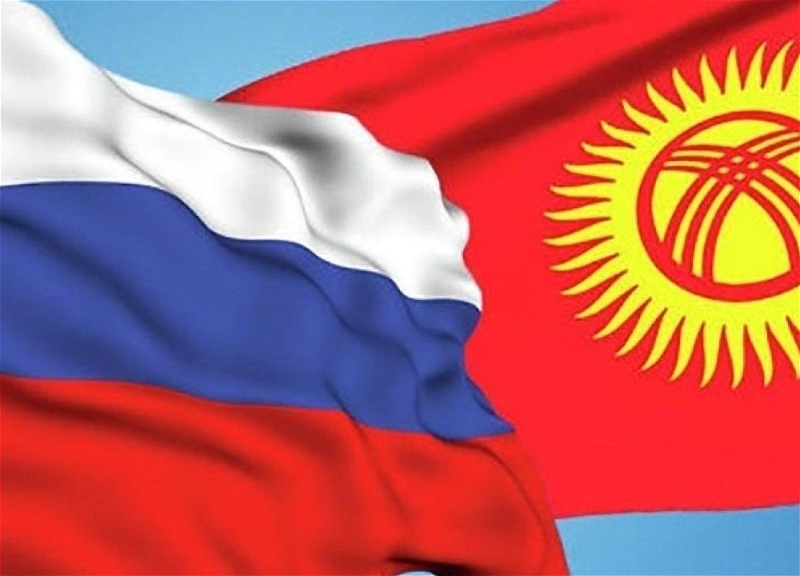
In Moscow, Kyrgyz history textbooks were criticized and the republic was called upon to abandon the term "colony," stating that it creates a "negative connotation" around Russia's role in the USSR.
The dispute flared up at a meeting of the expert advisory council held at the Russian Military Historical Society (RVIO), RBC reported.
Andrey Bykov, a researcher at the Institute of Oriental Studies of the Russian Academy of Sciences, stated that Kyrgyz textbooks for grades 8, 9, and 11 contain numerous "factual errors" and "much that never actually happened." Alikber Alikberov, director of the institute, noted that Russia continues to be viewed as a "prison of nations."
Special attention was given to differing assessments of the Soviet period. Russian representatives pointed out that domestic textbooks "reflect the greatness of the USSR," whereas Kyrgyz textbooks describe the infringement of national interests during the republic's time in the Union.
The use of the term "colonialism" in reference to Russia caused the greatest irritation among RAS members. Bykov called the choice a "tribute to fashion" and suggested finding a replacement. He noted that instead of "colonialism," the word "administration" could be used — then historical events "immediately change their color and hue" and the negative connotation disappears.
In response, Abylabek Asankanov, director of the Institute of History, Archaeology and Ethnology of the National Academy of Sciences of Kyrgyzstan, said the Russian side had set an "extremely difficult task." He recalled that colonialism implies the use of territory, natural resources, and the labor of dependent peoples in the absence of their full independence. "We find it very difficult to abandon this term," Asankanov stressed, and called for not "speculating on tragic events" or ideologizing them.
RVIO Chairman and Russian presidential aide Vladimir Medinsky has previously also opposed interpretations that portray Russia as an oppressor empire. He accused former Soviet republics of beginning to "invent enemies" and rewrite history. "What Soviet imperialism, when we brought enlightenment, new technologies, new social relations, the abolition of slavery?" Medinsky exclaimed.
This is not the first time Russia has sought to influence the content of textbooks in neighboring countries. In 2024, similar complaints arose regarding Armenia. The Foreign Ministry criticized a republican history textbook for a chapter on the Russo-Persian War of 1826–1828, in which the Treaty of Turkmenchay was described as "annexation." "To question the special role of the Russian Empire, and subsequently the USSR and Russia, in the formation of present-day Armenia means going against well-known facts," the Foreign Ministry emphasized at the time and called for preventing such a textbook from being introduced in schools.