The end of the legend: why PR will not save Vardanyan
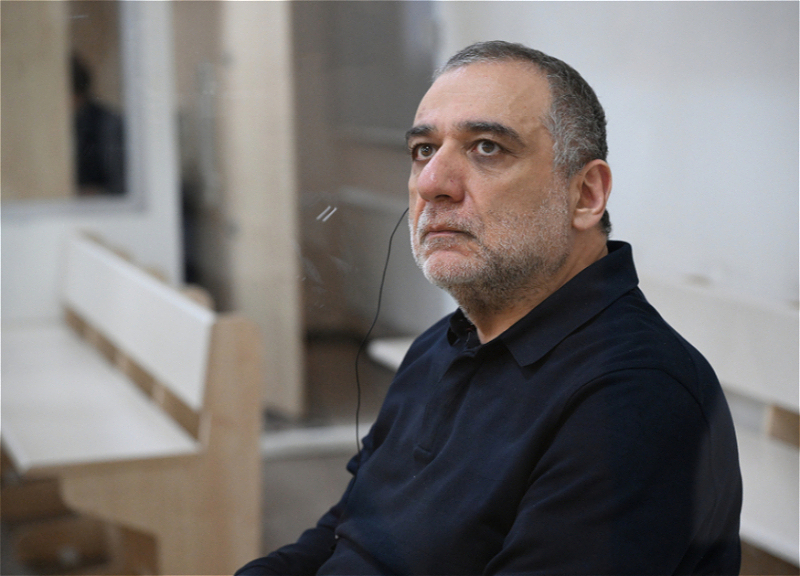
Attempts to whitewash the name of Ruben Vardanyan, one of the former leaders of the now-defunct Armenian separatist regime that existed on the territory of Azerbaijan’s Karabakh region, have reached a new media level.
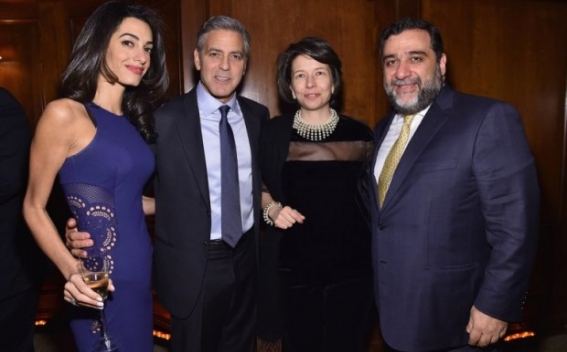
His wife, Veronica Zonabend, has launched a large-scale international campaign, trying to win over foreign human rights institutions and the leadership of Armenia. The goal of this strategy is obvious: to shift the focus from the criminal-legal plane to the political one, in order to present the defendant as a “victim” and force official Yerevan to intervene in the process. The calculation is that loud slogans in the foreign press and the information noise will prove stronger than legal arguments, allowing the figure facing serious charges to be turned into a “prisoner of conscience.” However, aggressive PR is running into the dry facts of the investigation. Behind the long-cultivated image of a generous philanthropist and businessman lies involvement in financing separatism, supplying illegal militants, and conducting dubious transactions in circumvention of international rules. From financial machinations to sponsoring terrorism 57-year-old Vardanyan is a former banker and oligarch. In an attempt to conceal his direct participation in large-scale fraudulent schemes, he renounced his Russian citizenship and embarked on political adventures. Having illegally entered Karabakh, he for some time headed the so-called “government” of the puppet regime, but was detained while trying to flee after the counter-terrorism measures in September 2023. As shown in detail in the documentary investigation by the AnewZ television channel, the true sources of Vardanyan’s wealth, which he also directed toward committing war crimes and financing terrorism on the territory of Azerbaijan, have now been fully exposed. For a long time, the figure of Ruben Vardanyan was perceived by the international community solely through the prism of his colossal financial success and large-scale humanitarian initiatives. In the 1990s and 2000s, he was effectively the face of Western banking in Russia, heading the investment company Troika Dialog, which he founded in January 1991. For American and European financial circles in London, Paris, and New York, Vardanyan long remained a “familiar” and civilized representative of the new Russian business. He skillfully built a reputation as someone who equally well understood both the specifics of the post-Soviet space and the rules of the Western corporate world. However, as today’s realities show, this facade was used for years only to mask destructive activities. This image was reinforced by high-level connections. Ruben Vardanyan was friends with Hollywood actor George Clooney, hosted the head of the United States Agency for International Development (USAID) Samantha Power in Armenia as part of events of the humanitarian prize Aurora he founded, and actively participated in the creation of the prestigious Skolkovo business school. His wife Veronica Zonabend acted as co-founder of family foundations, including the educational fund Scholae Mundi. Behind the scenes of this refined philanthropy, sponsorship of scholarships, support for the college in Dilijan, and restoration of churches in Armenia lay a cold strategic calculation. Vardanyan, like other Russian-Armenian oligarchs, for decades used charity, especially in the spheres of art and education, as an “entry ticket” into the Western establishment to build up the Kremlin’s soft power and wage a hybrid cultural war.
Secrets of the “Troika Laundry”: A four-billion financial scheme
The true nature of Troika Dialog’s activities was exposed thanks to large-scale leaks of banking data (about 1.3 million files) from the Lithuanian bank Ukio, which formed the basis of an investigation by the Organized Crime and Corruption Reporting Project (OCCRP). The financial network, dubbed the Troika Laundromat, functioned as a transnational brain center for laundering illegal proceeds. Through a complex system of interconnected offshore shell companies, over an eight-year period from 2004 until the closure of Ukio bank in 2012, approximately 4.6 billion U.S. dollars were withdrawn from Russia. The key mechanism for moving funds was the company Quantus Division, registered in the British Virgin Islands, whose accounts were held at the Lithuanian Ukio. Flows of dirty money were mixed with legal income in long chains of transactions, making it impossible to trace the real beneficiaries. It was in the bank statements of Quantus Division that investigators discovered the name of Ruben Vardanyan himself as the recipient of enormous sums. Moreover, the Troika Laundromat turned out to be directly linked to the case of lawyer Sergei Magnitsky, who exposed the theft of 230 million dollars from the Russian treasury and was tortured to death in a pretrial detention center in 2009. The stolen state funds were withdrawn from Russia through the same Troika channels, ending up in the pockets of the inner circle of the Russian elite, including cellist Sergei Roldugin, to whose account 11.6 million dollars were transferred in tranches under the guise of compensation. The money from the Troika Laundry served the interests of the Moscow and St. Petersburg elite, spent on the purchase of luxury real estate in Spain (where the prosecutor’s office later froze assets worth 25 million euros), the acquisition of superyachts Celestial Hope and Quinta Essentia, works of art, Rolls-Royce cars, and vineyards in France. At the same time, as nominal directors of the offshore companies, Vardanyan and his structures used the names of unsuspecting people—for example, an ordinary builder from Armenia, in whose name a 40-million-dollar loan was issued under forged signatures. The majority shareholder of Ukio bank, Vladimir Romanov, fled to Moscow in 2012 under the pretext of medical procedures with the direct assistance of corrupt officials from Lithuania’s Financial Crime Investigation Service. Vardanyan himself claimed that he did not know about the fraudulent origin of the money, but investigations proved that the funds for his personal expenses and business projects were drawn from the same financial reservoir into which stolen taxes flowed.
Logistics of war: From KamAZ to the wings of the Wagner PMC
With the start of the war in Ukraine, the West’s attitude toward oligarchs changed radically. Official sanctions were imposed on Ruben Vardanyan by Ukraine, since his structures were directly integrated into the functioning of the Russian military-industrial complex. Until 2024, Vardanyan owned a large stake in the KamAZ automobile holding, a key supplier to the Russian Defense Ministry that produces military trucks, armored vehicles, and platforms for artillery systems used on the Ukrainian front. An even more dangerous element of his activity was his many years of membership on the board of directors of the airline Volga-Dnepr. International investigations by the analytical center State Watch confirmed that since 2014 this cargo airline holding provided direct logistics services to the Russian armed forces. After 2022, Volga-Dnepr aircraft ensured the circumvention of international sanctions by delivering Western microelectronics, aviation spare parts, artillery shells, and components for explosives to Russia. The holding was involved in the transportation of personnel and weapons from Syria, illegal logistics operations of the Wagner PMC, as well as the delivery of Shahed strike drones from Iran. These facts moved Vardanyan from the category of ordinary shadow bankers to the status of a direct accomplice in war crimes, providing the material and technical base for the killing of peaceful Ukrainian citizens and the destruction of civilian infrastructure.
Mission in Karabakh: Disruption of the peace process and separatist bridgehead
Ruben Vardanyan’s renunciation of Russian citizenship in the summer of 2022 and his demonstrative move to Karabakh, where he took the illegal post of so-called “state minister” of the separatist regime, were dictated exclusively by a directive from the Kremlin. On the one hand, the demonstrative renunciation of the Russian passport was a legal trick designed to remove his assets from inevitable sanctions by the United States, the EU, and the United Kingdom. On the other hand, his dispatch to the region pursued the Kremlin’s tough geopolitical goals. Ruben Vardanyan arrived in the Azerbaijani territories temporarily under the control of Russian peacekeepers with the task of torpedoing the peace negotiations between Baku and Yerevan, as well as disrupting the emerging dialogue between Karabakh Armenians and the central authorities of Azerbaijan. Positioning himself as a “savior,” he launched aggressive propaganda in the world media (BBC, France 24, AFP), convincing Karabakh Armenians that they would never be part of Azerbaijan and declaring the impossibility of peaceful coexistence. His true goal was to create a pretext for the indefinite and long-term presence of the Russian army (peacekeeping contingent) in the region. Moreover, the Kremlin viewed Vardanyan as a “Trojan horse” and a direct competitor to Armenian Prime Minister Nikol Pashinyan. According to Moscow’s logic, Karabakh was to become a bridgehead from which Vardanyan would come to power in Yerevan, ousting the pro-Western government and returning Armenia to the path of complete and unconditional dependence on Russia. The oligarch’s stay in the region was marked by the resumption of predatory illegal exploitation of Azerbaijan’s natural resources. Under his leadership, a major gold-mining complex resumed operations, and the intensity of copper and molybdenum extraction at the Demirli and Gyzylbulag deposits increased. The raw materials were illegally transported by trucks to Armenia via the Lachin road, bringing huge criminal profits to the separatists and their Moscow curators. The environmental protest against this economic plunder ultimately led to the establishment of an official Azerbaijani border checkpoint in the Lachin corridor, which destroyed the channels of illegal transit of mines, weapons, and resources. Azerbaijan clearly stated to the international community that any practical communications with the Armenian community of Karabakh would become possible only after the criminal oligarch Vardanyan left the sovereign territory of Azerbaijan. Under this pressure, Vardanyan was dismissed, having held his “post” for just over three months.
Financial machinations under the guise of foundations and training of militants
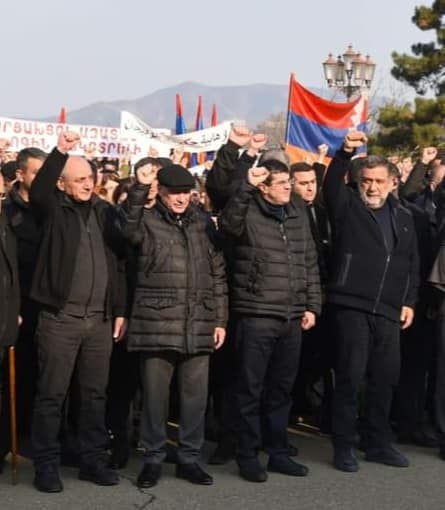
Local residents of Karabakh, whose testimonies are cited in the AnewZ film, openly call Vardanyan’s activities a deception. Promising to repair roads, build houses, and bring in millions in investments, the oligarch did not spend a single cent of his own on the needs of the population during his time in the region. Instead, during his stay in Karabakh, his structures created four charitable foundations, including the organization “We Are Our Mountains.” These foundations collected donations and contributions from ordinary residents under the pretext of purchasing food, mobile medical centers, or restoring the Akobavank monastery, but the millions collected ended up in the pockets of the top of the separatist regime and went toward militarization. The most weighty evidence of Vardanyan’s criminal activity was the data extracted by Azerbaijani investigators from his personal mobile phone and tablet after his detention. In a WhatsApp correspondence dated November 11, 2022, with full member of the Russian Engineering Academy Ernest Arustamyan, Vardanyan discussed in detail the purchase of helicopter-type unmanned aerial vehicles (UAVs) from the Czech company Leas and the construction of a factory for their production. These combat drones were intended to equip the illegal armed formations of the separatists. Vardanyan forwarded the text of this correspondence to Arman Jilavyan, executive director of the humanitarian organization Aurora, thereby involving “charitable” structures in the financing of terrorism. The investigation documented that Vardanyan personally compiled nominal lists of participants in illegal local self-defense units. On the basis of these lists, professional military personnel and mercenaries in the illegal formations were paid a monthly salary ranging from 700 to 2,000 U.S. dollars. On May 18, 2023, Vardanyan approved a written plan for the military training of civilians of various ages. The training was conducted in a closed camp under the leadership of the public movement “Front for Security and Development of Artsakh” that he created. In the camps, young people were taught to lay mines and assemble and disassemble automatic weapons. In the public sphere and on social networks, this activity was cynically disguised as children’s patriotic games “David Bek,” airsoft competitions, and survival courses in extreme conditions. Local residents confirm: Vardanyan “said during the day that everything would be fine, and at night he took young people to the camps and taught them to fight.”
The finale of the scam: Detention in Lachin and trial
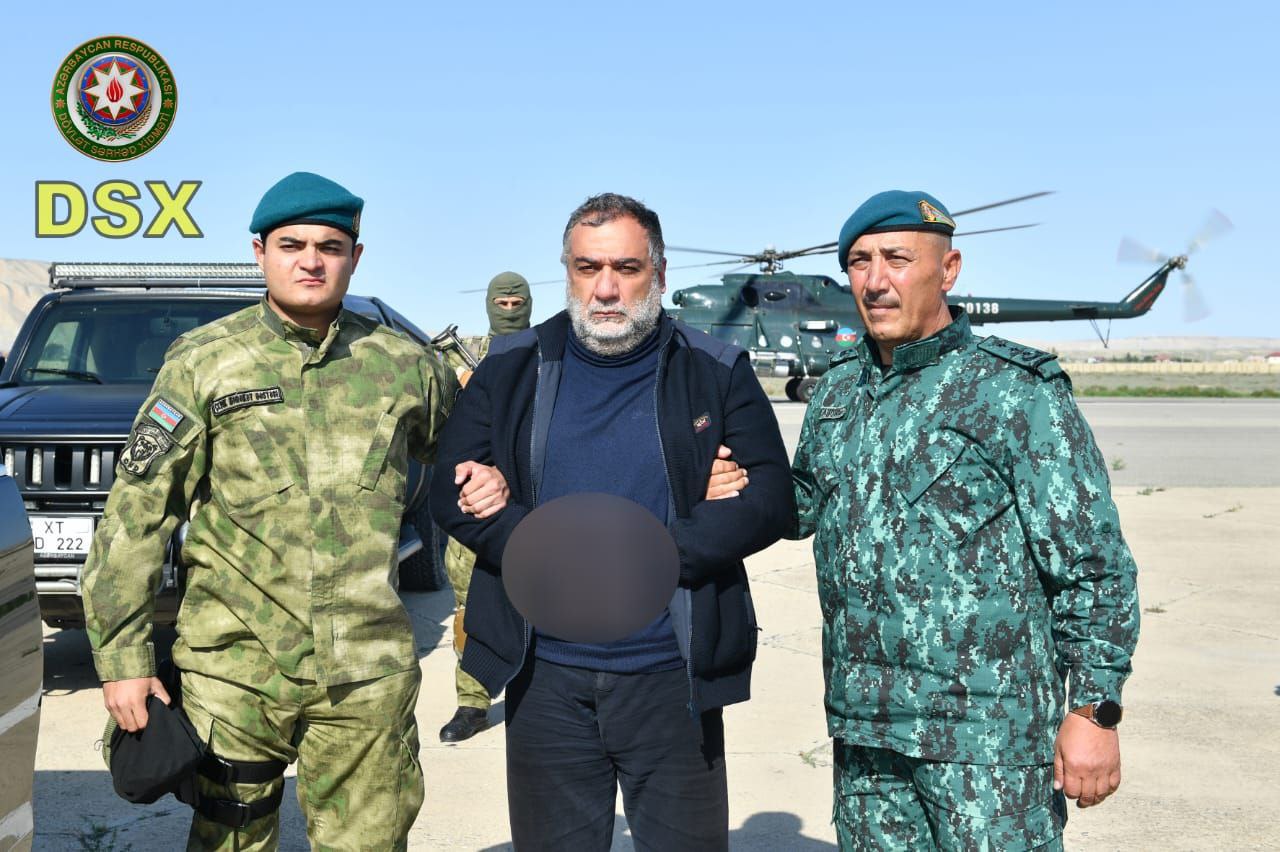
The illusion of omnipotence turned against Vardanyan on September 27, 2023. After the completion of Azerbaijan’s local counter-terrorism measures, the oligarch attempted to secretly leave the region disguised as a civilian, crossing the sovereign border of the Republic of Azerbaijan. He was detained by officers of the State Border Service at the “Lachin” border checkpoint and handed over to the Investigative Department of the State Security Service of Azerbaijan. He has been charged with a string of the most serious criminal articles: financing terrorism; creating and participating in the activities of armed formations or groups not provided for by law; illegal crossing of the state border of the Republic of Azerbaijan; illegal entrepreneurship as part of an organized criminal group, and others. At the open court hearing in the criminal case against Vardanyan, the accused was sentenced to 20 years of imprisonment. All charges are strictly criminal in nature and supported by an exhaustive evidence base. At the same time, the defendant was provided with all rights stipulated by the laws of Azerbaijan and international law: services of a professional lawyer and interpreter were ensured, the opportunity for regular calls to family was provided, and access to medical infrastructure, a gym, and the library of the pretrial detention center was granted.
Legal finale against media manipulations
Today’s media noise surrounding Ruben Vardanyan is not a struggle for justice, but a pragmatic and deeply cynical attempt by lobbyist groups to replace the criminal code with PR technologies. However, the era when billions laundered through transnational offshore networks could buy immunity and rewrite history has irrevocably passed. No philanthropic facades, loud names of Western defenders, or artificial promotion for prestigious awards can outweigh the dry facts of the investigation: the laundering of 4.6 billion dollars, logistical support for war crimes, and direct financing of separatism and terror on the sovereign land of Azerbaijan. The attempt to turn an oligarch and sponsor of illegal armed formations into a “prisoner of conscience” has completely failed, colliding with an ironclad evidence base and the irreversibility of the law. The text from his own phone, which revealed purchases of combat drones and plans for the militarization of the region, is the final touch to the portrait of a man who illegally went to Karabakh in the role of the Kremlin’s “Trojan horse,” ready to sacrifice the lives of ordinary people for geopolitical revanche and the salvation of personal foreign assets. The verdict of the Baku Military Court, which sentenced Vardanyan to 20 years of imprisonment, has drawn a line under a years-long criminal-political adventure. For the Azerbaijani state, which has restored its sovereignty and territorial integrity, external pressure under the cover of biased human rights slogans has no force. The natural finale of Ruben Vardanyan is not a political precedent, but the triumph of law and order. It is a clear and harsh lesson for any destructive forces: hybrid threats and attempts to encroach on the legitimate borders of the state will inevitably and harshly be broken against Baku’s unwavering position, which has proven in practice its ability to defend law and national security.