When old routes collapse: why the world is betting on Azerbaijan
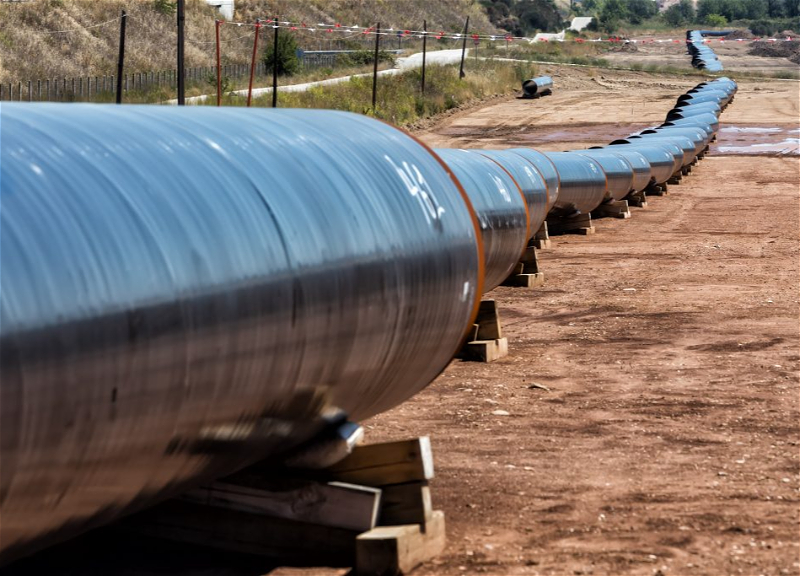
Modern geopolitical transformation in Europe and the situation in the Middle East are fundamentally redrawing the world map of energy flows.
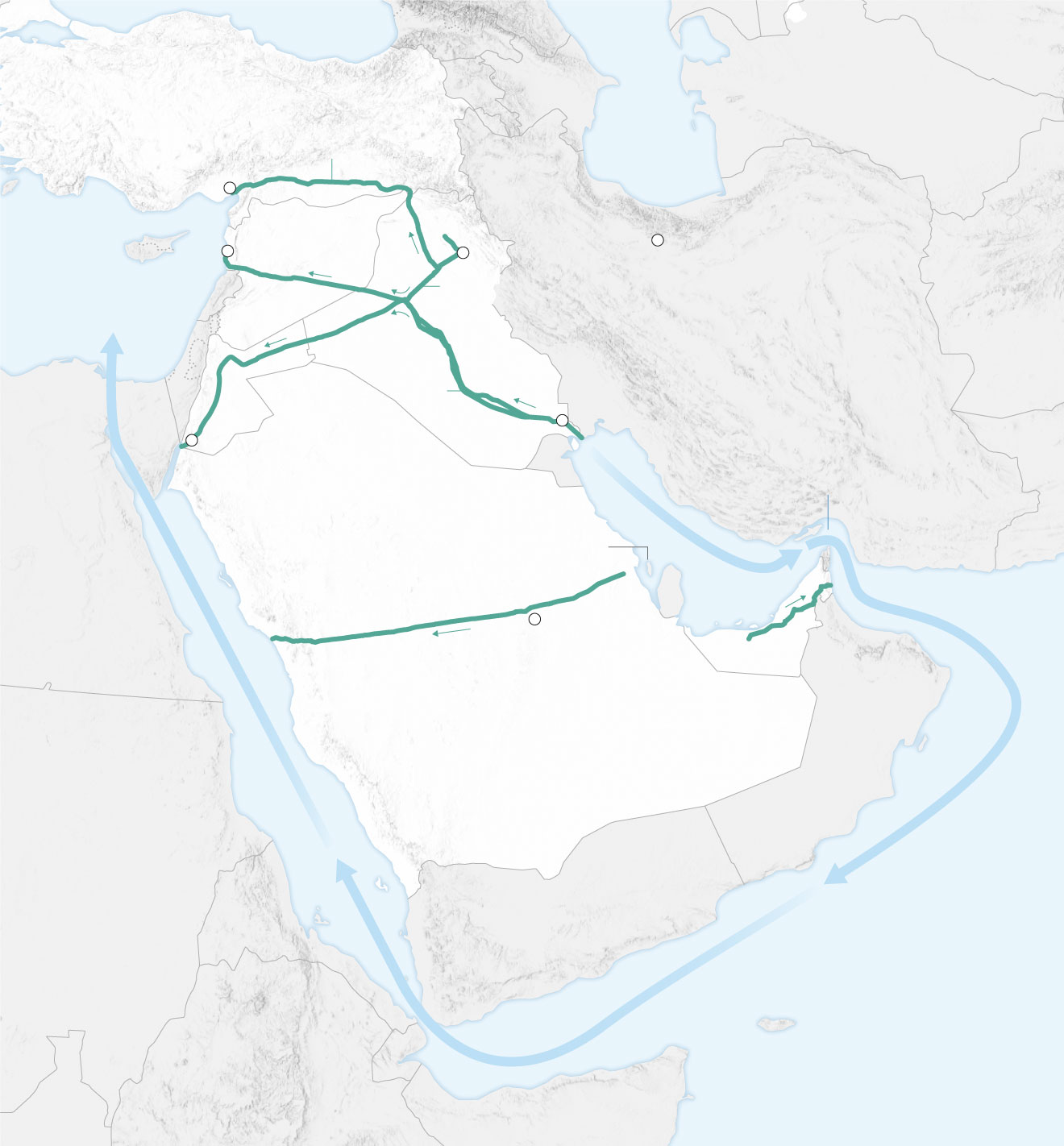
The energy crisis provoked by large-scale geopolitical upheavals around Russia and its attempts to use energy resources as an instrument of political pressure has clearly demonstrated to the European continent the critical vulnerability of the previous monopoly model. The situation was further complicated by a sharp escalation in the Middle East and military tensions between Iran and the United States, which threatened the stability of shipping through the Strait of Hormuz. This narrow sea corridor was the only logistics hub for exports from Iraq, Kuwait, Qatar and Bahrain, as well as the main transit route for products from Saudi Arabia and the United Arab Emirates. Before the start of hostilities, about 23 million barrels of energy resources passed through the Strait of Hormuz daily. However, attacks on civilian vessels throughout the Persian Gulf caused serious disruptions in supplies of Qatari liquefied gas and provoked price shocks in the spot market.
Today, throughout the Middle East, there is accelerated construction of port infrastructure, pipeline mains and logistics arteries, created with one clear goal: to establish transportation of hydrocarbons and commercial cargo by dry route bypassing the Strait of Hormuz. The United States of America has moved to direct assistance to these strategic projects. For the first time in a long time, key players in the region are directing colossal resources to creating an alternative reality where this sea artery will lose its status as an irreplaceable hub. In essence, the energy resource map of the Middle East is undergoing a large-scale reconfiguration aimed at completely neutralizing Tehran’s ability to use this narrow passage as an instrument of geopolitical blackmail.
In conditions where traditional supply systems are subjected to a double blow — disruptions due to sanctions-political wars in the north and risks of maritime logistics in the south — the search for fundamentally new, independent and protected routes acquires special value. The main bridge in this large-scale process is the South Caucasus, where Azerbaijan is confidently establishing itself as the key architect of the regional energy architecture. Occupying a unique geographical position at the junction of East and West, Baku not only supplies hydrocarbons but also lays the foundation for the diversification of all Eurasia, providing a logistics link between the Caspian region, the Middle East and the European continent.
For decades, the energy balance of the countries of Southeastern and Central Europe, as well as the largest states in the region, including Turkey, was in vulnerable dependence on monopoly supplies of pipeline gas from the north. In 2006, the share of Russian natural gas in Turkish imports reached an impressive 63.9%, which placed the country’s economic and industrial stability in direct dependence on a single source. However, a consistent and pragmatic diversification strategy, which began with the first steps to import Caspian gas, gradually began to change this proportion. If in 2007 the starting volumes of Azerbaijani gas on the Turkish market amounted to a modest 1.26 billion cubic meters, then by 2014 they had grown to 6.08 billion cubic meters. By 2024, this figure had already reached 11.48 billion cubic meters, accounting for about 22% of the total volume of blue fuel imported by Turkey. At the same time, the share of the northeastern monopolist steadily declined, falling from almost 60% two decades ago to 41.3% in 2024, and then to 37% at the beginning of 2025.
As noted in material from the Atlantic Council analytical center, European countries are step by step laying more sustainable energy routes: “European countries are slowly laying more sustainable energy routes. Turkey, long itself dependent on Russian gas, is at the forefront of this shift. It has embarked on an aggressive diversification policy, combining long-term Eurasian pipeline diplomacy — in particular with neighboring Azerbaijan — with an unprecedented, U.S.-supported expansion of liquefied natural gas (LNG) infrastructure. By changing the regional energy landscape, Ankara seeks to transform itself from a vulnerable consumer into a key gateway for Europe.”
The central element of the strategic shift was the signing in May of a 15-year agreement between Ankara and Baku for the supply of 33 billion cubic meters of natural gas until the mid-2040s. This decision is based on long-term investment projects, among which a special place is occupied by the second phase of development of the Azerbaijani Absheron field. The project involves a powerful international consortium uniting the State Oil Company of the Azerbaijan Republic (SOCAR), the Turkish state corporation BOTAŞ, the Abu Dhabi National Oil Company (ADNOC) and the French TotalEnergies. A significant detail of this deal lies in its synergistic effect: one half of the produced volumes is intended to cover the growing needs of the Turkish market, while the second part frees up additional potential for exports to European states experiencing an acute structural shortage of raw materials.
The success of Azerbaijani energy diplomacy is due to a combination of price competitiveness and high reliability of supplies. In its article, the Atlantic Council quotes former Turkish Minister of Energy and Natural Resources Ali Rıza Alaboyun, who directly points out that “natural gas from Azerbaijan offers Turkey a combination of competitive prices and reliability of supplies.” The Southern Gas Corridor pipeline system, which includes the TANAP and TAP arteries, has demonstrated the ability to pump resources uninterruptedly even during periods of global upheavals. Thus, Baku has proven its status as a sovereign and predictable partner whose policy is free from geopolitical blackmail or short-term market conditions.
In parallel with the development of Eurasian pipeline networks, an equally large-scale infrastructure revolution is taking place in the field of liquefied natural gas (LNG). Turkey’s regasification capacity has made an impressive leap, increasing from 32 million cubic meters per day in 2016 to 161 million cubic meters per day in 2025. With five modern terminals at its disposal — two onshore complexes and three floating storage and regasification units (FSRU) — the region is capable of receiving up to 58 billion cubic meters of LNG annually. This exceeds the total volume of the country’s national consumption. The influx of American LNG, which grew from a negligible 0.52% in 2016 to almost 16% (9.19 billion cubic meters) in 2025, as well as the entry into force of long-term contracts with Mercuria, Cheniere Energy and ExxonMobil, create a solid framework of flexibility. However, it is Azerbaijani pipeline gas that provides the necessary basic stability of the energy system, protected from maritime risks, logistics bottlenecks such as the Strait of Hormuz and sharp price spikes in spot markets.
As CNN emphasizes in the article, the fundamental importance of the current transformation of energy routes is confirmed by the key historical precedent of the region — the creation of the Baku-Tbilisi-Ceyhan (BTC) pipeline:
“There is an important historical precedent here. After the collapse of the Soviet Union, the United States proposed an ambitious pipeline project crossing Azerbaijan, Georgia and Turkey to the Mediterranean Sea. Known as the Baku-Tbilisi-Ceyhan (BTC) project, it required billions of dollars in investment and years of continuous American diplomacy under successive administrations. At first, many experts dismissed BTC as too ambitious (its length exceeds 1,000 miles), too expensive and politically impossible. History proved otherwise.
After completion of construction in 2006, BTC permanently reduced dependence on Russian-controlled export routes and demonstrated that energy infrastructure can change world politics no less than military alliances. In contrast, Europe made the opposite strategic choice, remaining heavily dependent on Russian energy resources and pipelines. Moscow later turned this dependence into a lever of pressure — a lesson that today’s Persian Gulf states appear determined not to repeat when it comes to Iran.”
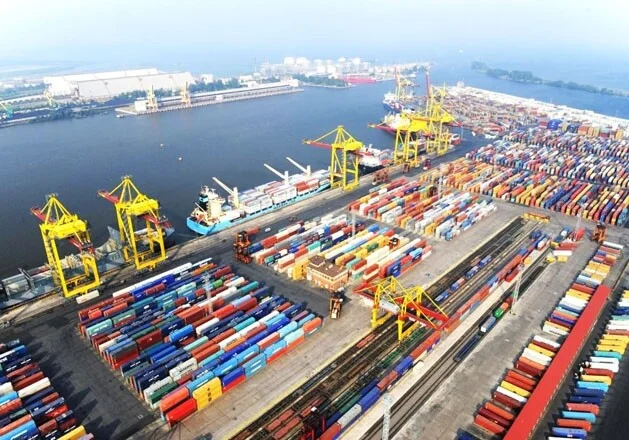
In this context, the importance of Azerbaijan goes far beyond the gas sector alone. The country has become the heart of the Middle Corridor — the Trans-Caspian International Transport Route, connecting the production and resource giants of Central Asia with European markets through the Caspian Sea, the South Caucasus and Turkey. As emphasized in the CNN material, the large-scale redrawing of energy routes relies on the implementation of strategic infrastructure initiatives in the region: “New pipeline and logistics projects are radically redrawing the energy map, creating fundamentally new routes for delivering resources bypassing traditional and unstable routes.” Against the backdrop of geopolitical instability in the Middle East and the isolation of northern transit routes, the Middle Corridor is turning from an alternative direction into an irreplaceable artery of world trade.
The route through the Caspian and the South Caucasus provides land and sea connectivity, allowing the movement of not only natural gas and oil, but also critically important raw materials, container cargo and electricity. The inclusion of Central Asia in a single logistics chain with Azerbaijan creates the potential for the transit of Turkmen and Kazakh gas to the West, which further strengthens Europe’s energy security. Azerbaijani infrastructure, including the Baku International Sea Trade Port and the Baku-Tbilisi-Kars railway, serves as a reliable foundation for the continuous flow of goods and energy resources.
The concept of turning the region into a major energy and trade hub requires a high degree of diversification, the development of financial infrastructure and deep attraction of private capital. In conditions where the European Union declares its intention to completely abandon imports of certain types of fossil fuels from the northern direction by the end of September 2027, the negotiating positions and strategic weight of Baku increase many times over. European countries seeking to protect their industrial capacities view Caspian resources and the Middle Corridor as a guarantee against crisis shocks.
Today, the Trans-Caspian route has finally taken shape as a single logistics framework of Eurasia. This transit bridge not only directly connects the production capacities of China, the resources of the Central Asian region, the Caspian, the South Caucasus, Turkey and European markets, but is also rapidly acquiring a full-fledged ecosystem. Along the entire artery, hubs, port facilities, railway junctions, industrial parks and unified digital platforms for end-to-end cargo management are developing synchronously.
In the current realities, the Middle Corridor has established itself as the most stable and predictable trade route. Its main advantage lies not only in favorable geography, but also in unprecedented international consolidation: all participating states show a vital interest in the project and direct large-scale investments in continuously expanding its throughput capacity.
The sustainability of the Azerbaijani model also lies in the fact that Baku is actively developing a “green” energy agenda. Projects to transmit renewable energy generated on the Caspian shelf via the bottom of the Black Sea to Europe organically complement traditional gas exports. This demonstrates a comprehensive approach to the concept of energy security, where environmental transformation is combined with practical reliability.
The development of infrastructure, diversification of routes and strengthening of alliances across the Middle Corridor deprive individual powers of the opportunity to use a monopoly position as a political lever. Azerbaijan, promptly responding to global challenges and skillfully building a multi-vector partnership with the United States, European states, Turkey and neighbors in the Caspian region, has become the main link in this new geoeconomic reality, guaranteeing stability and security for decades to come.