The Middle Corridor against maritime blackmail in Hormuz and Bab el-Mandeb
The architecture of world trade, shaped over many, many years under the banner of free thinking and the security of ocean routes, is undergoing a profound transformational crisis.
The fundamental principle of unimpeded passage through international straits, enshrined in the 1982 UN Convention on the Law of the Sea, is de facto giving way to an era of geopolitical racketeering and selective access. Events surrounding the key maritime chokepoints of the Middle East demonstratively prove that control over the narrow nodes of global logistics is becoming the most effective lever of non-kinetic pressure on the world's developed economies.
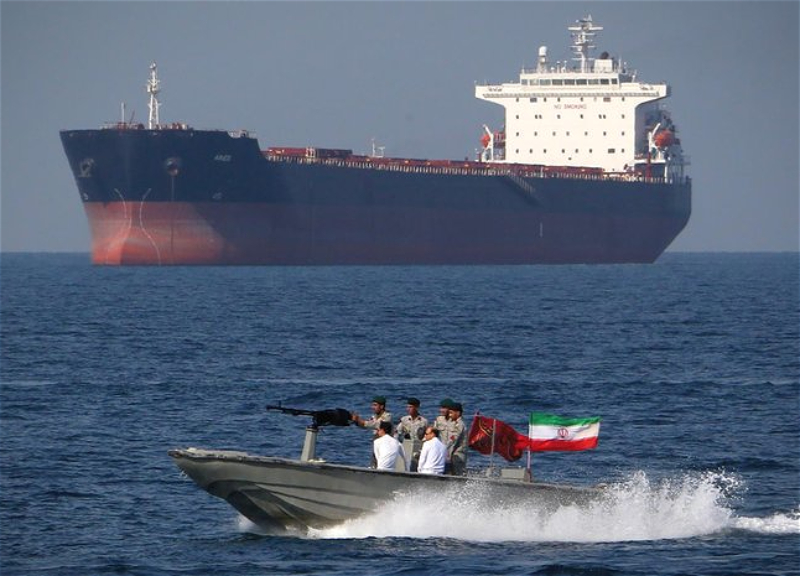
After Iran was subjected to a U.S.-Israeli attack, Tehran effectively set about establishing its own rules of navigation in the Strait of Hormuz, turning the planet's key oil artery into a zone of harsh military and legal control. Following this, the actions of Iranian proxies were synchronized as well: the Yemeni movement Ansar Allah (the Houthis) announced a naval blockade of Saudi Arabia, and a week later began considering the introduction of official fees for commercial vessels operating in the southern part of the Red Sea. As regional sources briefed by Tehran told Reuters, the concept of charging for passage through the Bab el-Mandeb Strait was discussed in substance during a visit by a Houthi delegation to Iran for the funeral ceremony of Supreme Leader Ayatollah Ali Khamenei.
The intent behind this step is distinctly strategic — to normalize the very precedent of levying duties for transit along international waterways and at the same time to increase systemic pressure on the United States and its allies. Moreover, the system being created is designed from the outset as discriminatory, since Chinese vessels are exempt from such fees, which is backed by an agreement between the parties. Such a selective model turns key maritime straits from common trade routes into a lever of pressure, into a kind of hybrid weapon directed against specific economic blocs.
The cumulative effect of this "arc of instability" poses a particular danger. Between 20 and 21 million barrels of oil and petroleum products pass through the Strait of Hormuz every day, which amounts to approximately 20% of global daily consumption of liquid hydrocarbons, as well as more than a third of the liquefied natural gas exported by sea, with a key role played by supplies from Qatar. In turn, the Bab el-Mandeb Strait serves as the southern gateway to the Red Sea and the Suez Canal, providing transit for roughly 12–15% of all global trade, including about 12% of seaborne oil shipments and 8% of the global volume of LNG.
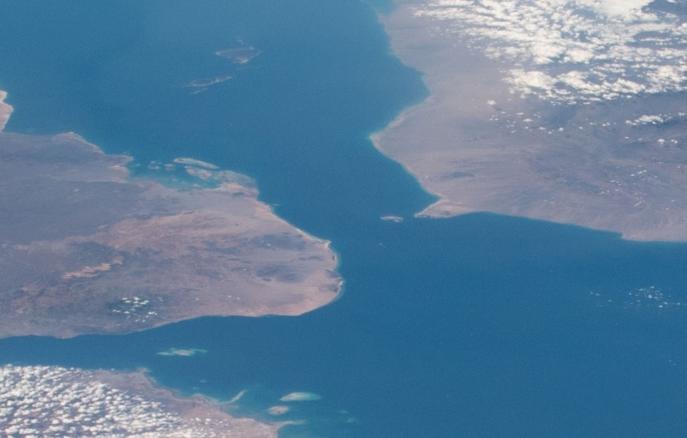
The simultaneous escalation of risks in these two maritime areas creates the threat of a complete paralysis of the traditional matrix of maritime supplies. While escalation in the Strait of Hormuz leads to an instantaneous price shock on world hydrocarbon markets, the transformation of Bab el-Mandeb into a zone of risky navigation strikes directly at the supply chains of finished products, components, and equipment between Asia and Europe. Initiatives to introduce unsanctioned commercial fees under the pretext of "ensuring security" destroy the legal foundation of globalization. The right of passage through international waters is openly converted into an instrument of political loyalty and financial payoff.
For world shipping and European markets in particular, these processes have already turned into harsh economic realities. Forced to reroute container ships and tankers around all of Africa — via the Cape of Good Hope — the world fleet faces a lengthening of the route by 3,500–4,000 nautical miles, which adds from 10 to 14 days to the traditional travel time. This entails not only million-dollar overspending on bunker fuel for each voyage, but also a provoked shortage of vessels and container equipment in key Asian ports, as well as a spike in insurance premiums for war risks. An attempt to offset these costs leads to the unwinding of an inflationary spiral in importing countries, inevitably striking a blow to the competitiveness of European industry.
Under these circumstances, a fundamental reassessment of the theory of global logistics is taking place. The era when freight cost alone determined the choice of transport route is finally becoming a thing of the past. Coming to the fore is the parameter of strategic predictability and physical security. And it is precisely here that the attention of the main global actors is shifting toward the land-multimodal arteries of the Eurasian continent, among which the Trans-Caspian International Transport Route, known as the Middle Corridor, is beginning to play a key role.
The Middle Corridor, linking China, the countries of Central Asia, Azerbaijan, Georgia, and Turkey with subsequent access to Europe, is objectively turning from a regional logistics project into a global insurance alternative. Its main advantage lies in its geographical isolation from the hot spots of the Middle East and the sanctioned territories of the Northern route. Under conditions in which southern maritime routes are becoming a space of military pressure and militarized control, the landmass of Eurasia and inland waters represent a zone of political stability.
However, a deep analytical approach requires an objective assessment not only of the potential but also of the real limitations of this alternative. The main challenge for the Middle Corridor remains its throughput capacity compared with the gigantic volumes of the maritime fleet. While a single modern ultra-large class container ship with a capacity of 20,000 TEU is capable of carrying at once the equivalent of hundreds of freight trains, the aggregate throughput volume of the Middle Corridor at this stage of modernization is measured in millions of tons of cargo, not tens of millions of TEU. According to the results of past years, the volume of cargo transportation along the TITR demonstrates steady growth, reaching figures of more than 3 million tons per year, with a target benchmark of expanding capacity to 10 million tons in the near term.
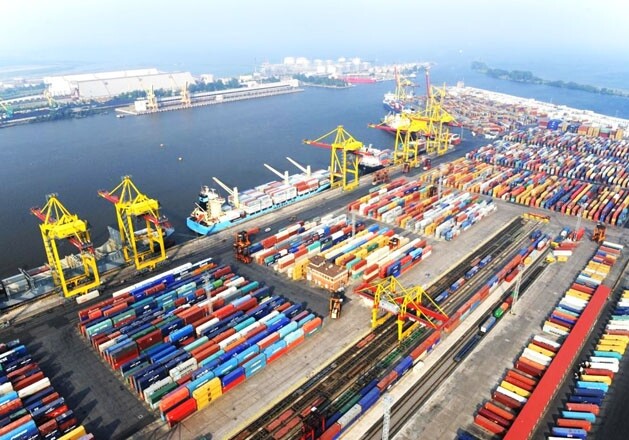
Nevertheless, the difference in volumes is offset by speed and geopolitical factors. Delivery times for cargo from China to European ports along the Middle Corridor are reduced to 12–15 days, which is 2.5–3 times faster than the roundabout sea route around Africa. The expansion of infrastructure — the modernization of the Baku–Tbilisi–Kars railway line with an increase in its throughput capacity from 1 to 5 million tons, the commissioning of new terminals at the Baku International Sea Trade Port in Alat, and the modernization of port capacities in Aktau and Kuryk — vividly demonstrates that transit states are responding promptly to global demand.
Paradoxically, the crisis of the maritime straits is also changing the very nature of investment in Eurasian infrastructure. The concept of a "bottleneck," long applied to the narrow points of the Middle Corridor (complex logistics of transshipment on the Caspian, differences in railway gauges, and customs bureaucracy), today is ceasing to be an isolated problem of the regions. The European Union, China, and the states of Central Asia and the Caucasus view overcoming these barriers as a task of national security. The injection of capital into the digitalization of a single transit document, the unification of tariffs, and the expansion of the merchant fleet in the Caspian Sea is acquiring paramount importance.
The Caspian basin and Azerbaijan's infrastructure network in this new geopolitical configuration turn out to be the load-bearing framework of all Eurasian connectivity. The balanced foreign policy of the region's countries, based on direct bilateral agreements and sovereign control over the transport network, creates a contrast with the instability of international maritime communications.
Ultimately, the escalation of pressure on the Strait of Hormuz and the Bab el-Mandeb Strait is forcing the completion of the formation of a new logistics map of the world. Maritime routes will undoubtedly retain their role as the main channel for super-massive raw material flows, but their vulnerability to political blackmail and hybrid threats has forever deprived them of a monopoly on reliability. The Middle Corridor is outgrowing the status of a simple alternative and becoming a fundamental element of the architecture of Eurasia's economic security, cementing the shift of the global transit center of gravity toward sovereign land-sea systems.