New Architecture of Cooperation: Analyzing the Azerbaijan-US Strategic Partnership Charter
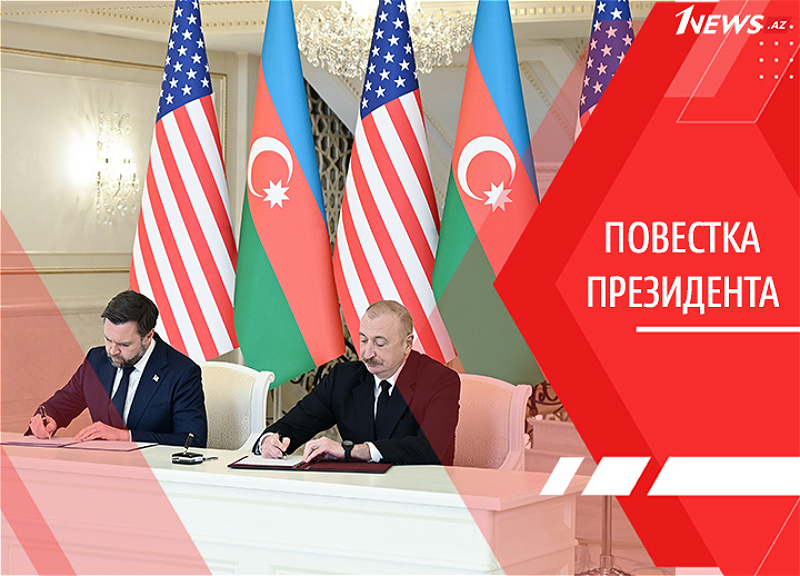
Baku and Washington have officially formalized the elevation of bilateral relations to the level of strategic partnership.
This new format of interaction marks a qualitatively different stage in the cooperation between the two countries and is seen as both a symbolic and practical step toward enhancing regional stability, security, and long-term mutually beneficial collaboration.
The "Charter on Strategic Partnership between the Government of the Republic of Azerbaijan and the Government of the United States of America," signed on February 10 in Baku by President of Azerbaijan Ilham Aliyev and U.S. Vice President JD Vance, is a logical continuation of the historic meeting in Washington. During that meeting, the leaders of the two countries signed an intergovernmental Memorandum on the establishment of a Strategic Working Group to prepare this document.
This Charter holds particular significance in terms of creating an institutional foundation for partnership between the two nations and reflects the high level of mutual trust, laying a solid groundwork for the further development of U.S.-Azerbaijan relations.
For a more comprehensive and in-depth understanding of the document, which consists of four sections, we will analyze its key provisions point by point, including from the perspective of Azerbaijan’s principled approaches and international law.
"The Government of the Republic of Azerbaijan and the Government of the United States of America:
- Reaffirm their support for each other’s sovereignty, independence, territorial integrity, and inviolability of borders as the foundation of their bilateral relations;
- Proceed from the Memorandum of Understanding between the Government of the Republic of Azerbaijan and the Government of the United States of America on the establishment of a Working Group to develop the Charter on Strategic Partnership between the Republic of Azerbaijan and the United States of America, signed on August 8, 2025, in Washington, D.C.;
- Affirm the importance of their strategic partnership in areas of mutual interest and mutual benefit, including regional connectivity, economic investments, and security cooperation;
- Emphasize their shared commitment to strengthening relations on issues of mutual interest, including diplomatic, economic, energy, technological, and security spheres;
- Acknowledge the vital importance of engaging not only governmental structures but also the private sectors of both countries in planning and implementing the strategic partnership and expanded cooperation."
As evident, the Charter begins with a provision of paramount importance—the governments of Azerbaijan and the United States reaffirm their support for each other’s sovereignty, independence, territorial integrity, and inviolability of borders as the foundation of their bilateral relations. This fundamental provision sets the political and legal framework for the entire document, underscoring the parties’ commitment to the principles of international law, mutual respect, and equality.
Further, the document addresses the formation of a comprehensive and sustainable architecture of cooperation, covering key elements of the bilateral and regional agenda. In effect, this establishes a systemic model of partnership designed for the long term and oriented toward joint responses to strategic challenges.
Regional Connectivity, Including in Energy, Trade, and Transit
Having established these core principles, the parties move to the practical implementation of the strategic partnership through targeted interaction in specific areas. The first section of the Charter is of exceptional importance in terms of giving the strategic partnership a practical dimension through the implementation of infrastructure and logistics projects.
"The Republic of Azerbaijan and the United States of America intend to work together to promote regional connectivity with a focus on the Trans-Caspian Transport Corridor (Middle Corridor) through cooperation in the development of land, sea, and air transport infrastructure; energy and information connectivity; facilitation of trade and transit; customs control and border crossing; international multimodal logistics, and other related areas. They recognize the significance of the 'Trump Route for International Peace and Prosperity' (TRIPP) as a multimodal connectivity project that will ensure seamless communication between the main part of the Republic of Azerbaijan and its Nakhchivan Autonomous Republic, with mutual benefits for international and domestic connectivity of the involved countries, as well as unlocking the region’s potential for international trade and transit in accordance with the Washington Declaration of the Peace Summit on August 8, 2025.
The Republic of Azerbaijan and the United States of America intend to work on improving the business climate, trade, and investment flows to promote bilateral economic relations, building on the productive history of Azerbaijani-American relations, which has resulted in the implementation of projects such as the 'Contract of the Century' and the 'Southern Gas Corridor,' benefiting both sides and the region as a whole through close cooperation. To this end:
- The Republic of Azerbaijan and the United States of America intend to expand cooperation to stimulate economic growth and regional connectivity with a focus on developing the Middle Corridor in the energy, transport, and digital infrastructure sectors, including through the development of TRIPP and other projects;
- Recognizing the importance of regional connectivity, the Republic of Azerbaijan and the United States of America intend to explore opportunities to mobilize public and private sector investments in the energy and transport sectors, as well as in the development of digital infrastructure;
- Recognizing the strategic importance of the Republic of Azerbaijan as a reliable partner in energy security, the Republic of Azerbaijan and the United States of America intend to expand energy cooperation, including in the oil, gas, and electricity sectors on a bilateral basis and through partnerships with third countries to implement joint projects, such as interconnector projects, and diversify supply routes;
- The Republic of Azerbaijan and the United States of America intend to deepen cooperation in the field of civil nuclear energy;
- The Republic of Azerbaijan and the United States of America express their intention to cooperate in facilitating the transit of critical minerals through the Middle Corridor to global markets."
Thus, Azerbaijan and the United States effectively formalize their intention to jointly participate in shaping a new geo-economic configuration of the region. This gains particular significance amid the transformation of global energy and transport routes, changes in Eurasia’s logistical architecture, and increasing competition for control over transit flows. The focus is on creating conditions for faster and cheaper movement of transit flows across the region, enhancing the economic resilience and competitiveness of Eurasia. Attracting investments, including private capital, indicates that cooperation is built not only on state initiatives but also on real market mechanisms, increasing the likelihood of successful project implementation.
Notably, this section particularly emphasizes the importance of the 'Trump Route' (TRIPP) as a multimodal project ensuring seamless communication between the main part of Azerbaijan and Nakhchivan, as well as unlocking the region’s international trade and transit potential, including within the framework of the Trans-Caspian Transport Corridor (Middle Corridor). This is critically important in terms of bilateral confirmation of agreements reached at the historic Washington Peace Summit.
Special significance is also given to the focus on civil nuclear energy and the transit of rare minerals, indicating an expansion of interaction in strategically important and promising sectors that play a key role in modern energy and technological supply chains.
Important areas of cooperation include artificial intelligence and the space industry, investments in digital infrastructure, including the development of data centers in our country, support for joint research and development, as well as innovative platforms in cybersecurity and AI.
In other words, this section demonstrates that the partnership between Azerbaijan and the United States goes beyond purely political dialogue and transforms into a practical platform for large-scale economic and infrastructure projects.
Cooperation in the Field of Security
While the initial sections of the Charter emphasize the economic and infrastructural dimensions of the partnership, the security section establishes its political-strategic foundation:
"Peace in the South Caucasus serves the common interests of the Republic of Azerbaijan and the United States of America, and security cooperation between the Republic of Azerbaijan and the United States of America benefits both countries, as well as international and regional peace and security. The United States deeply values Azerbaijan’s contribution to international peacekeeping efforts, within which Azerbaijani forces have served alongside the United States and coalition partners to strengthen international and regional security.
- The Republic of Azerbaijan and the United States of America intend to expand the scope of their defense cooperation and interaction in the field of security, including the sale of defense products;
- The Republic of Azerbaijan and the United States of America, considering their shared commitment to combating the threat of terrorism, intend to expand existing cooperation in counter-terrorism;
- The Republic of Azerbaijan and the United States of America intend to cooperate to enhance capabilities in cybersecurity and the protection of critical infrastructure;
- Taking into account the serious challenges faced by the Republic of Azerbaijan due to contamination by landmines and other explosive ordnance, the Republic of Azerbaijan and the United States of America intend to cooperate in building capacity for humanitarian demining through financial support and technology transfer."
Analyzing this section, it can be noted that amid growing global instability and the intensification of transnational threats, security cooperation between Azerbaijan and the United States acquires strategic importance. It serves as a key mechanism for maintaining regional stability, deterring potential escalations, and strengthening overall security in the South Caucasus, where the interests of various external actors intersect.
Particular importance in the Charter is given to issues directly affecting security. The document highlights the problem of mine threats faced by Azerbaijan and expresses the intention to jointly develop capacity for humanitarian demining through financial support and technology transfer. This holds critical practical value, as incidents of death and severe injury due to explosive remnants of war continue in our country. Thus, cooperation in this area can not only enhance overall security but also directly save lives and contribute to the restoration of peaceful life in liberated territories.
Institutional Framework and Implementation
Having established strategic priorities in infrastructure, economy, technology, and security, the parties move to an equally important element—the mechanism for their practical implementation. This section reflects the understanding that long-term strategic partnership is impossible without a clear institutional framework that transforms declarations into concrete projects and results:
"Recognizing the shared commitment to fulfilling the obligations arising from this Charter, the Republic of Azerbaijan and the United States of America may, within the existing framework of strategic partnership, establish working groups on areas of cooperation, including economy and trade, energy, connectivity, AI and digital development, as well as security and defense.
Within three months from the signing of this Charter, the relevant working groups intend to identify a list of projects and roadmaps for their implementation. The Republic of Azerbaijan and the United States of America intend to hold regular meetings at least once a year under this Charter and may establish other dialogue platforms as needed and by mutual consent to implement their partnership."
As evident, the document provides for the creation of mechanisms for regular dialogue and platforms, including meetings in economic and trade spheres, to implement the strategic partnership between the two countries. The establishment of working groups on key areas and a set timeline for developing a list of projects and roadmaps demonstrate a pragmatic approach—meaning the Charter is aimed at the prompt implementation of joint initiatives. This confirms that the partnership will develop dynamically, adapting to new challenges and opportunities.
Overall, this section can be considered the "mechanical heart" of the document—it establishes a systemic mechanism for managing cooperation and ensures its sustainability in the long term.
Conclusion
In general, the Charter on Strategic Partnership between Azerbaijan and the United States represents a historic document that not only symbolizes but also institutionally formalizes a new stage in bilateral relations. It reflects a transition from situational cooperation to a systemic, long-term, and mutually beneficial architecture of interaction, based on both declarations and practical projects, implementation mechanisms, and sustainable dialogue channels.
The document demonstrates the determination of both sides to build a partnership grounded in mutual interests and common goals, including strengthening regional stability, ensuring energy and transit security, developing infrastructure, digital technologies, and innovations, as well as jointly countering modern challenges.
In a strategic dimension, the Charter establishes Azerbaijan as a key Eurasian hub capable of becoming a pillar of regional connectivity and resilience, and the United States as a reliable partner ready to invest in infrastructure, security, and the development of promising sectors. In this sense, the document does not merely record the current state of relations but sets the trajectory for their development for years to come, enhancing the potential for joint influence on global processes and creating a foundation for sustainable peace in the region and beyond. Thus, the Charter not only formalizes the new status of Baku-Washington relations but also forms a long-term strategic platform capable of becoming one of the key factors in Eurasia’s stability.