Fought with the USA - Ended Up in Nakhchivan: Iranian Gratitude
Sometimes international politics resembles a scene from a poorly staged play, where actors deliver loud speeches about principles, justice, and the fight against injustice, only to take actions that shatter their own rhetoric.
The louder the assurances, the more often they conceal a completely different reality. The history of recent decades is replete with examples of states that proclaimed themselves defenders of justice and fighters against external enemies, only to suddenly behave in ways that turned their own statements into political farce.
In recent days, the Iranian regime has been demonstrating precisely this kind of behavior. Official Tehran claims to be waging war against the United States and Israel, accusing them of every conceivable sin and declaring the defense of its territory and sovereignty. However, in practice, the strikes Iran delivers in this war often target not the USA or Israel, but the states surrounding it.
Until today, this practice primarily affected countries in the Middle East. After each strike, the Iranian side invariably offered the same explanation: the target was supposedly American military bases located on the territory of these states. This formula was repeated so often that it became a kind of universal justification for any consequences. If infrastructure was destroyed, buildings damaged, or civilians harmed, the explanation was always ready: the strike was aimed at an American base.
The problem is that the results of these attacks often appeared far removed from the stated goals. Civilian objects, transportation infrastructure, and residential areas were hit. In various countries of the region, there were cases where ordinary people, with as much connection to military targets as airport passengers have to missile launches, became victims. Yet Iranian rhetoric remained unchanged. Tehran preferred to pretend that such "mistakes" were an inevitable side effect of war.
Until recently, all of this took place outside the South Caucasus. But today, the situation has taken on an entirely different character. For the first time during the current confrontation, a strike was carried out on the territory of Azerbaijan.
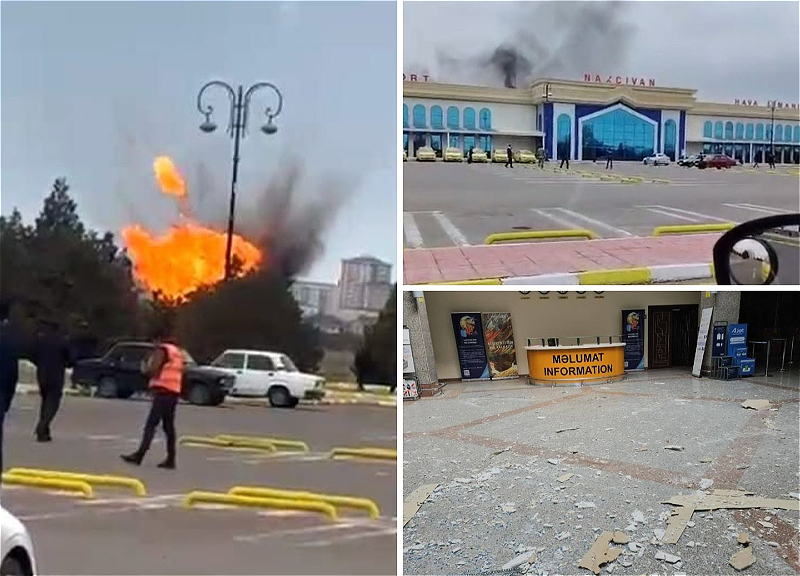
Several Iranian drones attacked the Nakhchivan Autonomous Republic. One of the drones fell on the terminal building of Nakhchivan Airport. Another unmanned device crashed near a school building in the village of Shekerabad. These attacks, launched from the territory of the Islamic Republic of Iran, resulted in damage to the airport building and injuries to two civilians.
The very geography of these strikes raises a legitimate question. There are no American bases in Nakhchivan. Nor are there any foreign military facilities. This is the territory of the Republic of Azerbaijan, home to civilian institutions and infrastructure used by the peaceful population. The airport that was hit serves passengers, and the school near the drone crash site is meant for children.
In other words, this time, explaining the incident with the standard formula of a "precise strike on an American base" is unlikely to work for Iranian authorities. Even with the most vivid imagination, it is hard to fathom how the terminal of Nakhchivan’s civilian airport could be mistaken for a Pentagon facility.
This raises a logical question: why was the strike specifically aimed at Nakhchivan Airport?
The answer seems quite obvious. The mullahs' regime is well aware that the main connection between the bulk of Azerbaijan and the Nakhchivan Autonomous Republic today is primarily through air travel. In fact, aviation ensures operational and continuous communication between the main territory of the country and its exclave. Therefore, disabling Nakhchivan Airport can be seen as an attempt to disrupt this connection and create additional difficulties in communication between the two parts of the state.
Unfortunately, such tactics are well-known in the history of the region. In the 1990s, Armenia actively used similar methods, seeking to isolate Nakhchivan and disrupt its transport links with the main territory of Azerbaijan. Today, it seems that the Iranian leadership has decided to follow this same infamous example.
The Ministry of Foreign Affairs of Azerbaijan reacted to the incident with utmost clarity and unequivocality. In an official statement, it emphasized that the attack on Azerbaijani territory contradicts the norms and principles of international law and contributes to the escalation of tensions in the region. The Azerbaijani side demanded that Iran promptly clarify the incident, provide explanations, and take necessary measures to prevent such incidents from recurring.
The statement from the Ministry of Foreign Affairs also noted that Azerbaijan reserves the right to take appropriate retaliatory measures.
Diplomatic action followed immediately. Iran’s Ambassador to Baku, Mujtaba Demirchilu, was summoned to Azerbaijan’s foreign ministry, where a strong protest will be expressed, and a corresponding note will be handed over. Such steps in diplomatic practice are taken in cases of serious violations of interstate relations.
However, diplomatic language is typically characterized by restraint. The reality, on the other hand, appears far harsher.
An even harsher assessment of the incident was provided by the Ministry of Defense of Azerbaijan. In an official statement, the ministry stressed: "Full responsibility for what happened lies entirely with the Islamic Republic of Iran. The Ministry of Defense of the Republic of Azerbaijan is preparing necessary retaliatory measures to protect the territorial integrity and sovereignty of our country, as well as to ensure the safety of civilians and infrastructure. These acts of aggression will not go unanswered."
The drone strike on Nakhchivan territory by Iranian armed forces demonstrates the level of political gratitude the mullahs' regime is capable of showing toward its neighbors. And this gratitude, as it turns out, is expressed in a rather peculiar way—through the use of drones.
For many years, Azerbaijan has consistently adhered to the principles of good neighborliness in its relations with Iran. No threats to the Iranian state have ever originated from Azerbaijani territory. Moreover, Baku has repeatedly, at the highest level, provided clear assurances that Azerbaijani territory would not be used for any military operations against Iran and has kept its word, no matter the circumstances. These assurances were voiced more than once and were well-known in Tehran.
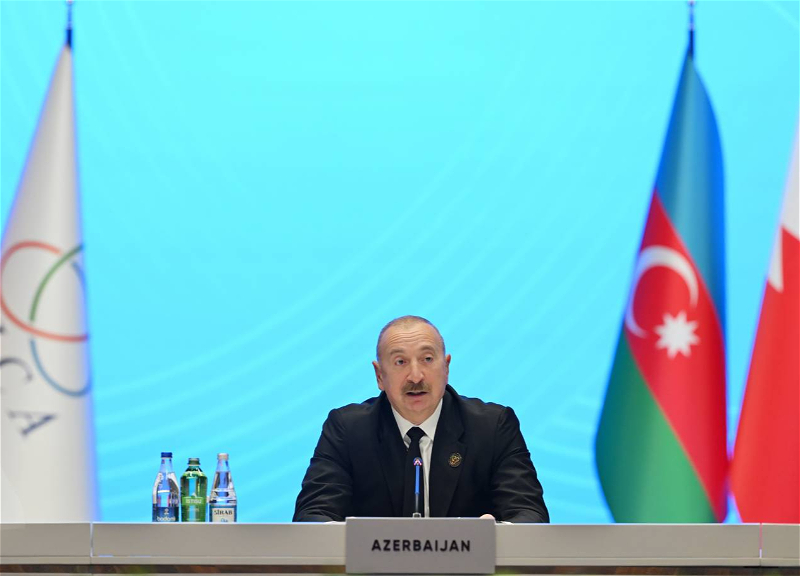
When the current confrontation between the USA, Israel, and Iran began, Azerbaijan took a balanced stance. Baku maintained neutrality, avoiding being drawn into someone else’s conflict. President of Azerbaijan Ilham Aliyev personally visited the Iranian Embassy in Baku to express condolences over the death of Iran’s Supreme Leader Ali Khamenei. This gesture was seen as a sign of respect and humanity in an extremely tense environment.
In addition, Azerbaijan considered the possibility of sending humanitarian aid to Iran. In other words, this was the behavior of a state striving to maintain normal relations with its neighbor even in a complex international situation.
The response received today, however, proved to be quite telling.
The Iranian drone that fell on the terminal of Nakhchivan Airport became a kind of symbol of the political logic guiding the mullahs' regime. When a state that has demonstrated good neighborliness and restraint receives a strike on civilian infrastructure in return, it is hard to call it anything other than blatant hypocrisy.
The choice of target also speaks for itself. An airport is an object intended to serve peaceful passengers. People go there to embark on a journey, meet relatives, or return home. Near the site of the other drone crash is a school. It is hard to imagine a clearer illustration of how Iranian military forces understand the difference between military and civilian targets.
Such actions have a specific name. A strike on civilian infrastructure used by the peaceful population is considered an act of terror against civilians.
Attempts to justify such episodes with military necessity appear particularly cynical, especially considering that Azerbaijan did not participate in the conflict against Iran. No foreign military bases were stationed in Baku, no operations were conducted against Iranian territory, and no actions were taken that could be seen as a threat.
In this context, the drone attack appears as a manifestation of sheer impotence. When a regime that boasts of its power strikes the airport of a neighboring peaceful state, it is hard to speak of military valor. History shows that such tactics rarely bring political dividends to their perpetrators. On the contrary, they inevitably lead to increased tensions and the destruction of trust between states.
For many years, Azerbaijan has consistently built relations with its neighbors based on respect for sovereignty and the principles of international law. This approach has helped maintain stability in a region already rife with conflicts. Therefore, what happened today is perceived as an overtly hostile act by the Iranian regime. Such actions destroy the fragile atmosphere of trust that has always been crucial for regional stability.
The Iranian leadership will have to provide an explanation for what happened. However, even the most skillful diplomatic wording is unlikely to change the obvious fact: strikes were carried out on civilian targets in Azerbaijan. And this is no longer a matter of rhetoric, but of responsibility.
The history of international relations clearly demonstrates one pattern. Those who dare to take aggressive actions against Azerbaijan sooner or later come to regret it. The Iranian regime would do well to remember this before turning drones into a tool of its "gratitude" toward neighbors.
Yalchin Aliyev