Strategic Partnership at New Heights: Baku and Belgrade Shape a New Architecture of Cooperation
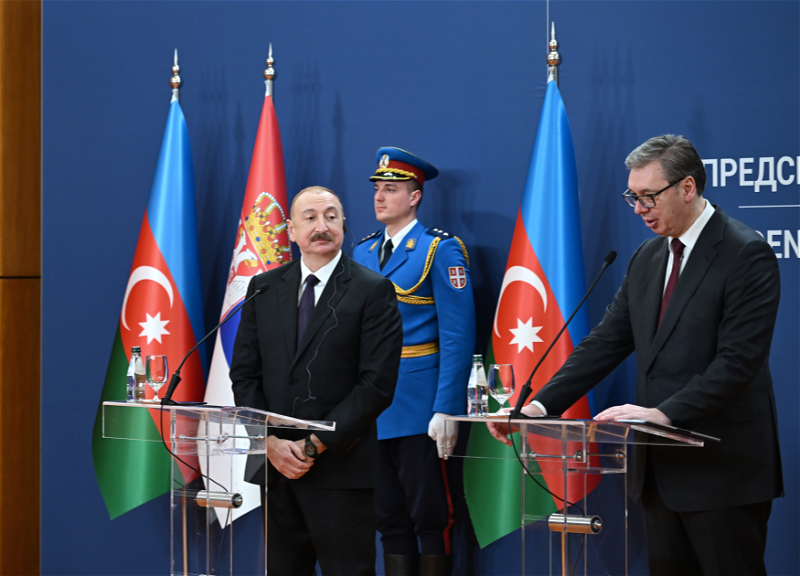
Azerbaijan and Serbia are elevating their strategic partnership to a new level – leaders of the two countries, Ilham Aliyev and Aleksandar Vučić, are solidifying a course toward deepening political dialogue, energy union, and large-scale investment projects.
From the joint construction of a gas power plant and the expansion of gas supplies to coordination on international platforms, Baku and Belgrade demonstrate readiness to transform mutual support into tangible economic and geopolitical outcomes, shaping a new architecture of cooperation.
The potential for developing cooperation is truly vast and covers nearly all key areas – from energy, industrial cooperation, and agriculture to digital economy, transport, and humanitarian exchanges. This is not merely about increasing trade turnover but about forming sustainable production chains, joint investment platforms, and technological partnerships capable of ensuring long-term economic benefits for both countries.
A practical confirmation of the serious commitment to long-term and systematic interaction was the transition to a new institutional format of cooperation. During the official visit of Azerbaijani President Ilham Aliyev to Serbia on February 15, the first meeting of the Strategic Partnership Council between the two countries took place in Belgrade – a platform designed to coordinate key areas of the bilateral agenda, provide additional impetus to joint projects, and elevate Azerbaijani-Serbian dialogue to a qualitatively new level.
A clear expression of the commitment to deepening strategic partnership was the signing of specific documents covering the main areas of cooperation. The memoranda signed between relevant ministries address economic coordination, media and communications development, cultural programs for 2026–2030, cooperation in youth policy and sports, as well as interaction in mandatory health insurance systems. Additionally, the parties formalized cooperation in food security, opening opportunities for expanding agricultural trade and technology exchange. Of critical importance is the agreement on the design, construction, and management of a gas turbine power plant in Serbia – a flagship project that will not only enhance the energy security of a friendly country but also provide new momentum to investment interaction.
This package of documents reflects the comprehensive nature of Azerbaijani-Serbian dialogue. Such targeted initiatives create a branched infrastructure of partnership, where strategic economic projects are complemented by humanitarian and social directions, forming a sustainable foundation for long-term rapprochement between the two states.
“Our cooperation is developing in all spheres of life. Compared to 2012, trade turnover in the services sector has increased 16-fold – not by 16 percent, but 16 times. Moreover, thanks to our strategic partnership, we have established new, extremely close ties with Azerbaijan,” said the President of Serbia, reflecting the real results of today’s achievements.
These figures are not just statistics but the result of long-term efforts by both countries aimed at deepening relations and diversifying cooperation. The growth indicator signifies a qualitative leap in relations and confirms that joint efforts have yielded concrete results. Most importantly, this is far from the limit but merely the beginning of a new stage in bilateral cooperation.
These achievements are the fruits of purposeful work, but the leaders make it clear that they cannot rest on their laurels. “I am not always satisfied with our pace. We must work with full dedication and accelerate all processes. Compared to the previous period, we have managed to do more and achieved good results,” said Aleksandar Vučić.
Thus, Azerbaijan and Serbia are already looking ahead, planning new initiatives and projects that will open opportunities for business, investments, and cultural exchange. “We discussed participation in an investment forum to be held in September in Azerbaijan. Before that, I will visit Azerbaijan. I believe this will be an opportunity for our business circles, bankers, and representatives to visit Azerbaijan. It will also be a chance for our country to best present its EXPO exhibition. Because at that time, only a few months will remain until its holding. This event will be the largest in Serbia in 2027, and it is extremely important for us. We are grateful to Azerbaijan for confirming its participation in EXPO 2027, and I am confident they will represent their wonderful country in the best possible way here in Belgrade in 2027,” said the Serbian leader.
According to him, there is a wide field for economic cooperation in agriculture: “When I first tried tomatoes and cucumbers grown in the settlement of Zira in Azerbaijan, and even earlier – products from a special region of Azerbaijan, Nakhchivan, I really liked them. I like them a lot, and I heard that compared to products coming from other places, Azerbaijan supplies goods at a significant discount. I wonder if it is possible to offer this product to our people at such a low price?! If the people sitting in the government have not thought about this, they should. I appeal to them to resolve the issue of providing citizens with quality goods from our Azerbaijani friends at a more affordable price. At the same time, we must offer our products in the same way. This is not happening yet. I am sure we could also supply a lot of products to Azerbaijan.”
The Azerbaijani leader, in turn, emphasized that relations between the two countries are strengthening in all areas: political, economic, and energy, “and today’s agreements are just the beginning.” “We will work on joint projects that will help not only our countries but the entire region, ensuring energy security and creating new opportunities for mutual investments,” stated President Ilham Aliyev.
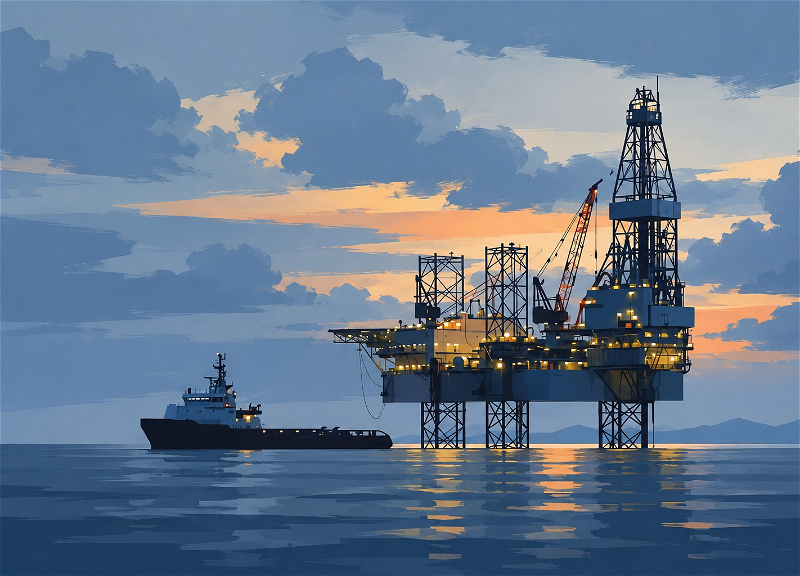
Let’s delve deeper into the energy agreements. As the Serbian leader noted, the era of electricity is beginning, “and we need more sources of electricity.” “We must produce more electricity. Azerbaijan will have electricity measured in gigawatts. But the question is whether there will be the necessary transmission lines for its import?! We have reached agreements with the Azerbaijani side on important issues. Today, the Serbian gas company and SOCAR held negotiations on this topic, and a cooperation agreement was signed. We will try to resolve every issue within two to three months so that immediately after, we can prepare project documentation and start construction, which will take more than two years. We believe we will open the gas power plant by 2029,” he said.
Revealing technical details of the new project, the Serbian leader noted that the project envisages the construction of a gas power plant with a production capacity of 500 megawatts, with Azerbaijani and Serbian companies each undertaking 50% of the work, which, in his words, “will be a good example.” “Three sites around the city of Niš were selected. We are talking about clean energy. The European Union also recognizes this. In short, construction is planned either in Trupale, Kruševac, or Niška Banja. However, I consider Kruševac the most suitable location.”
“President Aliyev promised me that he would personally address this issue. You may not believe it, but in a two-year period, they managed to create combined electricity production capacities of 1890 megawatts,” emphasized Aleksandar Vučić.
The head of the Azerbaijani state underscored the strategic significance of the project and its long-term prospects. He noted that its implementation would be under the control of both leaders. At the same time, he pointed out that the process of creating this power plant relies on existing investment opportunities in Serbia: “Because if the investment climate were unfavorable, Serbia would not be so attractive to foreign investors. It is precisely as a result of the reforms carried out that many countries, including Azerbaijan, are ready to make large investments in Serbia.” Overall, relations with Serbia in the energy sector are now developing in a multifaceted format, stated the Azerbaijani leader: “Some time ago, we started exporting natural gas to Serbia, and today we decided to increase export volumes. Now Serbia, by converting the exported gas into electricity, will achieve clean energy production. This will create opportunities for both the Serbian market and future exports. Today, Azerbaijan’s export potential in the energy sector is 2 gigawatts. This figure will grow because we are currently building a large number of power plants operating on renewable energy sources, and we are ready to cooperate with Serbia in this area.”
“By 2032, we will gain an additional 8 gigawatts of energy capacity, much of which will be exported. For this, we need new and more capacious transmission capabilities because the main direction of our export is the European space,” stated President Ilham Aliyev.
The leaders’ statements not only reflect a desire to deepen cooperation but also demonstrate a conscious choice by the two states in favor of a long-term strategic partnership based on mutual respect and alignment of key national interests.
Aleksandar Vučić: “Agreements and constant support are evident. Even on the most complex issues, Serbia has stood by Azerbaijan, and they have supported us as well. This will continue in the future. We have resolved very difficult issues. We fully trust the words of President Aliyev. I believe he feels the same sincere sentiments toward our country. We will continue these relations in the same spirit.”
Ilham Aliyev: “We have clear plans for the future: to strengthen our relations in political, economic, and energy spheres, to support each other’s territorial integrity and sovereignty on international platforms within international organizations, to implement joint investment projects, to use new opportunities in the energy and transport sectors, and, looking ahead, to form a stronger synergy.”
As can be seen, in Azerbaijani-Serbian cooperation, political will and economic pragmatism organically complement each other. The sustainability of bilateral relations is ensured by concrete projects, investments, and institutional mechanisms of interaction. Deep mutual involvement of businesses, infrastructure operators, and strategic industries forms a solid foundation for partnership.
Thus, Azerbaijan and Serbia demonstrate readiness for further systematic integration of efforts, building a model of cooperation based on mutual benefit, strengthening energy security, and shared responsibility for stability and development in their regions.