Farhad Mammadov: Azerbaijan and Armenia Are Shaping Their Own Conflict Resolution Model
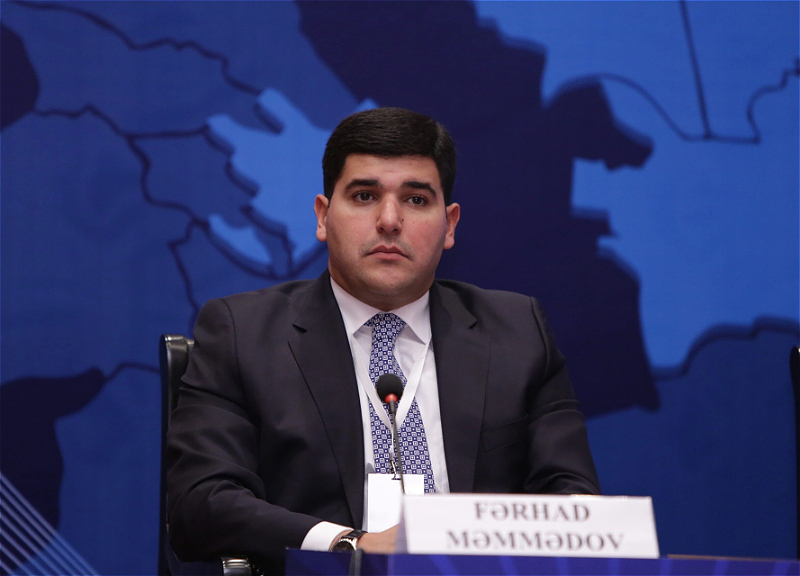
Azerbaijani political scientist and Director of the Center for Studies of the South Caucasus, Farhad Mammadov, gave an extensive interview to the French publication EurasiaPeace.
1news.az presents this interview in full to its readers:
- Thank you very much for accepting our invitation to answer a few questions about the dialogue process between the civil societies of Azerbaijan and Armenia. First of all, could you tell us about the Center for Studies of the South Caucasus, which you direct, and the specific research topics within this think tank?
- Our research center focuses on studying processes in the South Caucasus countries, their relationships with immediate neighbors—Turkey, Russia, Iran—and with countries that have interests in the region. The South Caucasus is a small, fragmented region in terms of territory, yet it reflects the influence of all processes occurring across Eurasia. Here, you can find military-political blocs like NATO (Turkey) and CSTO (Armenia, Russia), economic unions such as the EAEU (Armenia, Russia) and the EU (Turkey, Georgia). The South Caucasus is of interest to China through its Belt and Road Initiative. The US and EU are also engaged in the region—there is geopolitics, participation in energy projects in partnership with Azerbaijan, and interest in accessing Central Asia. Developments in the Middle East and Eastern Europe also impact our region.
Thus, the dynamics of our region are very high, and all these processes and events need to be analyzed, which is what we strive to do through the activities of our research center.
- The "Peace Bridge" initiative was launched in October 2025, and the third round of discussions concluded in February. Could you first tell us whether these discussions with representatives of Armenian civil society are progressing successfully, and are you satisfied with the work done within this framework?
- Contacts, dialogues, and discussions at the level of civil society representatives from Azerbaijan and Armenia have taken place throughout the thirty-year conflict. In most cases, these were meetings held in third countries, organized by foreign non-governmental organizations. The distinction of the "Peace Bridge" format is that the governments of both countries support this dialogue, and it is conducted in a bilateral format.
Following the first meeting between the President of Azerbaijan and the Prime Minister of Armenia in Abu Dhabi on July 10 and the Washington Summit on August 8, 2025, a joint declaration by the leaders was adopted, clarifying the sequence of steps toward signing a peace treaty and affirming a commitment to resolve all issues through political and diplomatic means. Today, in the peace process, we observe constructive dialogue at the political level, the beginning of economic interaction, and the establishment of a bilateral dialogue format at the civil society level.
Within the framework of the "Peace Bridge" initiative, representatives of civil society who support the approved peace agenda are getting acquainted. We have achieved maximum sincerity in dialogue, despite mistrust and the consequences of the conflict. We strive to structure the dialogue in a way that allows for an open exchange of opinions, expressing the expectations and concerns of our societies. Alongside this, both groups hold meetings with various segments of society in their respective countries to build readiness for peace. And, of course, we discuss future plans—what we can do now under current realities and how we can be useful to the countries and societies of Azerbaijan and Armenia in the future.
- Could you elaborate on the topics discussed at this forum, the composition of participants, the locations of these meetings, and their main objectives?
- The first two meetings were held in Armenia and Azerbaijan in a 5x5 format. The third meeting was larger, with a 20x20 format. Participants are mainly representatives of non-governmental organizations, the expert community, and media. Discussions include involving environmentalists, women’s organizations, youth organizations, and border municipalities. This will depend on how far we progress in the peace agenda.
Regarding locations, there is an understanding that meetings should take place on the territories of our countries. While the first two meetings were held in the capitals, subsequent ones are planned for the regions. Also, while we initially used air transport (there have been no flights between Baku and Yerevan for 30 years), during the last meeting, the Azerbaijani delegation crossed the land border. These are symbols, and they are very important at this initial stage of the peace process.
As for the discussion topics, I can say that we have published the latest program—it includes discussions on the current political situation, the issue of transport unblocking, and directions for civil society activities. Meetings with officials are also important, where, in a trusting atmosphere, opportunities are created to ask questions of interest and receive firsthand information. This increases the awareness of civil society and builds a connection between Track 1 and Track 2 diplomacy.
- Which of these diverse topics do you consider the most sensitive for discussion with representatives of Armenian civil society, and which provoke the most heated debates? Could you share your position on these issues?
- During meetings in our countries, we listen to the opinions and positions of various societal groups on the peace process. Within the "Peace Bridge" initiative, we convey these sentiments. Mostly, there is skepticism about peace and mistrust. Of course, the main sensitive topic is the humanitarian aspect of the conflict—hundreds of thousands of people who became victims of the conflict. A comprehensive, rather than selective, approach is important here.
The Armenian group raises the issue of Armenian citizens arrested for crimes, while the Azerbaijani group highlights the issue of three thousand missing Azerbaijani citizens whose fate remains unknown.
Delicate topics include the terminology used, the fate of Azerbaijani cultural heritage in Armenia and Armenian heritage in Azerbaijan, security issues, phobias, and rhetoric.
However, participants in the dialogue understand that at this historic moment, the governments of Azerbaijan and Armenia have decided to acknowledge the reality and are attempting to create a framework for peace. We cannot change the past, but we have the opportunity to shape a peaceful future and break the cycle of conflict.
- Are the positions of members of Azerbaijani civil society unified and unanimous, or are there disagreements among actors within the Armenian and Azerbaijani groups? What are your observations on this?
- Each dialogue participant represents themselves and expresses their own opinion. Of course, there are disagreements between representatives of Azerbaijan and Armenia, and there have been instances where differing opinions were expressed within national delegations. No one is immune to this if the dialogue is open.
We try to structure the dialogue to achieve maximum results within the limited time available. Discussing the current stage of the peace process helps us understand what is possible now and what can be left for the future. This is a very complex process that requires patience and consistency. We cannot afford to make mistakes.
- What is your view on this dialogue space in the South Caucasus and the evolution of discussions since the first meeting? Are you optimistic about the ability of civil societies in both countries to contribute to building peace in the region?
- The potential is undoubtedly there. We are advancing in dialogue, striving to move from interaction to cooperation. Today, the conditions for this exist. The peace agenda of the governments, economic interaction, and an atmosphere of security create these conditions. Civil society is trying to make use of this constructive context.
In the near future, parliamentary elections are expected in Armenia, the results of which will determine the progress of the peace agenda. After these elections, neither Azerbaijan nor Armenia will face decisive elections for the next five years, which is important in the context of the impact of domestic political dynamics on the peace process.
I believe that if pro-peace forces prevail in Armenia, the peace process will have the opportunity to expand the peace agenda, and civil society will also seize these opportunities.
- In a broader sense, what is your view on the conflict resolution process between Azerbaijan and Armenia, or, in other words, what do you think currently depends on the signing of a peace treaty between the two countries, as well as on the demarcation and delimitation of final borders between them?
- The governments of Azerbaijan and Armenia have agreed on the framework of the peace agenda. During this period, constructive political dialogue, economic cooperation, and societal dialogue have been established. The parties have focused on the benefits of the peace agenda.
All of this is happening in the context of a paraphrased but unsigned peace treaty. Without the establishment of diplomatic relations, an intergovernmental commission on border delimitation operates, economic cooperation is underway, and the regional TRIPP project is in progress. It can be said that Azerbaijan and Armenia have their own unique case of conflict resolution.
Much depends on the results of the parliamentary elections and the referendum on a new Constitution in Armenia. These are domestic political processes in Armenia, the outcomes of which have a significant impact on the peace process.
As for the border delimitation process, there is an intergovernmental commission whose activities depend on the peace process. Today, the framework for interaction has been defined, and depending on the atmosphere in the peace agenda, results can be expected on this issue as well.
- And what, in your opinion, are the specific expectations of Armenia in this peace process, and how could Azerbaijani civil society contribute to this?
- The peace process is a two-way street. Therefore, the expectations of both societies must be equally considered. The Armenian-Azerbaijani conflict is an ethno-territorial conflict. Azerbaijan has resolved the territorial part of the conflict in accordance with international law norms, and today Azerbaijan and Armenia recognize each other’s territorial integrity at the level of leaders’ statements and the paraphrased peace treaty.
The consequences of the conflict at the ethnic level remain, and resolving this part of the conflict requires time. The dialogue process between civil societies is an integral part of ethnic peace. It is conducted in a bilateral, constructive format without the involvement of a third party.
The expectations of the Armenian side are considered in conjunction with those of the Azerbaijani side; there cannot be a unilateral approach here. In this regard, as the Azerbaijani group, we do not feel the need for advice from external actors.
- Do you have a final message you would like to share to conclude this interview?
- The situation is not easy: hundreds of thousands of displaced persons who cannot return to their homes for various reasons, mass destruction, extensive minefields that remind us of the conflict’s consequences, minimal involvement of the international community in post-conflict reconstruction, skepticism and mistrust in societies, and the uncertain fate of thousands of missing persons.
Under these conditions, the governments of Azerbaijan and Armenia are making efforts to acknowledge the situation and shape the parameters of a peaceful future. Peace is possible, and the actions being taken demonstrate the political will of both sides. How societies respond to the peace agenda is crucial, and this response will become clear through the election results.