Areg Kochinyan: Baku and Yerevan Speak the Language of Peace for the First Time
After decades of conflict, the South Caucasus is entering a new political reality.
For the first time since regaining independence, the countries of the region have a chance for lasting peace—not merely declarative, but supported by concrete steps and mutual commitments.
While the world continues to grapple with the consequences of decades of conflict, the leaders of Azerbaijan and Armenia have almost simultaneously made statements focused on the future of peace in the South Caucasus. In Baku, President Ilham Aliyev stated that after long years of confrontation, the countries have only been living in peace for a few months but are already experiencing its tangible benefits—from the start of trade to the opening of transit opportunities. At nearly the same time, in Strasbourg, Prime Minister Nikol Pashinyan confirmed his commitment to a peace agenda and emphasized that Armenia will not allow a new war.
The synchronicity of these statements, delivered on different international platforms, reflects the emergence of a new political reality in which Baku and Yerevan increasingly speak not of confrontation, but of long-term peace.
These statements also reflect not only diplomatic rhetoric but also profound changes in regional politics, where the logic of confrontation is gradually being replaced by an agenda of peace and pragmatic cooperation.
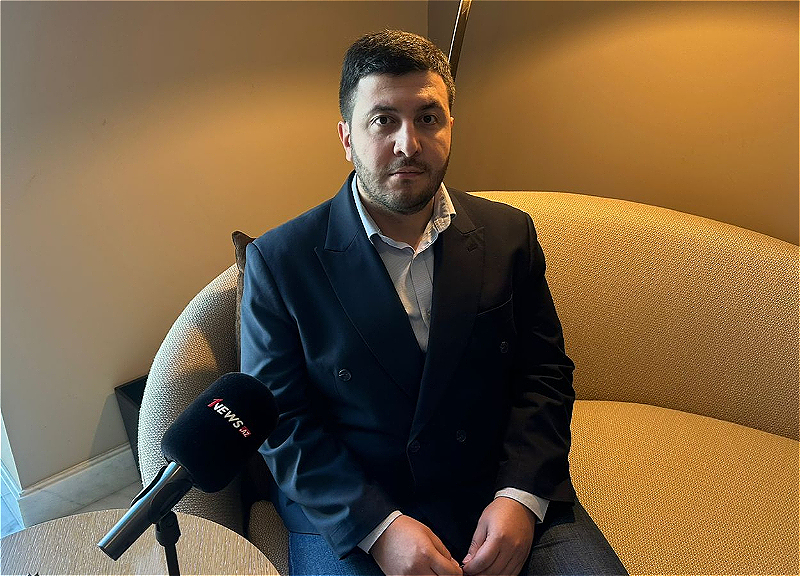
Against this backdrop, key questions arise: how sustainable can this process be, and what factors could transform the current détente into a robust architecture of peace in the South Caucasus? Armenian political scientist Areg Kochinyan, head of the Center for Security Policy Studies and a member of the "Bridge of Peace" Initiative, shared his insights in an interview with 1news.az.
- President Ilham Aliyev, during a meeting with the President of the European Council António Costa, stated that peace between Azerbaijan and Armenia will be eternal. At the same time, Prime Minister Nikol Pashinyan, in his speech at the European Parliament, declared: "We will not allow a new conflict, a new war." Can you comment on the simultaneous peaceful messages from the leaders of Azerbaijan and Armenia?
- A new era is effectively dawning between Armenia and Azerbaijan—an era of peace and peaceful relations. For a long time, experts both in our countries and beyond have noted that one of the main obstacles to normalization was the rhetoric of the parties.
Today, the situation is beginning to change. The leaders of the two countries have taken on the responsibility—and to some extent, the political courage—to fundamentally alter the narratives and tone of statements that Baku and Yerevan have used toward each other. This can truly be considered an important and historic moment.
If harsh rhetoric was previously one of the key obstacles in Armenian-Azerbaijani relations, it is now gradually transforming at the leadership level. Most importantly, the language of confrontation is being replaced by the rhetoric of peace.
- In your opinion, what political, economic, and societal factors can ensure the long-term nature of this peace?
- Political processes are already underway. This includes the preparation of a peace treaty, the process of border delimitation and demarcation, and mutual confidence between governments in the absence of intentions to continue the conflict. All of these are crucial political components for building sustainable peace.
Economic factors are no less significant. Primarily, this involves the opening of communications and the use of each other’s transport routes—for travel as well as for the trade of goods and services, including with third countries.
Additionally, joint production chains could play an important role. For example, one country might have a raw material base, while the other has processing capacities. By combining these resources, the parties could create a joint product and export it to external markets.
Such production chains, in my view, could become one of the most effective economic foundations for sustaining peace. When economies begin to complement each other, it creates a long-term mutual interest in stability and cooperation.
Finally, the societal level is also crucial. Existing initiatives, particularly the "Bridge of Peace" initiative, which began its work in October of last year, are worth noting. It is expected that this initiative will continue to develop and expand.
The more public organizations, experts, and media are involved in the process of normalizing relations, building trust, and fostering a culture of peace, the stronger the foundation for long-term peace between the countries will become.
- In your opinion, what measures can be taken to ensure greater support for this position within Armenian society?
- I believe that the measures currently being taken are aimed at ensuring broader public support for this position in Armenian society and are largely necessary. A clear indicator of how much this approach resonates with society will be the upcoming elections in Armenia.
- Pashinyan also touched on the role of the clergy, stating that the use of religious platforms for conflict propaganda is unacceptable. How significant a factor in Armenia’s domestic politics remains the position of the Armenian Apostolic Church on the issue of peace with Azerbaijan?
- I do not think that the position of individual representatives of the Armenian Apostolic Church can be considered the official stance of the entire Church. The real impact of these statements and figures on public sentiment will be most evident in the results of the upcoming elections in June.
- Azerbaijan has already taken practical steps—opened transit routes and initiated economic interaction. Can economic interdependence become one of the key guarantees of sustainable peace in the South Caucasus, and what other steps can be taken in this direction?
- Yes, the parties are already taking certain practical steps toward each other to implement the peace agenda, and this work must undoubtedly continue.
Recently, in the European Parliament, Armenian Prime Minister Nikol Pashinyan voiced a proposal to Azerbaijan regarding the provision of transport links between the main territory of Azerbaijan and Nakhchivan.
In my opinion, this is an important initiative addressed to the Azerbaijani side. At the same time, it is by no means about questioning or undermining the importance of the TRIPP project. All agreements on this project, as before, must be implemented.