Trump asked China for help. Perhaps that was the day Iran already won
By: First News Intelligence Unit
(exclusively for the Opinion section)
Fifteen days into a war America chose to start, the strategic logic has already inverted. A 19th-century banker from Warsaw could have told you why:
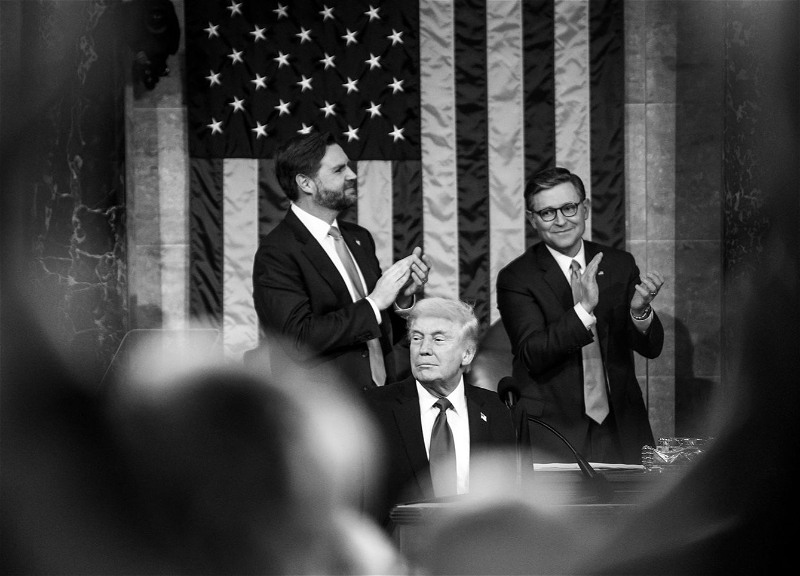
On Day 15 of Operation Epic Fury, Donald Trump publicly expressed hope that China would send warships to the Strait of Hormuz.
China. The country that opposed this war from day one. The country actively working to displace the dollar in global energy markets. The country that, in any serious strategic accounting, sits on the other side of America's long-term geopolitical contest.
Trump needed their help. And he said so out loud.
That moment does not require much analysis. It explains itself. But if you want to understand how the world's most powerful military arrived at that point in just two weeks — and where this is going — you need to go back 128 years, to a man almost nobody in Washington has apparently read.
- Iran did not invent the strategy it is executing. It simply studied history more carefully than its adversaries did.
Ivan Bloch — a Polish banker who decoded the nature of modern warfare
Ivan Bloch was a Polish banker, not a general. He had no military career. But he had access to data. In 1898 he published a six-volume analysis of modern warfare and concluded, with quantitative precision, that offensive military campaigns between industrialized states would no longer produce decisive outcomes. The defense had become structurally dominant. Any major war would degenerate into attrition. The economic system sustaining the war would collapse before a winner emerged. Social revolution would follow.
Nobody listened. Sixteen years later, Europe proved him right at a cost of 20 million lives.
Bloch's framework did not require trenches and mustard gas to apply. It required only one condition: that the adversaries be embedded in an interdependent economic system that could be weaponized as effectively as any artillery battery. In 2026, that condition is met more completely than it was in 1914.
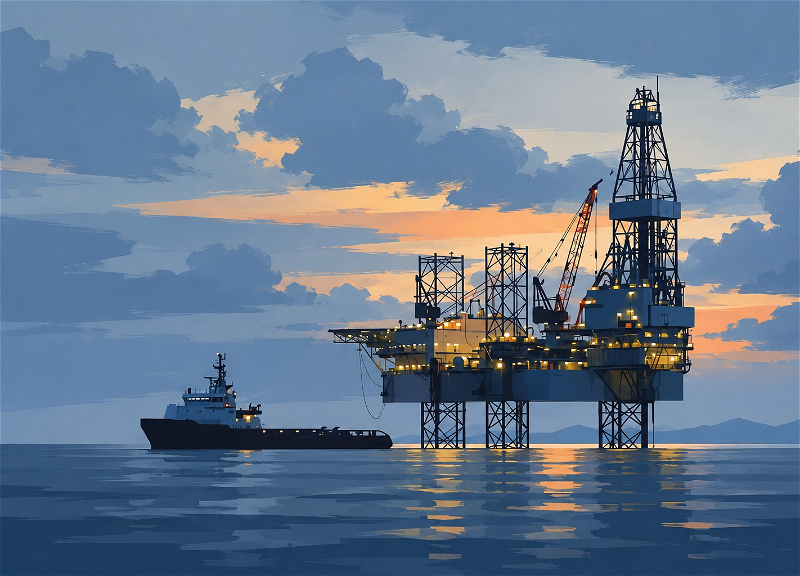
The weapon is not the drone. The weapon is the Strait of Hormuz — and Iran has been holding it for fifteen days.
Horizontal escalation: what Iran is actually doing
Let us be precise about what Iran is actually doing.
This is not retaliation in the conventional sense. Iran cannot match American airpower. It is not trying to. What it is doing is executing a textbook horizontal escalation strategy: when you cannot defeat your adversary vertically, you widen the cost surface until third parties — who had no quarrel with anyone — start absorbing enough pain to pressure the aggressor to stop.
By Day 5, Iran had struck targets in nine countries simultaneously. Bahrain, Kuwait, Qatar, Saudi Arabia, Jordan, Iraq, Oman, the UAE, Cyprus. Not because it has grievances against all of them. Because each of those countries hosts American military infrastructure, and making them bleed is how you make Washington's allies quietly ask Washington to reconsider.
But the targeting logic has since evolved in a way that deserves separate attention.
Iran is no longer limiting itself to military infrastructure. Amazon data centers in the UAE and Bahrain were among the first civilian targets struck. The Dubai International Financial Centre — home to Goldman Sachs, Standard Chartered, and a Ritz-Carlton — was hit by a drone. Iran has explicitly threatened to strike banks across the Gulf (after the Americans attacked its Bank Sepah in Tehran), and warned residents to stay one kilometer away from any financial institution. Citibank and Standard Chartered have already ordered staff to work remotely. Some investors are actively considering relocating assets from the Gulf to Hong Kong.
This is not collateral damage. It is deliberate targeting of the infrastructure of globalization itself — the data centers, financial hubs, and logistics networks that make the Gulf what it has become over the past quarter century. The UAE minister of state Lana Nusseibeh said plainly what this amounts to: Iran must not be allowed to hold the global economy hostage. She is correct in the description, even if the prescription is harder to execute than the statement implies.
This strategy has precedents. Saddam tried a version of it in 1991 by firing Scuds at Israel. Hezbollah demonstrated its logic in 2006. North Vietnam practiced it for a decade. But none of them did it at this scale, with this simultaneity, while also closing a chokepoint through which 20 percent of global oil supply moves.
That combination — regional strikes plus Hormuz — is what makes this conflict structurally different from its antecedents.
- Iran is not targeting American military power. It is targeting Trump's economic agenda — and every American filling a gas tank is already paying the invoice.
The economic numbers are not background noise: they are the strategy
Brent crude has traded as high as $120 per barrel during this conflict — settling around $104 at time of writing, up nearly 50% from pre-war levels. US gasoline has risen more than 30% since February 28, with the national average now above $3.70 per gallon — up from $2.81 at the start of the year. WTI briefly touched $119 in early trading before pulling back. Dubai's airport struck. Global aviation in disruption. The IEA releasing a record 400 million barrels in emergency intervention. And Washington quietly easing sanctions on Russian oil to stabilize markets — handing Moscow a quiet concession to manage the blowback from a war America started.
Trump ran on cheaper energy for American households. That promise and this war cannot coexist indefinitely. Iran knows it. Every week the Strait stays effectively closed, that political contradiction sharpens.
Bloch would call this the economic collapse phase — the point at which the cost of continuing the war exceeds any plausible definition of victory. On Day 15, we are not there yet. But the trajectory is visible. $11.3 billion spent in the first six days alone. Thirteen American service members dead. Congressional pressure mounting. Over 250 organizations calling for a funding halt. The rally-around-the-flag phase, which always exists at the start of a war, has a shelf life. In democracies, that shelf life is measured against kitchen-table economics. And kitchen-table economics in America right now is gasoline above $3.70 a gallon and rising.
- Iran was expelled from the liberal economic order by sanctions. That expulsion became its armor. It has nothing to lose in a system that never included it.
Here is the paradox that the Washington Post identified and that most strategic commentary has not yet absorbed: Iran enters this economic war with almost nothing to lose (with the possible exception of oil infrastructure, strikes on which would only further inflame global energy markets).
For years, the United States maintained at least eight separate sets of financial sanctions against Iran, effectively excising a nation of 93 million people from the dollar-denominated global economy. Iranians cannot use the dollar. Iranian businesses cannot access SWIFT. Iran's annual non-oil trade is roughly one-seventh of Vietnam's — a country with a comparable population that was integrated into globalization rather than excluded from it.
The result is a country that is structurally immune to the kind of economic warfare being waged against its neighbors. When Iran hits Dubai's financial center, it is attacking a system it was never part of. When it threatens Gulf banks, it has no equivalent exposure. The sanctions architecture that was designed to strangle Iran has inadvertently produced an adversary with no stake in the preservation of the liberal economic order — and therefore no incentive to spare it.
This is one of the deepest ironies of the past two decades of Iran policy: the tool of economic pressure, applied maximally, eliminated the economic leverage that might have moderated Iran's behavior. You cannot threaten to exclude someone already excluded.
Can Trump fight as long as Putin?
This war will not last as long as its architects imagine — not because Iran will be defeated, and not because American military power is insufficient, but because the democratic feedback mechanism that authoritarian systems lack will assert itself. Electoral cycles, approval ratings, congressional oversight, and the direct transmission of energy prices into household budgets are not soft factors. They are the hardest political variables in a democratic system.
Putin could sustain Ukraine for years because his feedback loop is severed by design. Trump cannot do the same. The midterms exist. The polls exist. The senators demanding hearings exist. The gap between 'unconditional surrender' — Washington's stated war aim — and any realistic near-term outcome is already wide enough to drive a political crisis through.
Bloch predicted this too, in essence: that democratic publics, once they feel the personal cost of a total war, correct their governments faster than the governments would choose. He was writing about empires that lacked that correction mechanism and paid with their existence. The United States has it. The question is only how long it takes to activate.
What is Israeli Defense Minister Katz actually saying?
Read Israeli Defense Minister Katz's recent statement carefully. He said the war is entering a 'decisive phase for the regime's leaders' and that only the Iranian people can end it through a 'determined struggle' to overthrow the regime. This is presented as resolve. It is actually an admission. When a defense minister invokes the enemy's civilian population as the necessary agent of military resolution, it means the military instrument alone is not producing the outcome.
The bombs are working tactically. They are not producing strategic surrender. So the goalposts shift to regime change — the most maximalist war aim possible, and historically the one most reliably associated with prolonged, inconclusive, destabilizing conflicts.
Iraq. Libya. The lesson is not obscure.
There is one more paradox worth naming, and it may be the most consequential.
The nuclear question as the only card left to play
Before February 28, Iran's nuclear program was a negotiating asset — a card to be played, traded, and leveraged. Oman confirmed that a deal was within reach: Iran had agreed to cap enrichment, accept IAEA verification, and step back from the threshold. The nuclear file was, in diplomatic terms, alive and movable.
It may not be anymore. A state that has just watched its supreme leader assassinated, its capital bombed for fifteen consecutive days, and its entire leadership structure targeted for elimination now faces a different existential calculus. Nuclear deterrence — the logic that no state possessing deliverable nuclear weapons has ever been subjected to regime-change military operations — becomes not a bargaining chip but a survival imperative. The war that was launched partly to prevent Iranian nuclearization may have provided the most compelling argument for it that Iranian hardliners have ever had.
This is the deepest strategic failure embedded in Operation Epic Fury, and it will outlast the war itself regardless of how it ends. Whatever successor arrangement emerges in Tehran will have watched what happened to a state that agreed to nuclear concessions — and then got bombed anyway. The lesson is not subtle.
So where does this end?
Not in unconditional surrender. Not in the popular Iranian uprising that Katz is apparently counting on — external military pressure has a poor historical record of producing the internal revolutions attackers want; it more reliably produces nationalism and hardened resolve.
Not in a clean military victory, because the Blochian problem is structural: you can degrade Iran's missile inventory, but you cannot bomb your way out of a Strait of Hormuz closure without either accepting the economic cost indefinitely or escalating to a point that makes the economic cost catastrophically worse.
It ends in negotiation, almost certainly.
Probably through a third party — Oman has done it before, and Qatar and China are now positioning themselves for exactly that role. It ends when the domestic political cost in Washington crosses a threshold that the administration can no longer manage.
It ends, in other words, exactly as Bloch said wars between modern industrialized powers end: not with a winner, but with an exhaustion that makes continuing more irrational than stopping.
The tragedy is that this particular ending was available on February 27th, without any of this. Oman said so. The Iranians had agreed to the core terms. Someone decided the deal was not good enough.
On Day 15, Trump asked China for warships. On Day 16, Iran's foreign minister called that request 'begging.'
Ivan Bloch, writing in Warsaw in 1898, would not have been surprised.
🌐 Read in other languages:
Трамп попросил Китай о помощи. Возможно, в тот день Иран уже победил
Tramp Çindən kömək istədi - Ola bilsin ki, həmin gün İran artıq qalib gəlmişdi