Turkish General on Attack on Nakhchivan: 'This is a Step of Military Pressure'
The attack by unmanned aerial vehicles from Iran against the Nakhchivan Autonomous Republic is not merely a random technical incident, but a step of military pressure carrying the character of a strategic message.
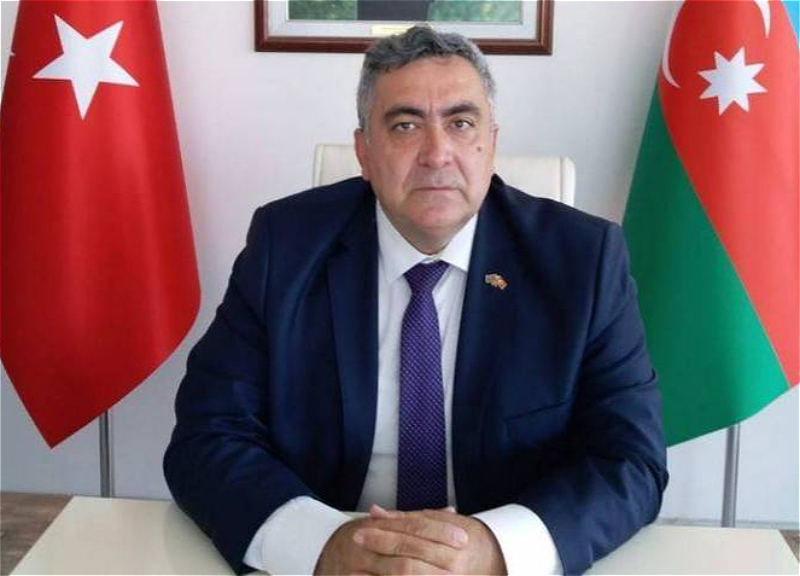
This opinion was expressed in a commentary to 1news.az by the former military attaché of Turkey in Azerbaijan, retired Brigadier General Yücel Karauz.
This incident raises serious concerns in the context of regional security, which can be viewed through several key aspects, he noted.
'Nakhchivan is the sovereign territory of Azerbaijan and simultaneously shares a direct border with Turkey. For this reason, any military activity in this direction could put the regional balance and security system in a vulnerable position,' Karauz emphasized.
According to him, one of the main goals of attacks using unmanned aerial vehicles may not only be to inflict physical damage but also to create psychological and political pressure. Karauz believes that through such actions, Iran may be attempting to send a signal to both Azerbaijan and, indirectly, Turkey.
'This behavior increases tension in the region and carries the potential for risky escalation,' he noted.
In the expert's opinion, the resolute condemnation of the incident by Azerbaijan's leadership and the demand for accountability are steps in line with international law. He stressed that at this stage, the most important issues remain conducting a full investigation of the incident, identifying the responsible party, and strengthening diplomatic, political, and military-technical security measures.
Karauz also noted that against the backdrop of current tensions in the Middle East and the region as a whole, such events can be seen as a local manifestation of broader geopolitical confrontations. According to him, in such a situation, it is crucial for both regional actors and international mechanisms to act with maximum caution to prevent the situation from escalating into uncontrollable conflict.
The expert emphasized that the use of drones targeting Nakhchivan is a serious incident capable of striking a blow to the region's security architecture.
'Such steps serve neither regional stability nor trust between neighboring states. To prevent such incidents, it is critically important to keep diplomatic channels open and to engage accountability mechanisms within the framework of international law,' he stressed.
Commenting on the recent incident involving the interception by NATO air and missile defense systems of a ballistic missile launched from Iran that violated Turkish airspace, the retired Brigadier General noted that the event must be considered in a broader geopolitical context. According to him, tensions in the Middle East are no longer just a 'crisis of the outer belt' and are beginning to exert direct pressure on airspace security and the deterrence architecture in the region.
Karauz stated that the issue is no longer just about observing the confrontation along the Iran-Israel or US-Iran lines. According to him, there is a likelihood of this tension spilling over to neighboring states due to the range of missiles and drones, possible trajectory deviations, miscalculations, or deliberate signals.
The expert emphasized that the geographical proximity of conflict zones and the fact that ballistic threats can materialize within minutes shift regional countries from the status of observers to states directly affected by the events.
He also drew attention to NATO's reaction and statements by President Recep Tayyip Erdoğan that Ankara is taking all necessary measures in close coordination with its Alliance allies. According to Karauz, this demonstrates that Turkey-NATO cooperation in the field of air and missile defense operates at both political and military levels. He noted that, despite the development of its own defense capabilities, the NATO defense 'umbrella' remains crucial for Ankara, especially in matters of early warning, forming a unified target picture, coordinating interceptions, and building a layered defense system.
The expert also referred to a Reuters report stating that the potential threat was detected in less than ten minutes, after which ground and naval systems were activated. In his opinion, this indicates that coordination mechanisms within NATO function in real time.
At the same time, Karauz stressed that such incidents highlight the need to further strengthen national defense architecture. According to him, a security threat can arise not only from a missile or drone directly targeting a country's territory but also from their movement toward the country, course changes, or the fall of debris from intercepted missiles.
The expert noted that to prevent such risks, it is necessary to further develop early detection systems, strengthen layered air and missile defense, and create mechanisms for rapid response to threats with flight times measurable in minutes.
Karauz also highlighted the diplomatic dimension of the situation. According to him, it is critically important for regional countries to enhance deterrence potential while preventing tensions from escalating into direct conflict.
'Such steps serve neither stability in the region nor trust between neighboring states. To prevent such incidents, it is critically important to keep diplomatic channels open and to engage accountability mechanisms within the framework of international law,' he concluded.