Azerbaijan - EU: A New Level of Partnership in Geopolitics and Economy of Eurasia
Azerbaijan and the European Union are entering a new stage of strategic interaction, covering a wide range of areas—from energy and transport connectivity to security, digital transformation, and climate policy.
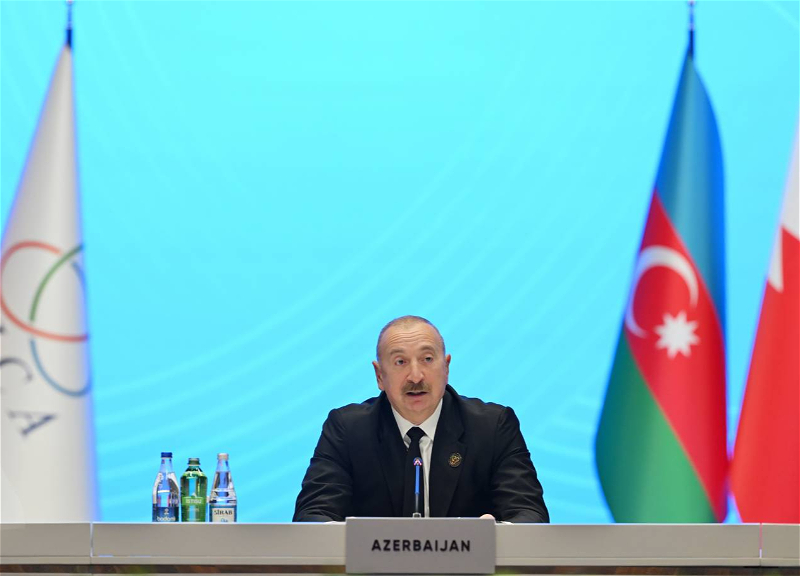
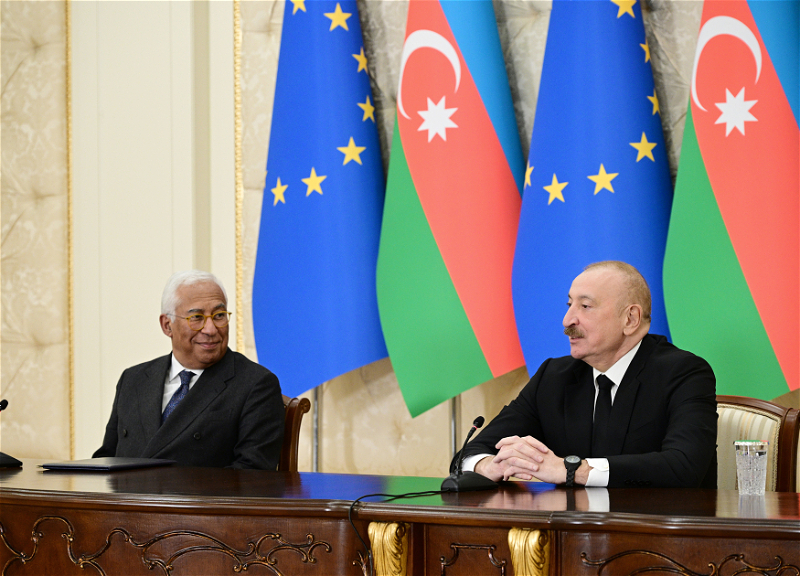
This was confirmed by the Joint Press Statement of President of Azerbaijan Ilham Aliyev and President of the European Council António Costa following their talks in Baku on March 11.
The document reflects the parties’ desire to deepen political dialogue and practical cooperation amid the transformation of regional and global geopolitical architecture. At its core is the reaffirmation of the strategic nature of the partnership between Azerbaijan and the European Union and the readiness to elevate it to a qualitatively new level.
From the Joint Statement: “Emphasizing the strategic nature of the partnership between Azerbaijan and the European Union, the presidents reaffirmed their commitment to further deepening political dialogue and practical cooperation, building on the positive momentum achieved during recent high-level meetings, including in the areas of security, energy, and transport. This cooperation serves the mutual interests of both parties and contributes to strengthening peace, stability, transport connectivity, and sustainable development in the broader regions of the Black Sea, South Caucasus, and Central Asia.”
This thesis demonstrates the determination of Azerbaijan and the EU to make their cooperation more systematic and long-term. The emphasis on strategic partnership indicates that the interaction between the parties goes beyond individual projects and is evolving into a sustainable political and economic format of cooperation. Deepening dialogue is primarily linked to the development of key areas—energy, transport connectivity, and security. It is worth recalling that in the energy sector, Azerbaijan is an important partner for Europe through gas supplies via the Southern Gas Corridor. Today, the geography of supplies through this route covers 16 European countries. At the same time, Azerbaijan’s role in the transport sector is growing, particularly as a key transit hub in the Middle Corridor. For the European Union, this route is of strategic importance as it ensures sustainable connectivity with the markets of Central Asia and China.
From the Joint Statement: “The parties reaffirmed that relations between the Republic of Azerbaijan and the European Union are built on mutual respect, equality, and mutual benefit, in full compliance with the Charter of the United Nations and norms of international law, including the principles of sovereignty and territorial integrity of states.”
This point in the document enshrines the key principles of interaction between Azerbaijan and the EU—mutual respect, equality, and adherence to fundamental norms of international law. For Baku, this is of fundamental importance in the context of the new post-conflict reality in the South Caucasus. At the same time, the emphasis on these principles in the Joint Statement effectively reflects Brussels’ absolute recognition of the new geopolitical realities following the end of the conflict and the full restoration of Azerbaijan’s territorial integrity and state sovereignty.
From the Joint Statement: “The presidents reiterated their intention to promptly conclude negotiations on a new comprehensive bilateral agreement that will provide a solid legal framework for the further development of relations. The importance of adopting updated partnership priorities between Azerbaijan and the EU and fully utilizing existing dialogue mechanisms, including the Azerbaijan-EU Cooperation Council, to advance the bilateral agenda across all areas was also emphasized.”
This provision reflects the parties’ aspiration to update the legal framework for cooperation. The completion of negotiations between Baku and Brussels on a new comprehensive agreement could create a more sustainable legal basis for expanding interaction in all areas and provide additional impetus to the work of existing dialogue mechanisms, including the bilateral Cooperation Council. This also indicates an intent to transform the partnership into a more structured and long-term format. For Azerbaijan, strengthening relations with the EU means expanding economic opportunities, diversifying foreign policy ties, and reinforcing its role as a key regional actor. For the European Union, it means strengthening its position and the opportunity to more effectively promote its economic, energy, and transport interests in a strategically important region. Simultaneously, an updated agreement could create a platform for coordinated responses to regional challenges and expand tools for cooperation on a range of shared agenda items.
From the Joint Statement: “Reaffirming the common strategic goal of a peaceful, stable, interconnected, and prosperous South Caucasus without dividing lines, the presidents welcomed positive developments in the region, particularly the historic momentum in the peace process between Azerbaijan and Armenia. The outcomes of the Washington Summit on August 8, 2025, and subsequent steps toward normalizing relations between the two countries were noted with satisfaction. The President of the European Council reiterated the EU’s full support for the efforts of Azerbaijan and Armenia aimed at achieving sustainable peace in the region through mutual dialogue.”
This point in the document underscores that for Azerbaijan, the strategic goal of cooperation with the EU includes not only bilateral interests but also the strengthening of regional stability. The EU’s support for the positive momentum in the peace process between Azerbaijan and Armenia is seen as an important factor in promoting sustainable peace and shaping a new regional order in the South Caucasus. For Azerbaijan, this confirms the international legitimacy of its policy for peaceful and stable development of the region, while for the EU, it offers an opportunity to actively contribute to stabilizing the South Caucasus through support for diplomatic mechanisms and dialogue.
From the Joint Statement: “The presidents noted the large-scale post-conflict reconstruction and development efforts being carried out by Azerbaijan in the Karabakh and East Zangezur regions. Recognizing the seriousness of pressing challenges, particularly the issue of mine contamination, they called for increased international support, noting that the European Union is a leading international donor in the field of humanitarian demining.”
As evident, the theme of post-conflict reconstruction in Azerbaijan’s Karabakh and East Zangezur regions occupies a significant place in the document. Today, Baku is implementing a large-scale program for infrastructure reconstruction, restoration of cities and villages, and the Great Return of former internally displaced persons to their ancestral lands. At the same time, the focus on the issue of mine contamination reflects the real security and humanitarian challenges the country faces. In this context, practical support from the European Union, as one of the leading international donors, for Azerbaijan’s efforts in humanitarian demining would be timely. This would be a significant contribution by the European side to strengthening bilateral cooperation and international recognition of Baku’s post-conflict initiatives.
From the Joint Statement: “It was emphasized that the implementation of the document ‘Azerbaijan 2030: National Priorities for Socio-Economic Development’ opens new opportunities for expanding cooperation between Azerbaijan and the EU in relevant priority areas, including trade, transport connectivity, investment, economic resilience, and clean energy.”
This point in the document establishes a connection between Azerbaijan’s domestic strategy and Baku’s cooperation with the EU. For Azerbaijan, this means the opportunity to attract European technologies, capital, and expertise, while for the EU, it means participating in the modernization of infrastructure and the development of a sustainable economy in the region, forming a mutually beneficial and pragmatic format of cooperation.
From the Joint Statement: “The presidents noted Azerbaijan’s key role in ensuring regional connectivity, primarily within the framework of the Middle Corridor, which strengthens transport, trade, energy, and digital links between the Black Sea region, the South Caucasus, and Central Asia. The European Union reaffirmed its commitment to cooperating with Azerbaijan in the field of transport connectivity under the Global Gateway initiative and other relevant mechanisms, including support for the modernization of railways in the Nakhchivan Autonomous Republic of Azerbaijan, as well as ongoing efforts to implement the TRIPP project. The parties welcomed the establishment of a High-Level Working Group on Economic Cooperation to strengthen economic ties and investments between Azerbaijan and the EU within the framework of the Global Gateway initiative.”
This provision highlights Azerbaijan’s strategic role as a transport and economic hub in Eurasia. The Middle Corridor, by facilitating transport, trade, energy, and digital communications, reinforces Azerbaijan’s status as a key transit node and platform for regional integration. The EU’s commitment to cooperation under the Global Gateway initiative, including the modernization of railways in Nakhchivan and the implementation of the TRIPP project, demonstrates European interest in investing in the development of transport connectivity. The establishment of a High-Level Working Group on Economic Cooperation further strengthens the institutional framework for coordinating joint projects, making the partnership more structured and practice-oriented.
From the Joint Statement: “Noting the long-term strategic partnership in the energy sector, the presidents confirmed Azerbaijan’s role as a reliable partner in diversifying Europe’s energy supply sources and expressed commitment to further implementing the Memorandum of Understanding on Strategic Partnership in the Energy Sector, signed in 2022. The importance of the activities of the Southern Gas Corridor Advisory Council and green energy meetings was emphasized, as well as the potential for expanding cooperation in renewable energy sources, including wind and solar energy production, and the implementation of grid interconnection projects, such as the underwater electric cable project across the Black Sea.”
This thesis underscores Azerbaijan’s strategic importance for Europe’s energy security. Baku has long been a reliable partner in diversifying energy supplies, particularly through the Southern Gas Corridor, and the implementation of the joint Memorandum from 2022 solidifies the long-term nature of bilateral energy cooperation. At the same time, beyond traditional energy resources, the parties see prospects for cooperation in renewable energy. A significant role is attributed to the underwater cable project across the Black Sea. This highlights a comprehensive approach to energy strategy and the desire to integrate Azerbaijan into Europe’s green energy transformation.
From the Joint Statement: “Welcoming the successful outcomes of the 29th session of the Conference of the Parties to the United Nations Framework Convention on Climate Change (COP29), held in Baku in November 2024 under the chairmanship of the Republic of Azerbaijan, the presidents confirmed their readiness to intensify interaction on climate change and environmental protection issues.”
This point further emphasizes Azerbaijan’s growing role as a platform for international dialogue on climate issues. Chairing COP29 demonstrates Baku’s important role in major global initiatives and strengthens the country’s positive image on the international stage. The readiness of Baku and Brussels to deepen cooperation on climate change and environmental protection opens new opportunities for joint environmental projects and the exchange of expertise in sustainable development.
From the Joint Statement: “The presidents welcomed the upcoming 13th session of the World Urban Forum in Azerbaijan in May 2026 as a significant contribution to global efforts for sustainable urbanization and the development of resilient cities, and expressed readiness to use the Forum’s platform to deepen cooperation between Azerbaijan and the EU in relevant areas.”
Azerbaijan continues to strengthen its position as one of the key platforms for discussing global initiatives, now for exchanging international experience in sustainable urbanization and the development of resilient cities. The upcoming World Urban Forum in May will create new opportunities for deepening cooperation with the EU in urban planning, infrastructure, and sustainable development, positioning the country as an active participant in international practices for creating smart and environmentally safe urban ecosystems.
From the Joint Statement: “The presidents pointed to the importance of deepening cooperation in the defense and security fields to counter emerging threats such as organized crime, terrorism, extremism, illicit trafficking of weapons and drugs, money laundering, human trafficking, and illegal migration.”
This point emphasizes that Azerbaijan and the European Union view cooperation in security and defense as a strategically important direction. Joint efforts are aimed at countering transnational threats—from terrorism and extremism to the illicit trafficking of weapons, drugs, and human trafficking. For Baku, this strengthens the country’s position as a reliable partner of the EU in ensuring regional stability and security, while for Europe, it expands tools for joint responses to growing challenges in the South Caucasus and neighboring regions.
From the Joint Statement: “The importance of strengthening interaction in the field of digital transformation and innovation was emphasized. Recognizing the growing significance of artificial intelligence and other cutting-edge technologies, the parties expressed readiness to enhance cooperation in this direction to stimulate innovation, increase economic resilience and development, and promote the formation of sustainable and growth-oriented digital ecosystems.”
Digital transformation and innovation are becoming one of the priorities of cooperation between Azerbaijan and the EU. The focus on artificial intelligence and advanced technologies reflects the parties’ desire to stimulate innovative development, enhance economic resilience, and create dynamic digital ecosystems. For Azerbaijan, this opens opportunities for integrating European technologies and expertise, while for the EU, it means participation in shaping a modern technological landscape in the country.
From the Joint Statement: “The presidents reaffirmed the importance of developing people-to-people contacts, including through expanded mobility. They welcomed the continued implementation of the Visa Facilitation Agreement aimed at mutual facilitation of travel and confirmed their intention to strengthen cooperation in the fields of education, culture, youth engagement, and scientific research.”
This point highlights the socio-humanitarian dimension of the partnership between Azerbaijan and the EU. Expanding mobility, simplifying visa regimes, and strengthening cooperation in education, culture, youth engagement, and scientific research create a platform for direct interpersonal and professional exchange. For the EU, this means broadening contacts and collaboration, while for Baku, it strengthens the country’s international image and develops human capital.
From the Joint Statement: “The presidents discussed key current geopolitical issues, including recent developments in Iran and Ukraine.”
The discussion of pressing geopolitical issues by the parties confirms Azerbaijan’s growing significance in the global security system. This demonstrates Baku’s readiness to contribute to the analysis and development of joint approaches to complex international challenges, reinforcing the country’s role as a constructive player not only in the South Caucasus but also in the broader Eurasian context.
As evident, the Joint Statement of the leaders of Azerbaijan and the EU reflects the transition of the partnership to a new strategic level. For Baku, cooperation with the European Union becomes a tool for strengthening international influence, expanding economic opportunities, and integrating into global political and economic processes. Energy resources, a key transit position, and an active diplomatic role make Azerbaijan a vital link in shaping a sustainable system of partnerships for Europe.
For the EU, this is an opportunity to enhance interaction with a reliable partner in a strategically important region, diversify transport and energy routes, and promote sustainable economic and technological integration across Eurasia.
Overall, the expansion of cooperation contributes not only to deepening bilateral ties but also to strengthening transport, energy, and economic integration from the Black Sea to Central Asia.
Expanding dialogue with the EU becomes part of a comprehensive strategy to transform Azerbaijan into a regional center of geopolitical and geoeconomic interaction, forming an integrated and stable architecture of cooperation across the entire Eurasian space.
Source: 1news.az