Threat of new flooding emerges on the China-Nepal border
Chinese authorities have warned of a high probability that a natural lake formed after a landslide in the area of the Nepal-Tibet border could burst.
If the natural barrier holding back the body of water does not withstand the pressure, a powerful flow of water could head downstream, creating the threat of new flooding in a region already affected by the disaster.
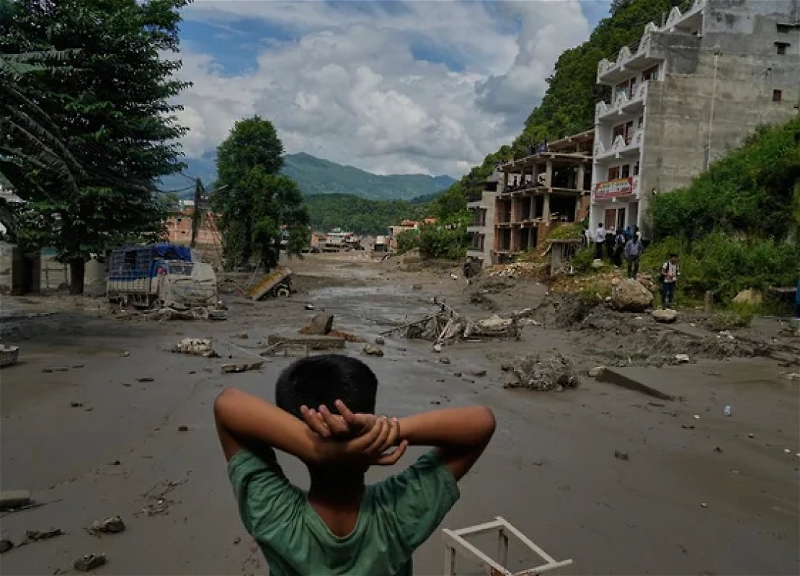
The warning came several days after a devastating flood that occurred in the same area on Wednesday. According to preliminary estimates by scientists, the cause of the sudden rise in water could have been the collapse of part of a glacier in the area of the Langtang Lirung peak. Fragments of the glacial mass entered the river, displacing a large amount of water and triggering a rapid flow that spread downstream.
The situation is complicated by the fact that after the initial collapse, the riverbed was blocked by masses of ice, stones, and other rock. As a result, a natural body of water formed, the level of which continues to change.
According to Chinese state television, by Friday about 2.5 million cubic meters of water had accumulated in the lake. At the same time, specialists expect that between Thursday and the weekend another three million cubic meters could flow into the body of water. It is precisely the significant increase in the volume of water that prompted the warning about the high probability of a breach.
At the same time, scientists do not rule out a more favorable scenario. As specialists note, the water is capable of gradually seeping through the natural barrier or forming a channel for runoff on its own. In that case, the lake could shrink without a sudden destruction of the dam and the emergence of a new destructive wave.
China's Ministry of Water Resources reported that the body of water arose in the area where the Chhochen Khola and Purepu Tsangpo rivers converge. It is located not far from the Langtang Lirung peak, where the glacial collapse presumably occurred. A few kilometers downstream lies Dezhen, also known as Gyirong, a major land border crossing between China and Nepal.