Point of no return: The political dismantling of Armenia
The large-scale procedural actions that unfolded in Yerevan at the end of August 2026 have definitively moved Armenia's domestic political struggle out of the format of acute confrontation and into a phase of systemic liquidation of the former ruling elite.
The events, which began with investigative measures by Armenia's Anti-Corruption Committee, quickly transformed into the largest criminal prosecution in the country's history of former top officials, big business, and affiliated security structures.
In terms of scope, operational scale, and the administrative and legal resources involved, what is happening surpasses all previous anti-corruption campaigns. At the center of the investigation are figures who shaped the country's political and economic landscape for two decades. An analysis of the legal wording, the official statements of the current authorities, and the accompanying information backdrop shows that this is not simply another criminal case, but a consistent strategy to restructure the entire framework of state power, the financial sector, and the country's foreign policy.
The architecture of the criminal case: from ex-presidents to their families
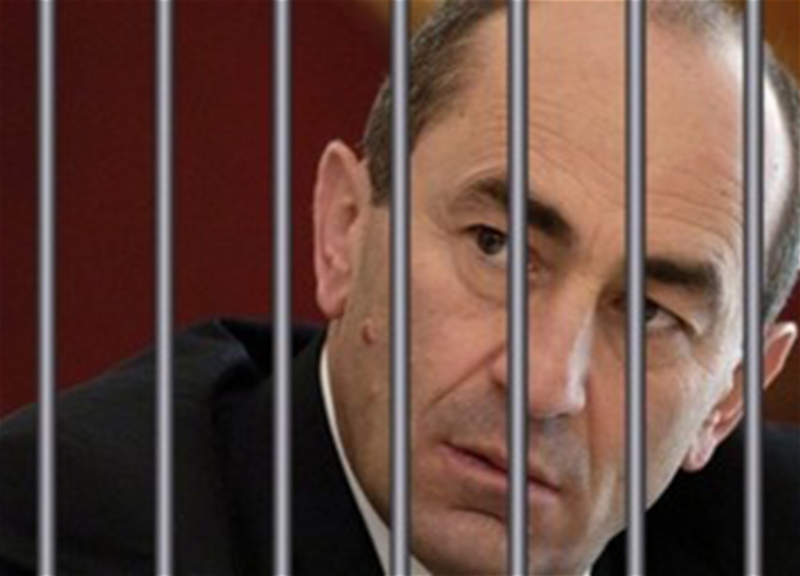
The formal start of the tough phase of the special operation was marked by large-scale searches conducted by law enforcement agencies at several dozen addresses in Yerevan and in the country's regions. The Anti-Corruption Committee's attention focused on real estate, commercial structures, and private residences affiliated in one way or another with Armenia's second president, Robert Kocharyan, as well as with his closest circle and relatives. On August 25, 2026, as part of the investigation into a criminal case concerning the unlawful appropriation of state property, abuse of official powers, receipt of bribes on an especially large scale, and money laundering, Sedrak Kocharyan — the second president's eldest son — was detained and then arrested for a term of two months. He was taken to the "Yerevan-Kentron" penitentiary institution. On the same day, searches were carried out at the home of the ex-president's younger son, Levon Kocharyan, a deputy of Armenia's National Assembly. The situation surrounding 71-year-old Robert Kocharyan himself developed with maximum drama. After being taken to the Anti-Corruption Committee, he experienced a sharp deterioration in his health caused by elevated blood pressure, in connection with which he was hospitalized in a medical facility, accompanied by officers of the National Security Service. However, despite the hospitalization, on the evening of August 26 Armenia's Anti-Corruption Court began considering the investigation's motion, and on August 27 it issued a ruling to impose on Robert Kocharyan a preventive measure in the form of arrest for a term of two months. The second president has been charged in three episodes of exceeding and abusing official powers, two episodes of receiving bribes on an especially large scale, and four episodes of legalizing criminally obtained proceeds. According to the investigation, Kocharyan, using his position and conspiring with associates, ensured the alienation and appropriation of valuable state property at prices many times below market value.

At the same time, Armenia's third president, Serzh Sargsyan, was given the status of a defendant under two articles of the Criminal Code, and a preventive measure not involving deprivation of liberty was imposed on him, though it substantially restricted his movements. The case materials also mention other former high-ranking officials, among whom appear the names of the late ex-prime minister Andranik Margaryan, former Yerevan mayor Gagik Beglaryan, and the heads of affiliated commercial companies.
The next step, according to information from Armenian news resources, will be a wave of arrests targeting the so-called "Karabakh generals" — high-ranking military officers and security officials of past years who amassed fortunes on rear-area supplies, defense contracts, and the construction business, and who now own developed business structures in Armenia. The seizure of property and assets belonging to the defendants has effectively blocked the financial flows that fed the traditional opposition.
Pashinyan's financial ultimatum: the economics and ideology of dispossession
The public justification for such large-scale actions was given personally by Armenian Prime Minister Nikol Pashinyan. At a briefing held in Yerevan, the head of government articulated the political and economic concept of the ongoing process with utmost frankness, directly pointing to those whom the authorities consider the main culprits of the many years of plundering of national wealth. Pashinyan stated that all illegally acquired assets of the country's former leadership — represented by Robert Kocharyan, Serzh Sargsyan, and also the major entrepreneur and leader of the "Prosperous Armenia" party Gagik Tsarukyan — must be seized in full and returned to the state treasury and to the people of the country. In formulating this directive, the prime minister used emphatically harsh and vivid language, noting that everything unlawfully taken from the state — grain by grain, kopeck by kopeck, cent by cent, kebab by kebab — must be returned to the Republic of Armenia and its citizens, and that the authorities will not allow any alternative scenario.
Revealing the ideological essence of the ongoing purge, Pashinyan indicated that the executive branch's key political task lies in changing the very way of life of the former ruling elite and the big oligarchy. In his words, Robert Kocharyan, Gagik Tsarukyan, and Serzh Sargsyan must all reach a state in which, on the first day of each month, they will open their phones solely to check whether the state pension payment has arrived. The head of the cabinet of ministers emphasized that these individuals are obliged to live exclusively on their lawful pension and confirmed legal income.
This rhetoric performs a most important social function. By translating the complex procedural and legal language of multi-volume criminal cases into the language of basic everyday concepts ("kebab by kebab"), Pashinyan appeals directly to broad segments of the population experiencing economic hardship. Public attention is redirected toward the idea of historical justice and the complete confiscation of what was "plundered," which allows the government to concentrate public support around the security structures and the Anti-Corruption Committee.
The foreign policy dimension: demolishing the pro-Russian flank and dismantling Moscow's levers
Behind the formal anti-corruption thrust of the criminal proceedings lies a fundamental geopolitical calculation. Practically all the key figures who have come under procedural attack — from former presidents Kocharyan and Sargsyan to representatives of the affiliated generals' corps — constitute the institutional backbone of Armenia's pro-Russian political flank.
Throughout the history of the independent republic, it was precisely these figures who built and maintained the concept according to which Armenia's sovereignty, security, and economic survival are possible exclusively within the framework of a rigid attachment to the Russian Federation, its security guarantees, and its integration projects. Both in power and later in opposition, they remained comprehensible and predictable partners for the Kremlin, through whom Moscow retained direct access to decision-making inside the country and control over the regional agenda. The consistent purge of this segment entails cardinal changes in the entire architecture of Yerevan's foreign policy orientation: for Russian diplomacy and institutions of influence, the arrests of Kocharyan and his circle, the criminal prosecution of Sargsyan, and the elimination of the financial base of the "Karabakh clan" mean the loss of customary operational levers. The opposition field, capable of bringing people into the streets and financing protest actions, turns out to be completely beheaded and financially drained. The traditional "power reserve" in the form of authoritative generals loses the ability to influence sentiment in the army and law enforcement agencies.
At the same time, Armenia's current government gains complete freedom of maneuver to deepen its course toward diversifying foreign policy and accelerating integration with Western structures. Ridding itself of internal pro-Russian resistance removes the key barrier to revising military obligations, transforming the security system, and reducing the presence of traditional allies in the region.
Armenia's new political landscape
Summing up the unfolding events, it must be stated that Armenia is passing the point of no return in its contemporary political development. The campaign, outwardly framed as a large-scale investigation into the corruption crimes of past years, is in fact a profound dismantling of the previous political and economic model of state governance.
By confronting the leaders of the pro-Russian bloc with a choice between long prison terms and the complete loss of assets, the current authorities in Yerevan are not merely solving the task of neutralizing the current opposition. A systemic destruction is taking place of the foundation on which Armenian politics of the last three decades was built.
By removing the former players from the board and depriving them of resources, Nikol Pashinyan's government is completing the formation of a monocentric system of governance, oriented toward the gradual but steady withdrawal of the state from Moscow's zone of determining influence and its reformatting to fit new geopolitical realities.