USA and Iran agree on ceasefire: war in the region may come to an end
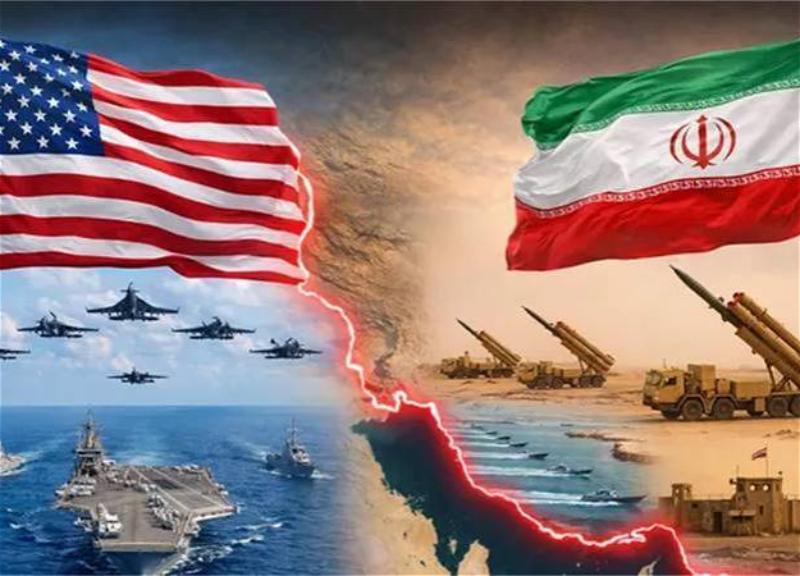
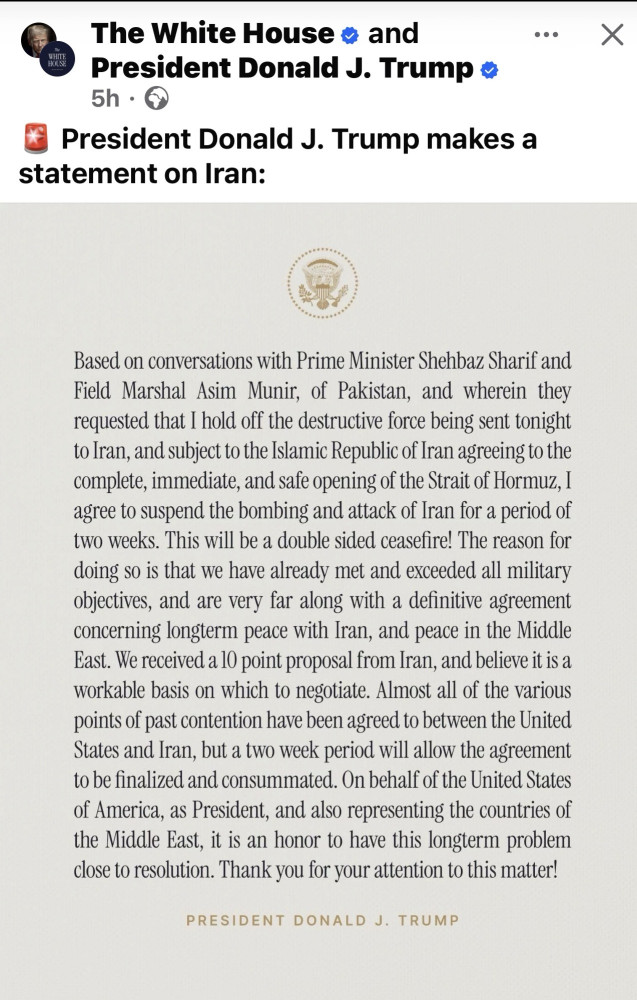
US President Donald Trump announced a two-week ceasefire with Iran on the evening of April 7—less than two hours before the expiration of his own ultimatum.
Earlier that same morning, he had warned that "an entire civilization will die tonight" if Tehran did not open the Strait of Hormuz.
How it happened
Pakistan played a key role. It was at the request of Prime Minister Shehbaz Sharif and Field Marshal Asim Munir that Trump agreed to suspend strikes.
Sharif announced the agreement, calling it the result of "remarkable wisdom" on both sides, and invited delegations from the US and Iran to Islamabad on April 10 to continue negotiations.
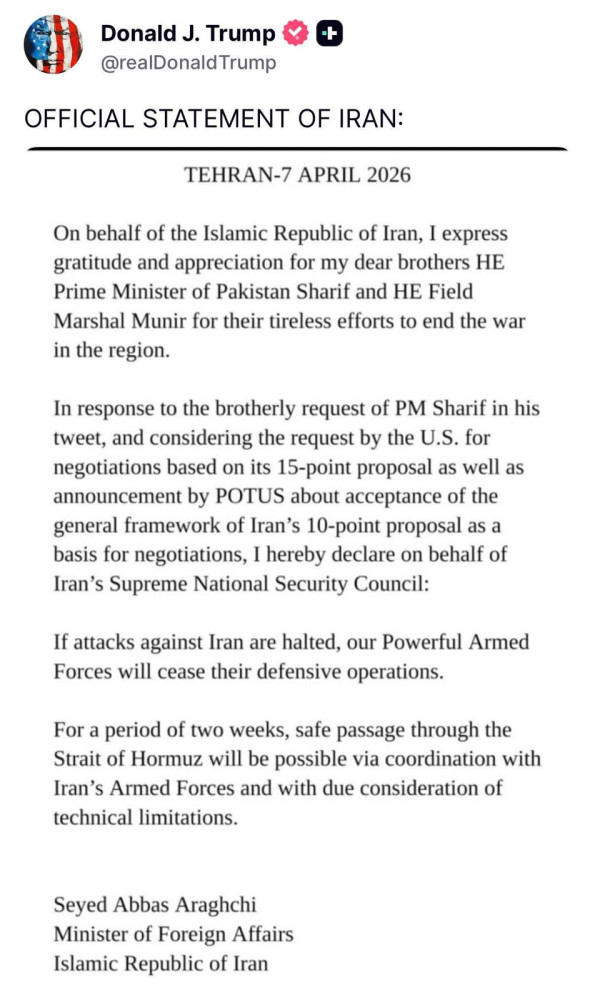
For his part, Iranian Foreign Minister Seyed Abbas Araghchi issued an official statement on behalf of the country's Supreme National Security Council. It states that if attacks against Iran are halted, Iranian armed forces will cease defensive operations. Additionally, over the next two weeks, safe passage for ships through the Strait of Hormuz will be ensured in coordination with Iranian military forces.
Conditions and disagreements
Trump insisted on a "full, immediate, and safe" opening of the strait. The Iranian wording—passage "taking into account technical limitations"—leaves open the question of whether it fully meets Washington's demands.
The Supreme National Security Council of Iran emphasized that the ceasefire does not mean the end of the war. "Our hands remain on the trigger," the statement reads.
The Iranian side also partially disclosed a summary of its 10-point plan.
From the published points, it follows that Tehran demands control over the Strait of Hormuz, an end to the war against the "Axis of Resistance," the withdrawal of American troops from the region, full compensation for military damages, as well as the lifting of all sanctions by the US, the UN Security Council, and the IAEA, and the unfreezing of Iranian assets abroad.
Notably, the plan contains no commitments regarding the country's nuclear program. The full text of the document has not been officially published.
Israel's position
Israel supported Trump's decision to suspend strikes on Iran; however, Prime Minister Netanyahu stated that the ceasefire does not extend to Lebanon, where Israel continues operations against Hezbollah.
Market reaction
Oil futures plummeted by approximately 8%—from $117 to around $103 per barrel. S&P 500 futures rose by more than 1.6%, Nasdaq futures by 1.8%, and Dow Jones futures gained over 700 points.
What’s next
According to sources from Axios, the American delegation at the talks in Islamabad on April 10 will likely be led by Vice President JD Vance. The Supreme National Security Council of Iran has allowed for the possibility of extending the ceasefire beyond two weeks if the negotiations progress successfully.
The war between the US, Israel, and Iran has been ongoing since February 28, 2026.