
From Rome to Baku: why ancient walls cannot be 'healed' quickly
The history of every nation is inextricably linked to its memory, which finds its material embodiment in stone and architecture.
Ancient monuments are not merely objects of tourist interest; they are the foundation of a people's culture, silent witnesses to triumphs and trials, shaping national identity. However, preserving these priceless relics in the face of modern natural disasters and global climate change is a task of colossal complexity, requiring not only political will but also the deepest scientific knowledge.
Preserving monumental fortifications in the 21st century has evolved from a narrow architectural task into a highly complex systemic challenge, standing at the intersection of climatology, engineering geology, materials science, and the philosophy of restoration. Partial destruction or sudden deformations of ancient walls, which we observe today in various parts of the world, are not evidence of a local management crisis but an objective result of the interaction between centuries-old structures and an aggressive external environment undergoing radical and irreversible changes.
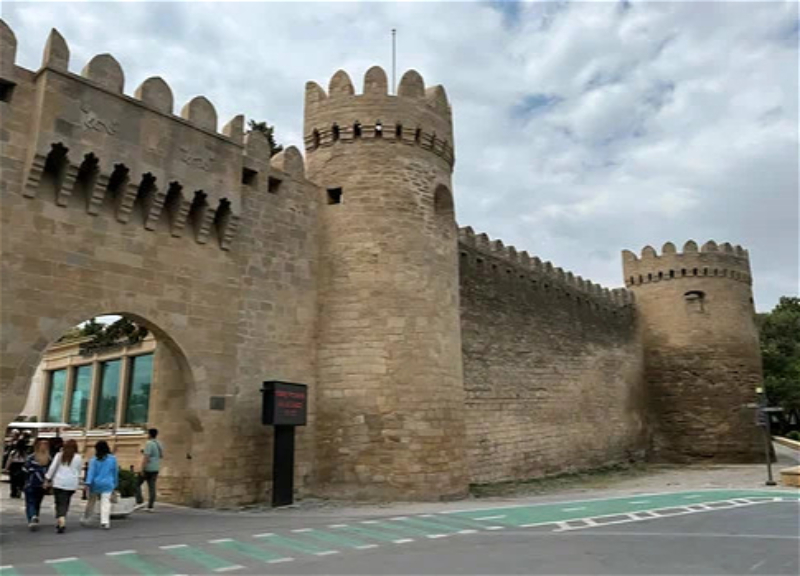
The fortress wall of Icheri Sheher, as a living historical organism and a UNESCO World Heritage site, is inevitably subject to the same physical and chemical processes as the greatest ancient monuments in Europe and Asia exposed to the open air. Global restoration practices in recent decades have completely moved away from the concept of 'one-time major repairs,' acknowledging that the preservation of cultural heritage is a permanent, endless process, where every intervention must be not only scientifically justified but also as gentle as possible toward the historical fabric. One of the main causes of modern deformations in ancient masonry is the global climatic factor, which has become far more unpredictable and destructive. Changes in precipitation patterns, increased air humidity, and sharp temperature fluctuations create thermal shock effects and expansion-contraction cycles that gradually destroy the binding mortars within walls whose age is measured in centuries.
Similar issues are regularly recorded at sites of colossal scale, such as the Great Wall of China. In 2012 and 2016, the world saw footage of significant sections of the wall collapsing in Hebei and Shaanxi provinces after anomalous torrential rains.

Chinese experts, despite having immense resources, officially stated that attempting a total 'reinforcement' of the entire length of the wall contradicts the principles of authenticity. Instead, they have shifted to a strategy of 'preventive conservation,' acknowledging that partial destruction in the most vulnerable sections is part of the monument's life, requiring phased rather than rushed intervention.
Equally illustrative and dramatic is the example of Rome, where the famous section of the Aurelian Walls known as Muro Torto has caused concern for centuries due to its alarming tilt. As early as the 19th century, engineers proposed demolishing and rebuilding this part of the wall, but the international community and Italian restorers deliberately rejected radical measures. Today, this section employs a laser monitoring system and targeted reinforcing injections that do not alter the monument's appearance but prevent its complete collapse. The Roman experience proves that preserving a tilt or natural deformation is often a more scientific approach than crudely correcting the geometry of an ancient structure.

In this context, the situation with the Fortress Wall in Icheri Sheher in Baku must be viewed exclusively through the lens of these international standards. The specificity of Absheron limestone-shell rock is such that it has high porosity, making it extremely sensitive to groundwater levels and salt corrosion. The Administration of the State Historical-Architectural Reserve of Icherisheher is currently implementing a long-term strategy prioritizing the preservation of the original stone over replacing it with new material. It is important to understand that, according to the Venice Charter, the authenticity of the material is of the highest value, and any work must be reversible. This is why restoration in Baku is carried out systematically and cyclically: sections that have not been intervened in during previous decades are scheduled to become priority areas precisely when monitoring detects critical accumulation of fatigue stresses in the material.
In Europe, a striking example of this approach is the conservation cycles in Avignon, where the Papal Palace and its surrounding fortifications constantly face stone erosion due to the harsh winds of the Rhône Valley. French specialists apply a method of 'slow restoration,' where work on a single section can take years to achieve perfect alignment of the mortar composition and stone density with the original. When a fragment of cladding falls off in Avignon, it is perceived by the professional community as a localized technical incident requiring an investigation of causes, not a reason for panic.
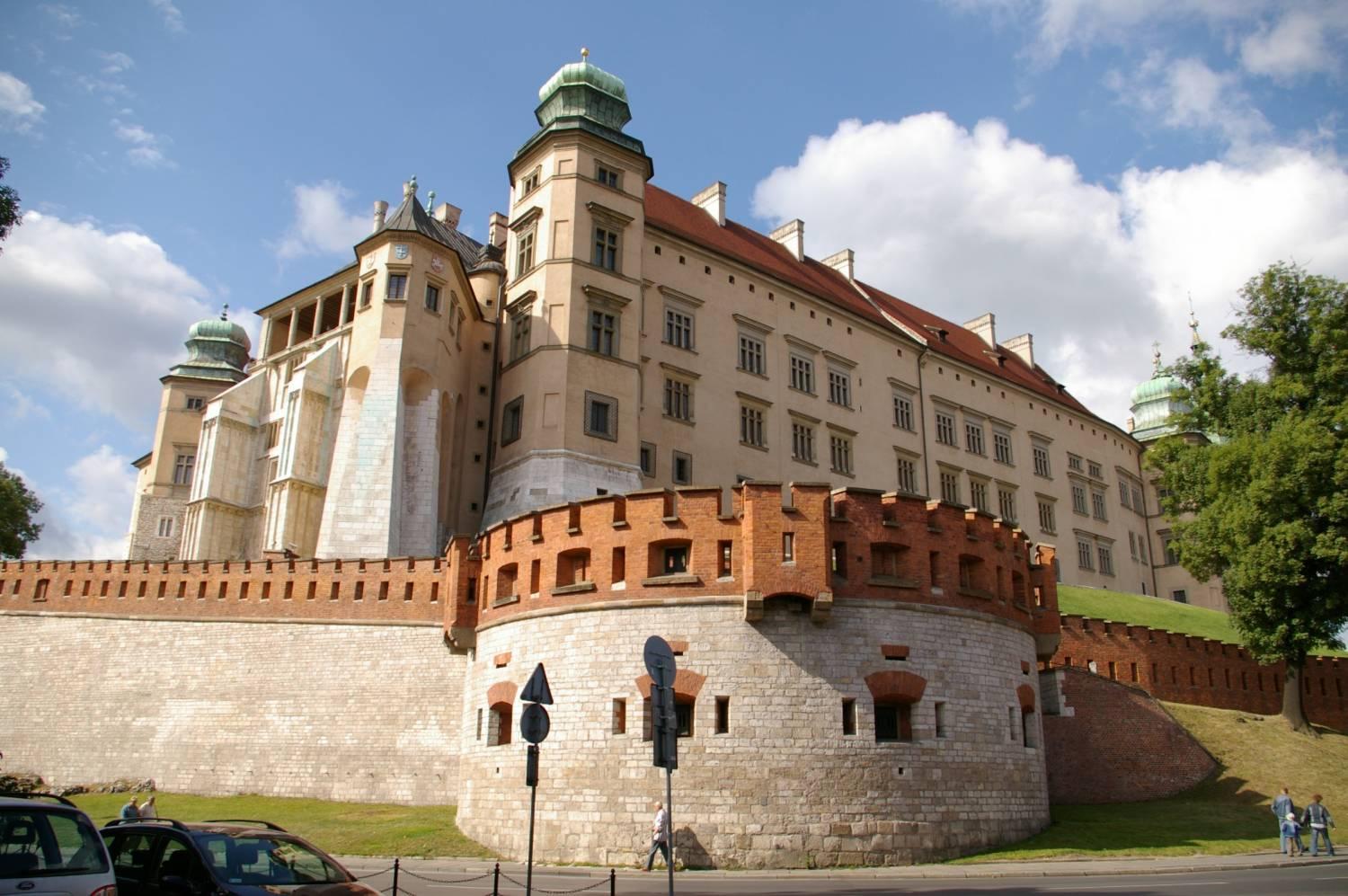
Similarly, in Krakow, Poland, the restoration of the Wawel Castle walls never ceases—it is an ongoing process where the completion of one stage marks the beginning of another.
Moreover, modern research in geomechanics confirms that the movement of soil layers beneath ancient cities is a complex dynamic process influenced by both natural seismic cycles and the pressure of modern urban development. In such conditions, overly rigid, monolithic fixation of an ancient wall can be detrimental: the structure must retain a certain elasticity to 'breathe' with the ground.
Azerbaijani specialists, guided by recommendations from ICOMOS (International Council on Monuments and Sites), consciously avoid 'quick' solutions. Long-term protection involves the use of specific lime-based compositions that require time for carbonation and deep penetration into the stone's pores.
The experience of restoring the Jerusalem Walls also confirms the correctness of this path: there, each individual block undergoes individual documentation, and restoration is conducted pinpointedly to avoid disrupting the static equilibrium established over centuries. Any damage to a specific section of the wall in Baku is related to the unique technical characteristics of that segment—foundation depth, historical layers, or wind patterns. This cannot and should not be considered an indicator of the overall condition of the entire fortress.
The process of safeguarding monuments is not a sprint but an endless marathon, where success is measured in centuries during which the object continues to exist. Attempts to rush work for short-term visual effects have often ended disastrously in global practice (as seen, for example, in unsuccessful restorations of castles in England in the mid-20th century, where the use of cement instead of lime led to accelerated stone destruction).
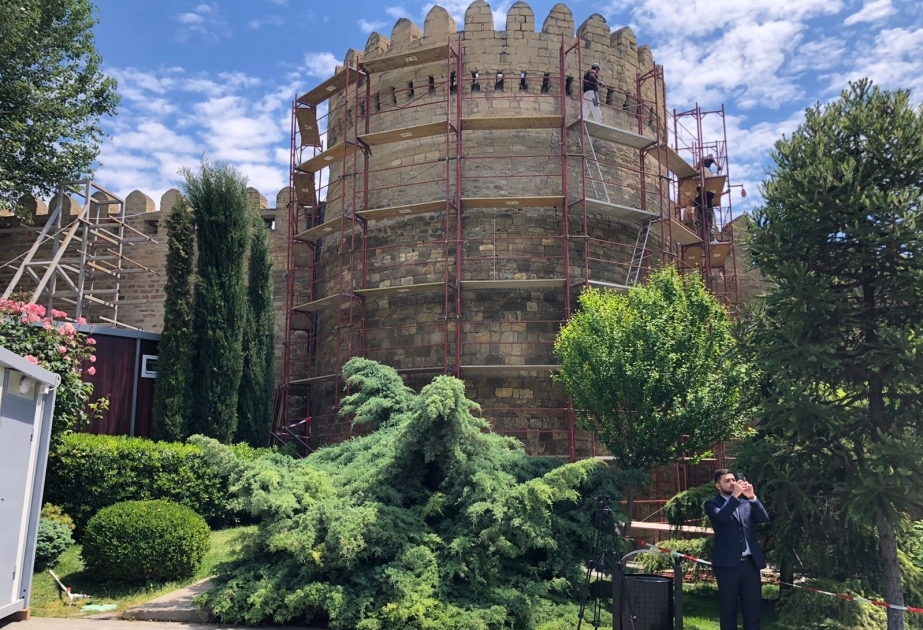
The Administration of the Icheri Sheher Reserve today demonstrates professional competence by choosing the path of continuous monitoring and in-depth assessment, allowing timely responses to the challenges of time. Recognizing the fact that ancient walls require constant care and may show signs of natural wear places Baku among the world's leading centers for heritage preservation. The Administration's efforts are aimed at ensuring the transmission of this unique ensemble to future generations in its true, undistorted form.
Cultural heritage is not a static decoration; it is a living history that demands patience and an understanding that the true longevity of ancient structures lies not in their immobility but in their ability to be restored through a scientific approach and respect for the natural passage of time. Baku's current strategy is one of conscious preservation, where every step is carefully considered from the perspective of international expertise, and the monument's safety is ensured not by cosmetic measures but by a deep understanding of the physics and history of each stone.