Azerbaijan at the G20: Baku enters a new orbit of global diplomacy
Contemporary international politics shows that the real weight of a state is measured not simply by the scale of its resources, but by the ability to effectively convert strategic achievements and economic potential into global political influence.
One of the main markers of influence is becoming diplomatic victories in international elections, the ability to set trends in world organizations, to be a platform for multilateral dialogue and to act as a strategic partner in solving key global issues.
It is in this context that Azerbaijan’s achievements deserve special attention. The diplomacy of official Baku, combining strict adherence to national interests with pragmatic multilateral cooperation, has allowed the country to go far beyond the regional scale and secure the status of a strong middle power, whose opinion cannot be ignored when solving issues of global significance.
New diplomatic triumph
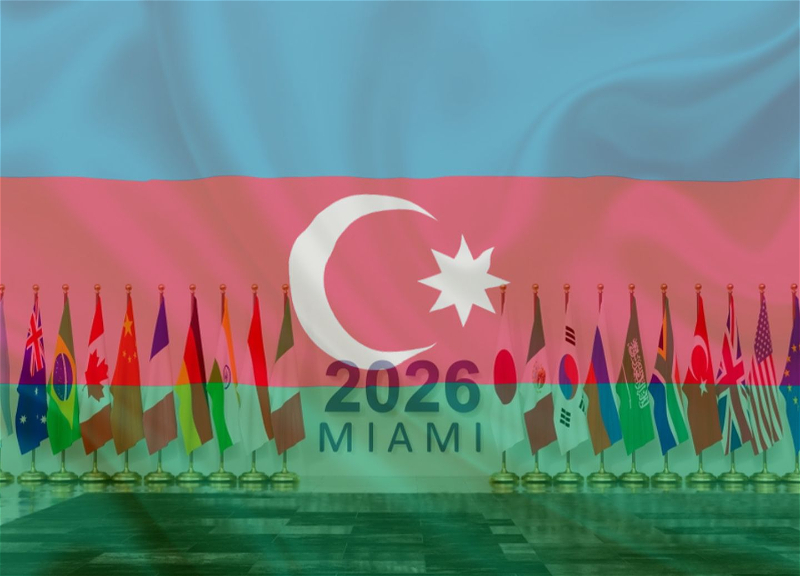
A clear confirmation of this increased status was the new notable success of Azerbaijani diplomacy. U.S. President Donald Trump invited Azerbaijan to participate in the G20 leaders’ summit in Miami, scheduled for December 14-15 this year.
This step by the White House has deep symbolic and practical significance. Of particular note is the fact that the official list of invited non-G20 countries also includes fraternal Kazakhstan and Uzbekistan. Such a consolidated presence of key states of the Turkic world at the planet’s most important economic platform not only underscores their individual authority but also demonstrates the transformation of this space into a powerful sovereign pole of world politics and economics.
To understand the scale of this event, it is necessary to briefly explain the structure and functions of the host forum. The G20, or “Group of Twenty,” is an international forum uniting the world’s largest developed countries and emerging market economies to discuss and coordinate economic policy. The group deals with issues such as global financial stability, international economic cooperation, trade and investment. G20 member countries account for about 85% of global GDP and two-thirds of the world’s population.
Being invited to such an event as a sovereign participant outside the framework of permanent membership is a notable diplomatic success, testifying to the growing role of the state in the global dialogue.
Azerbaijan’s invitation to the G20 summit is a direct recognition of its role in global geopolitics and geoeconomics. Azerbaijan has already gone beyond the regional format, confirming the status of a middle power. The political, military and economic achievements of recent decades, Azerbaijan’s full restoration of its territorial integrity and state sovereignty, have created the conditions for a clearer confirmation of this status. Strengthening positions as a middle power indicates that the country’s influence is growing not only in the region but also on a broader geographical space.
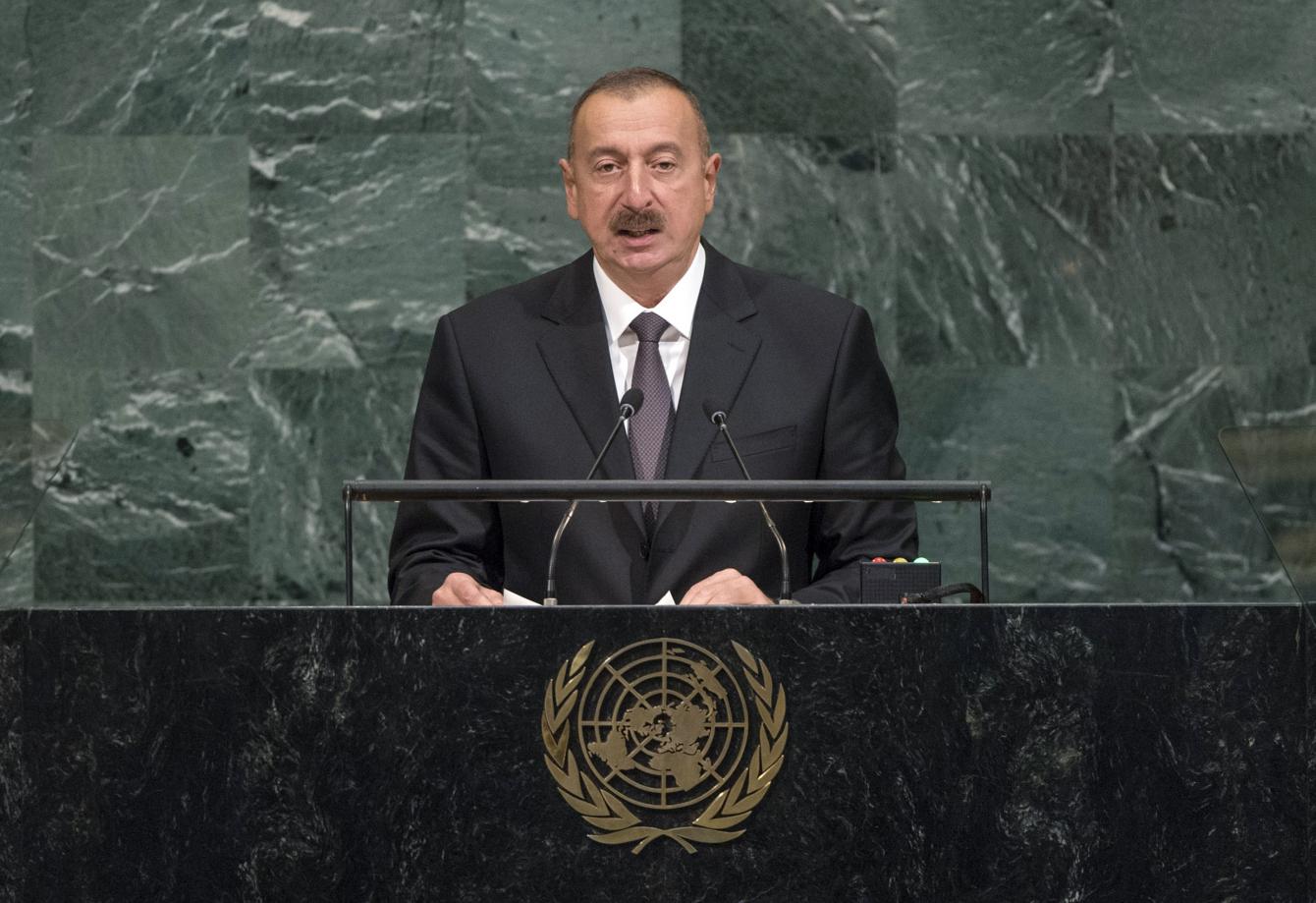
The essence of this positioning was most succinctly and accurately characterized by the head of the Azerbaijani state himself: “Today we have very extensive international ties. The number of countries wishing to cooperate with Azerbaijan is growing every year. We have a very high reputation, a very positive image in the world. Azerbaijan is already recognized in the world as a middle power, and companies from many countries want to cooperate with us in various fields.”
Status of a middle power – what does it mean?
The concept of a middle power combines military power, economic capabilities, diplomatic influence, soft power and other factors.
And although this status does not yet have clear criteria, in general, states capable of projecting their influence at regional and global levels can claim it.
Today, Azerbaijan not only implements projects inside the country and the region, but also carries out various projects in Eastern and Southern Europe, the Middle East and Central Asia. That is, Azerbaijan’s potential is manifested beyond the South Caucasus. It is the combination of these factors that has allowed Azerbaijan to move into the category of states capable of exerting influence far beyond its own region.
Azerbaijan’s classification as a middle power is determined by several important factors. First, the country pursues an active and multilateral foreign policy. Azerbaijan’s victories in international elections over the past two years, as in previous years, are clear evidence of the high trust and authority accorded to our country. This is an important result of the principled foreign policy course defined and pursued under the leadership of the Azerbaijani leader.
The statistics of the country’s successes on multilateral platforms attract special attention with their effectiveness. All of Azerbaijan’s candidacies put forward in 2025 to elective bodies of international organizations were successful – a complete victory was secured for all 14 candidates. This demonstrates Azerbaijan’s achievement of 100% success in electoral diplomacy.
The obtained memberships cover a wide range of areas – sustainable development, tourism, migration, social development, the environment, cultural heritage and humanitarian cooperation. This reflects the universality of Azerbaijan’s foreign policy priorities.
The dynamics of victories continued this year as well. In June 2026 alone, the country achieved maximum results in elections to such authoritative structures as:
- The UN Committee on the Elimination of Discrimination against Women (CEDAW),
- The Human Rights Committee (ICCPR)
- The Committee on the Rights of the Child (CRC).
In accordance with the results of previous elections, Azerbaijan is represented in:
- The Committee on Economic, Social and Cultural Rights (CESCR)
- The Committee on the Protection of the Rights of All Migrant Workers and Members of Their Families (CMW).
Overall, Azerbaijan has gained representation in 5 of the 10 UN human rights treaty bodies, allowing the country to participate in the development of international human rights standards and strengthening its diplomatic presence in the UN system.
Thus, in terms of representation in these treaty bodies, the country shares second and third place with China among all UN member states. These results confirm the effectiveness of Azerbaijan’s multilateral diplomacy and the relations formed with international partners.
The expansion of representation in the UN, UNESCO and other authoritative international organizations further strengthens Azerbaijan’s role in global decision-making processes. The successes achieved within UNESCO have once again confirmed Azerbaijan’s growing international role in the field of preserving and promoting cultural heritage. Azerbaijan’s election to membership and leadership positions in elective bodies covering various fields is an indicator of the high appreciation of the country’s contribution to shaping the international agenda.
Consistent successes in international elections once again confirm Azerbaijan’s reputation as a reliable, responsible and constructive partner. On the other hand, the mandates obtained create additional opportunities for more effective promotion of Azerbaijan’s national interests on multilateral platforms and the development of international cooperation.
Global initiatives: from the Non-Aligned Movement to the “Council of Peace”
The initiatives put forward by Baku within international organizations expand Azerbaijan’s opportunities for multilateral diplomacy and strengthen its international authority. Azerbaijan’s chairmanship of the Non-Aligned Movement, the COP29 climate summit and the World Urban Forum WUF13 are just a few striking indicators of the country’s growing international prestige.
Among the most indicative international initiatives within these platforms is the strategic breakthrough during the COVID-19 pandemic. Having headed the second-largest international structure after the UN at a critical moment, Azerbaijan did not merely formally fulfill its duties. The country effectively revived this historic platform, filling it with real practical content and initiating a special session of the UN General Assembly to combat “vaccine nationalism.”
Another contribution of Azerbaijan to global solidarity is Azerbaijan’s diplomatic efforts on the climate track. Baku managed to bring together representatives of the largest hydrocarbon exporters, developed Western economies and small island states most vulnerable to the consequences of climate change. Thus, Azerbaijan practically demonstrated the ability to form a balanced agenda in which environmental responsibility is not opposed to economic sovereignty and the national interests of developing countries, but is considered as a mutually complementary component of sustainable development.
A special place among the factors strengthening Azerbaijan’s international positions is occupied by its balanced foreign policy course. Baku consistently builds mutually beneficial relations with various centers of power, including the Turkic and Muslim world, the European Union, the United States, China and others. Such a multi-vector approach allows the country to develop cooperation across a wide range of areas while preserving space for constructive interaction with various international partners.
No less significant is the country’s readiness to contribute to the search for new mechanisms to ensure global security. This task acquires particular relevance in the conditions of growing instability in the world system of international relations. Today, the presence of more than 60 conflict hotspots in various regions of the planet confirms the systemic crisis of international mechanisms for ensuring peace.
Under these conditions, the establishment at the initiative of the White House head of a new international organization – the “Council of Peace” – and the participation of President Ilham Aliyev in its first meeting confirmed Azerbaijan’s high authority on the world stage and deep respect for its leader. On the other hand, it demonstrated the country’s ability to combine a strategic diplomatic position with a practical contribution to the resolution of international crises.

With this initiative, the United States indicated the need to rethink the architecture of international security and create more flexible formats of interaction between states.
One of the key reasons for Azerbaijan’s participation in the “Council of Peace” is the successful strategy for resolving the long-standing conflict with Armenia and advancing the peace process. Initiatives aimed at achieving lasting peace with Yerevan, including opening beneficial economic prospects for Armenia, serve to strengthen sustainable peace, security and cooperation in the South Caucasus and beyond. In the global context, this experience is viewed as a rare example, which strengthens trust in Azerbaijan as a responsible participant in international peace processes.
Azerbaijan’s participation as a founding state in the “Council of Peace” underscores the country’s increased political weight, recognition of its international authority and ability to offer practical models for conflict resolution. Active diplomacy, successful experience in promoting a peace agenda and a responsible position on peacekeeping and solving global problems form the image of Azerbaijan as one of the significant actors in the process of establishing a new system of international security.
Geostrategic framework and energy diplomacy
The strength of a state’s international positions is inseparable from its material foundation. Of particular importance is also the country’s geostrategic position – Azerbaijan is located at the intersection of the East-West and North-South transport corridors, and projects such as the Baku-Tbilisi-Kars railway and the Middle Corridor strengthen Azerbaijan’s role as a regional transport and logistics center.
In parallel with the development of transport and logistics potential, one of the main components of Azerbaijan’s international influence is energy diplomacy. The country’s key role in ensuring Europe’s energy security and the implementation of the Southern Gas Corridor project have significantly strengthened Azerbaijan’s position in the world economy and increased the country’s importance as a reliable international partner.
Architecture of a new Eurasian center of power
It is through the prism of recognition of Baku’s high authority on the world stage that the invitation of the head of state to the G20 summit in the United States can also be viewed. This is not just a formal gesture of courtesy, but a strategic calculation by the world’s leading powers, who understand the real balance of power in Eurasia.
Commenting on this historic event, the expert community rightly points to long-term geopolitical trends. “This is further evidence that the Greater Caspian region is confidently strengthening its international significance and is increasingly viewed as an independent geopolitical and economic center,” writes Farhad Mammadov, head of the South Caucasus Research Center, in his Telegram channel.
An analysis of Azerbaijan’s contemporary diplomatic successes allows us to conclude that the country has successfully completed internal and regional consolidation and moved to the systematic consolidation of its international influence.
The results of electoral diplomacy in UN structures, leadership on the climate track, participation in the creation of new international formats, as well as the invitation to the G20 leaders’ summit in the United States reflect the expansion of Azerbaijan’s international engagement and its growing role in discussing issues that go far beyond the South Caucasus.
The combination of these factors indicates a noticeable expansion of Azerbaijan’s international role. Consistent strengthening of positions in international organizations, participation in major diplomatic initiatives and the development of transport and energy projects form the prerequisites for further strengthening its importance in regional and global politics.
If in the past Azerbaijan was perceived primarily as an important regional player, today it is progressively becoming a state whose participation is in demand when discussing issues of international politics, the global economy, energy and transport and logistics security.
In the conditions of the formation of a new architecture of international relations, the role of states capable of connecting regions, forming new formats of cooperation and making a practical contribution to ensuring international stability is growing. It is to the number of such states that Azerbaijan is increasingly confidently attributed.