Dublin's eighth term: with what Ireland headed the EU Council in 2026
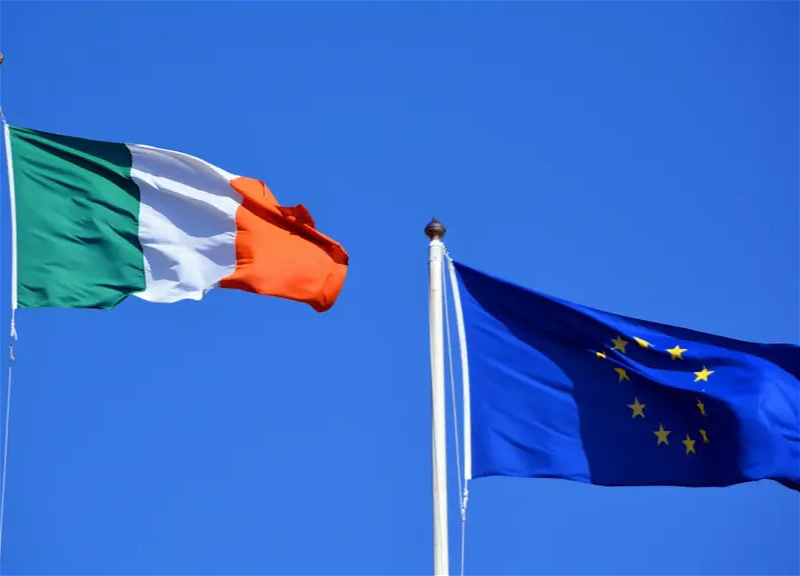
Ireland assumed the post of chair of the Council of the European Union for the eighth time in its history at the beginning of the current month, taking on these six-month powers amid deep structural transformations of the union.
The official slogan of the presidency — “Ní neart go cur le chéile” (“In unity there is strength”) — is meant to underscore Dublin’s commitment to consolidating European efforts. For Ireland, this period is an important institutional milestone that allows it to align current challenges with the rich historical experience of its past presidencies.
Beginning with the debut year of 1975, when Dublin initiated the first-ever official meeting of the European Council and advanced the creation of the European Regional Development Fund, the country has traditionally acted as an effective broker of compromises. In 1996, the Irish presidency laid the regulatory foundation for the eurozone by agreeing on the Stability and Growth Pact, and in 2004 it successfully moderated the historic “Big Bang” enlargement of the EU with the simultaneous admission of ten new states.
Nevertheless, Irish experience also includes institutional setbacks. During the last presidency in 2013, Dublin, despite effectively agreeing on the EU’s seven-year budget (MFF) and creating the Single Supervisory Mechanism in the banking sector, faced criticism for excessive lobbying pressure from the largest American technology corporations (Apple, Google, Facebook), whose headquarters are located in Ireland. This led to delays and softening of the initial regulatory parameters of the General Data Protection Regulation (GDPR), which continues to spark debate in Brussels regarding Dublin’s ability to maintain full impartiality in the technology sector.
In 2026, the Irish program is structured around three equal vectors: competitiveness, values, and security, each of which requires a balance between national economic interests and pan-European goals.
European competitiveness
The first block of priorities focuses on strengthening the global competitiveness and economic resilience of the European Union. Dublin’s main analytical attention is directed at revising the regulatory environment to reduce the administrative burden, optimize bureaucratic procedures, and deepen the Single Market. As Europe’s key digital hub, Ireland sets itself the task of accelerating the EU’s potential in cloud computing and artificial intelligence. An important infrastructural aspect of the program is the development of digital connectivity, where the key emphasis is shifting to attracting investment in submarine telecommunications networks and ensuring the physical security and resilience of transatlantic deep-sea cables. The economic agenda of the presidency is oriented toward linking technological sovereignty with long-term climate commitments within the framework of the green and digital transitions. However, the expert community notes that Dublin will have to overcome skepticism from other EU capitals that fear Irish leadership may delicately circumvent strict antitrust measures against technology giants in order to preserve its own tax advantages.
European values
The second vector of the Irish program is devoted to protecting and promoting European values, where the EU seeks to position itself as a principled global actor. The domestic political dimension of this block includes unconditional support for the rule of law and the promotion of human rights with a special emphasis on gender equality, women’s rights, and the rights of LGBTQ+ persons. Institutional strengthening of democratic institutions is planned through the implementation of a set of measures under the “European Democracy Shield,” focused on protecting electoral processes from external interference, supporting independent media and improving media literacy, as well as through the introduction of the EU Strategy for Supporting Civil Society. An important regulatory task for Dublin will be to ensure balanced application of the European Digital Services Act (DSA) to create a transparent and safe online environment. On the foreign policy contour, Ireland confirms continuity of the EU course of providing comprehensive support to Ukraine and facilitating a long-term settlement of the crisis in the Middle East, including de-escalation of the humanitarian catastrophe in the Gaza Strip and stabilization of the situation on the West Bank of the Jordan River. On the enlargement track, Dublin intends to accelerate the completion of accession negotiations with Montenegro and ensure measurable progress in the negotiation processes with Albania, Moldova, and Ukraine.
European security
The third strategic block covers issues of European security, the development of which will require traditionally neutral Ireland to demonstrate high diplomatic flexibility. The key task in this direction is advancing the project of a new European security strategy and the practical implementation of measures laid out in the White Paper on European Defense and the Defense Readiness Roadmap to 2030. This process envisages coordinating efforts to implement such large-scale initiatives as “Eastern Flank Watch,” the “European Drone Defense Initiative,” the “European Air Shield,” and the “European Space Shield.” At the same time, Dublin undertakes obligations to agree on a regulation on military mobility, respond to challenges in the field of maritime security, and protect critical infrastructure. In the sphere of internal security, priority is given to strengthening cyber defense, countering hybrid threats, cross-border cooperation in combating organized crime, illegal migration, and illicit trafficking in firearms. The foreign policy aspect of security envisages a reset of the transatlantic dialogue by building ambitious trade links between the EU and the United States, as well as deepening partnership with the UN, OSCE, and NATO, which should demonstrate Ireland’s ability to effectively moderate the defense agenda without prejudice to its special sovereign status.
Looking ahead
Ireland’s eighth presidency opens an important chapter in the history of the EU. Dublin’s pragmatic approach to the economy combined with a firm commitment to democratic values and security could give the European Union the necessary impetus. Whether Ireland will prove in practice that “in unity there is strength” will be shown in the coming six months.