"A disservice": about how support for revanchism in France hits Pashinyan in the back

Paris's policy in the South Caucasus has long gone beyond traditional diplomacy, turning into direct torpedoing of the peace process and inciting revanchist sentiments.
Double standards are obvious: positioning itself as a supporter of the peace agenda, the French side simultaneously provides platforms for broadcasting the position of the marionette entity sent to the archives of history. In reality, this means only one thing - direct support for the sham remnants of the defeated military junta.
The latest events related to the activation of the so-called "Association for the Support of Artsakh" and the holding of its "general assembly" clearly demonstrate that political and near-political circles in France stubbornly refuse to accept the new geopolitical realities of the region.
While Azerbaijan and Armenia are taking difficult but consistent steps toward long-term peace, the French side continues to cling to the ghosts of the past. How else to explain the provision of a mouthpiece to radical supporters of revanchism, if not as support for the illegal institutions of destroyed separatism?
The irony of the situation lies in the fact that, trying to play the "Karabakh card," France is actually stabbing Yerevan itself in the back, undermining the positions of Prime Minister Nikol Pashinyan and his team.
One of the indicative examples of this destructive line is the anti-Azerbaijani resolutions and appeals of official Paris. They, of course, have not the slightest influence on Baku's policy, but clearly expose a deep crisis of objectivity in French power institutions.
The involvement of academic platforms in this campaign, such as the branches of the Institute of Political Studies (Sciences Po) in Paris, Strasbourg, and Reims, indicates attempts to systematically ideologize the young generation of French people, imposing on them a one-sided, distorted view of real history.

Numerous publications in the press, colloquia of the so-called "France-Artsakh Friendship Circle" within the walls of the National Assembly - and the very existence of this structure - not only trample on the norms of international law, but demonstrate open and cynical disregard for them. French deputies voicing the narratives of Armenian revanchists at the official level are effectively legalizing lawlessness on the territory of their own country. Indulging the phantom pains of separatism at an almost official level turns French power institutions, demonstratively ignoring the established international legal order, into accomplices of revanchism.
In France, they deliberately ignore the fact that Azerbaijan restored its territorial integrity and state sovereignty in full accordance with the UN Charter and the four resolutions of the Security Council, which France itself once signed.
Support for such initiatives from the Paris City Hall, the Alpes-Maritimes department, and the Hauts-de-France region, to which the above-mentioned "Association" publicly expresses gratitude, clearly demonstrates that anti-Azerbaijani activity in France is systemic and institutional in nature. As can be seen, it is not just about public lobbying structures - the bar has been raised much higher, directly to the level of state and municipal institutions.
This policy of stimulating revanchism fundamentally contradicts the stated position of official Yerevan.
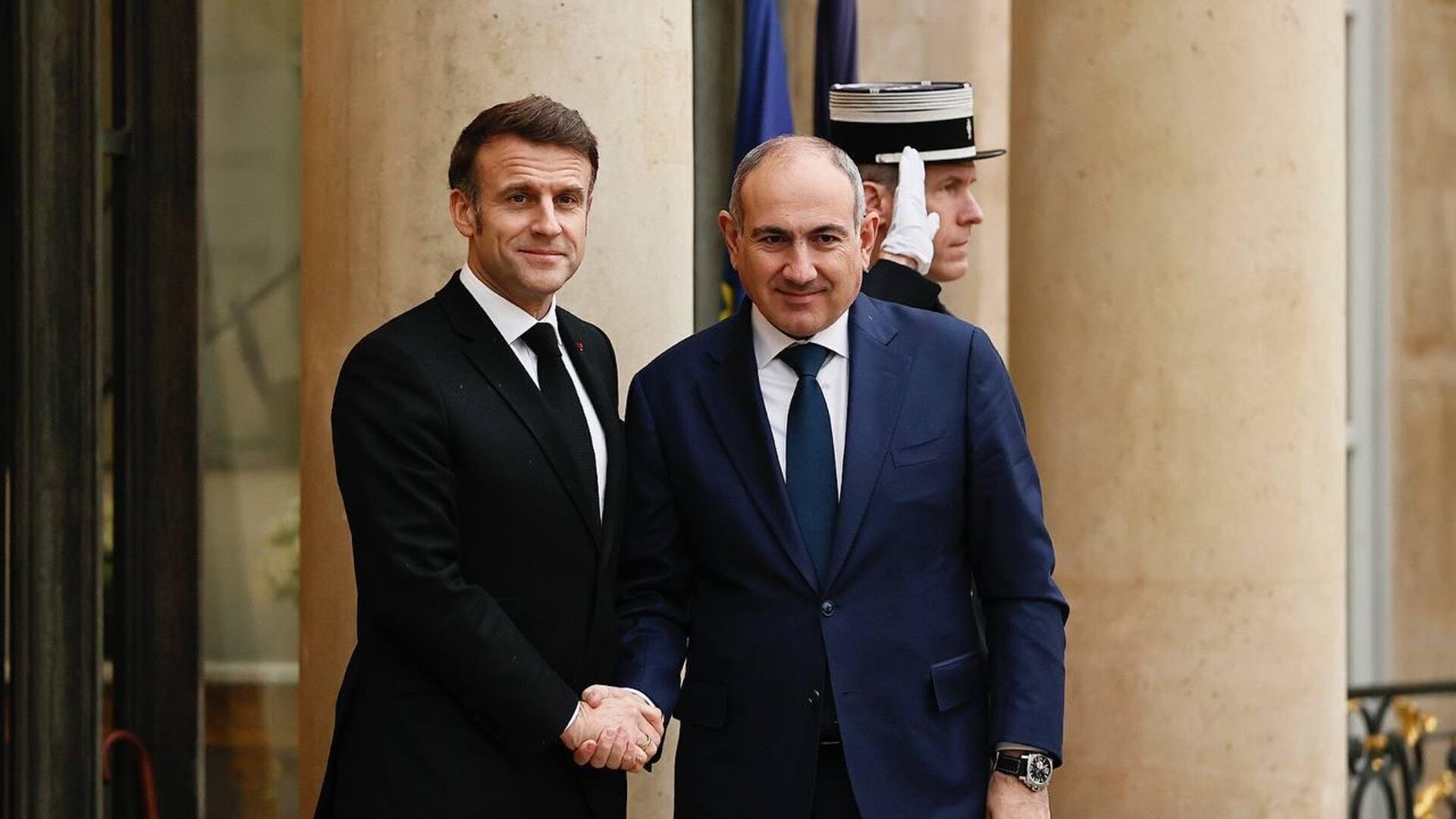
Prime Minister Nikol Pashinyan has repeatedly stated recognition of Azerbaijan's territorial integrity and called on his compatriots - in the interests of Armenia itself - to abandon revanchism and separatist narratives. In this context, support by French strategists for radical circles looks like open sabotage of the course of the Armenian government itself.
By fanning the flames of separatism, France is pursuing exclusively its own interests, seeking to gain a foothold in the South Caucasus. Paris's steps toward the accelerated militarization of Armenia, including the supply of offensive weapons, armored vehicles, and air defense systems, only confirm these intentions.
Instead of facilitating the opening of regional communications, which promises economic benefits to a vast geographical space, Paris seeks to build new dividing lines. Such an approach is doomed to failure, as it ignores the position of key regional players and the will of Azerbaijan, which has formed a new geopolitical and geo-economic reality.
Attempts to revive political corpses and speculate on absurd slogans will not be able to change the historical vector of the region's development, but they are finally turning France into the main brake on the path to peace and stability.