The curious case of Bank Melli Iran: Inside the balance sheet of Baku's most unusual financial institution
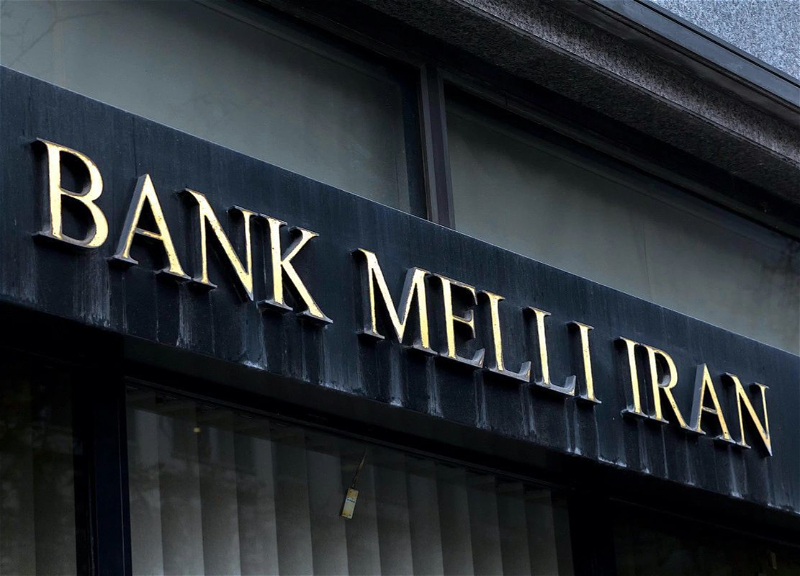
Bank Melli Iran's Baku branch posts record profits while its lending business flatlines — a case study in regulatory limbo and passive income.
In 2024, Bank Melli Iran's Baku branch reported its best financial performance in years: a net profit of 7.55 million manat, nearly doubling the previous year's result.
By conventional measures, the institution is thriving. But a closer examination of the underlying accounts reveals something peculiar: this is a commercial bank that has largely ceased commercial banking.
The Lending Collapse
The branch's loan portfolio tells the story of a core business in terminal retreat.
Customer lending has fallen from 9.47 million manat in 2022 to just 2.23 million manat by the third quarter of 2025 — a decline of approximately 76 percent. Against a total asset base of 121.3 million manat, outstanding loans now represent less than 2 percent of the balance sheet. This ratio renders the term 'commercial bank' essentially nominal.
Where has the capital migrated?
Into a fortress of cash, interbank placements, and government securities. As of September 30, 2025, approximately 113.2 million manat — or 93.3 percent of total assets — sits in instruments that require no credit underwriting, no relationship management, and no branch infrastructure. The bank has become, in essence, a high-security fixed-income fund with a banking license.
The Profitability Paradox
This transformation explains the profit surge. In 2024, the branch earned 5.58 million manat in interest income, primarily from securities and placements with other financial institutions. Remarkably, its interest expenses totaled a mere 286 manat — not thousands, but single digits of manat.
The branch also benefited from 6.17 million manat in provision reversals — recoveries on legacy problem loans that had previously been written down. Strip out these one-time gains, and operating profit from ongoing business activity is modest. This is not a sustainable commercial model; it is a liquidation dividend dressed as performance.
The Regulatory Freeze
The pivot from lending to liquidity management was not a strategic choice but a regulatory necessity. In April 2023, the Central Bank of Azerbaijan (CBAR) imposed operational restrictions on the branch, limiting its ability to open new accounts or expand its customer base. A further suspension of core activities followed in May 2024.
The 2024 audit, conducted by Reanda Azerbaijan, included standard language for institutions whose future viability is in doubt, citing a "material uncertainty related to going concern" . While management notes they believe these restrictions will eventually be lifted, the audited financial statements provide no specific rationale for the CBAR’s decision.
A Decade of Institutional Stress
The current freeze is the latest chapter in a long institutional saga. In 2014, the branch's headquarters was demolished by Baku city authorities to make way for a public park. The bank recorded a 9.3 million manat receivable — its own valuation of the demolished property — and pursued compensation through the courts.
Baku city authorities did not accept this valuation, and the dispute dragged on through litigation for years. For five years, auditors flagged this asset as improperly valued, and in 2017 and 2018, the branch received qualified audit opinions for refusing to write it down. The loss was finally recognized in 2019.
Financial fragility has appeared before. In 2016, the branch breached the CBAR’s minimum capital requirement when equity fell to 21.9 million manat against a 50 million threshold. The parent bank in Tehran recapitalized the branch the following year, converting subordinated debt to equity.
Today, despite its recent profits, the branch still carries 20.29 million manat in accumulated losses. Its capital adequacy remains dependent on a 17.9 million manat subordinated loan from its parent — funding that could, in theory, be withdrawn.
The Commercial Void
What remains is an institution frozen in place. Twenty-two employees service a shrinking client base. The branch collects interest on government paper, and profits accumulate. But no new loans are extended, no new deposits are gathered, and no new business relationships are formed.
For students of banking, Bank Melli Iran's Baku branch offers a rare case study: a financial institution that has achieved profitability by abandoning its core function.
Whether this represents prudent adaptation or terminal decline depends on one's time horizon — and on decisions that will be made far from its quiet offices on 8 November Avenue.
Author: First News Intelligence Unit
This analysis is based on audited IFRS financial reports (2016–2024) and preliminary 2025 regulatory filings submitted by the Bank Melli Iran’s Baku Branch.
Read in other languages: