Division Within and Pressure from Outside: Who is Writing the Script for Armenia's Elections? - Expert Opinions
Parliamentary elections scheduled for June 2026 are becoming not just another electoral cycle for Armenia, but a critical point of political choice and internal reassessment.
The country is entering the election campaign amid deep socio-political polarization, ongoing turbulence in the party landscape, and simultaneously, against the backdrop of attempts to institutionally establish a new order in domestic and foreign policy.
On one hand, the current government led by Prime Minister Nikol Pashinyan demonstrates resilience and a desire to consolidate public support around an agenda of peace, institutional reforms, and economic pragmatism. On the other hand, the opposition remains fragmented, personalized, and largely centered around former political elites who appeal to revanchist and nostalgic narratives. At the same time, there is virtually no room for compromise between these poles, which only heightens public tension.
An additional factor of uncertainty is the growing external influence, which becomes more evident as the elections approach. The activation of foreign actors, informational pressure, and attempts to exert influence through media and 'soft power' add not only a domestic but also a geopolitical dimension to the pre-election campaign.
Under these conditions, the June 2026 elections could either become a moment of political stabilization and institutional consolidation of a new course, or, conversely, lead to a deepening divide and prolonged turbulence. Armenian experts and political analysts share their views on the most likely scenarios, the real balance of forces, and the risks and opportunities of the upcoming campaign in comments to 1news.az.
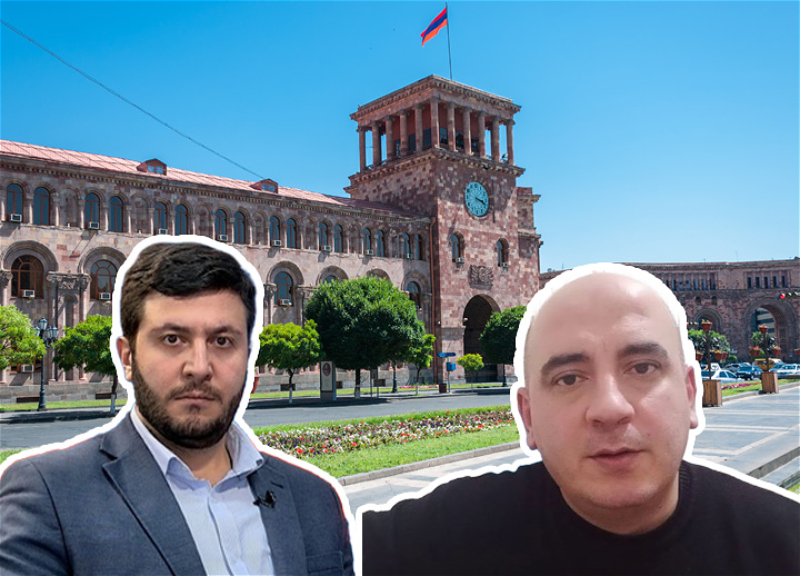
Armenian political commentator Ishkhan Verdyan notes that Nikol Pashinyan is consistently reinforcing a peace agenda, and this strategy is already yielding tangible results. Despite attempts by his opponents to challenge this, it is impossible to deny certain progress in Armenian-Azerbaijani relations, as well as the growing economic interaction between the countries. Unlike political rhetoric, the economy is an inertial factor: once processes are set in motion, it is extremely difficult to reverse or nullify them with mere statements.
According to Verdyan, Pashinyan is betting not only on foreign policy détente but also on a profound internal transformation of society—fostering civic consciousness and citizens’ awareness of their role as the institutional bearers and source of power. This aspect often remains outside public discourse, yet it largely explains the resilience of the current government and its ability to maintain public support.
Against this backdrop, the electoral position of the Prime Minister is not just holding steady—it has noticeably strengthened. Moreover, recent public statements by an opposition representative, broadcast nationwide, have effectively discredited not only the individual but also a wide circle of associated political and even familial structures. As a result, the opposition field has become even more fragmented, weakened, and demoralized.
Undoubtedly, Robert Kocharyan will attempt to consolidate all available resources—this was predictable and comes as no surprise. However, talk of a 'unique moment' for uniting opposition forces seems, to put it mildly, unconvincing, given that a significant portion of these forces has long been under his direct or indirect control.
In essence, to speak frankly, the Armenian opposition today is effectively personified by the figure of Robert Kocharyan. The political field has been reduced to a rigid and oversimplified dichotomy: Nikol Pashinyan versus the opposition led by Kocharyan. All other players are either secondary or integrated into this framework as auxiliary elements lacking independent electoral weight.
Kocharyan’s tactics will clearly be flexible and situational. His team will closely monitor public sentiment, respond in real time, and employ various scenarios—from consolidating political projects to artificially fragmenting them to dilute votes and create the illusion of a broad alternative. These technologies are well-known and have been repeatedly used in Armenia’s past political practice.
However, strategically, according to Verdyan, the question is no longer whether Kocharyan can return to power. Rather, it is about the fact that he currently lacks any real chance of attaining any form of power in Armenia. Moreover, it seems that in the current situation, he should be more concerned not with his political future but with the need to address legitimate demands from the law enforcement agencies of the Republic of Armenia in a legal context.
In the current configuration, Nikol Pashinyan essentially has no comparable competitors in the electoral field. Therefore, it can be said that his chances of victory are not just high—they are extremely high, and if the current momentum continues, the incumbent Prime Minister is poised for a confident electoral success.
According to the expert, external factors will undoubtedly seek to influence the domestic political situation in Armenia—moreover, they are already actively doing so. In particular, statements have been made about Russia’s intention to invest around 163 million dollars in so-called 'soft power' in Armenia right on the eve of the election campaign. In this context, it is hard not to view these actions as direct external political interference.
In fact, according to the expert, this is the only truly serious challenge that Armenia may face ahead of the elections. At the same time, the current government has legitimate and legal tools to counter such influence. If Nikol Pashinyan consistently relies on the principles of sovereignty and legitimacy, he can effectively neutralize this factor as well.
'No state is obliged to accept so-called humanitarian aid on its territory if it has not requested it and if such activities bypass state institutions. Moreover, when a third country begins to independently distribute resources or provide 'aid' within Armenia, this can quite reasonably be viewed through the lens of state security. In this sense, the Armenian state has not only the political but also the legal right to respond firmly to such attempts at external influence,' Verdyan believes.
According to Verdyan, the upcoming elections and their outcomes will become a point of political stabilization—a kind of new starting point and reference.
'It is from this moment that the formation of a different Armenia, a new Armenian Republic, may begin, in which old models, conflicts, and inertia will finally be left in the past. The country is objectively moving onto the tracks of new economic, regional, and geopolitical realities. The establishment of stable neighborly relations and the development of economic cooperation in the South Caucasus open up vast prospects for all states in the region, including Armenia. This is not about tactical gains but about a structural change in the logic of development,' the expert noted.
In the expert’s opinion, it is after these elections that a radical change in the situation may begin, not only within the country but also in the broader regional context. This could mark the start of a new era for the sovereign Republic of Armenia—one that is more pragmatic, stable, and focused on long-term development rather than the reproduction of old conflicts and political deadlocks.
President of the analytical center 'Armenian Council,' Areg Kochinyan, notes that the current political situation in Armenia is characterized by a high degree of polarization. Society is effectively divided into two irreconcilable factions— the government and the opposition, which not only refuse to cooperate but also mutually accuse each other of all possible sins. The level of political confrontation remains extremely high.
At the same time, according to his assessment, the current government retains quite real chances of victory. Moreover, Prime Minister Nikol Pashinyan and his party remain the most popular political figures and force in the country. However, according to sociological surveys, it is unlikely that they will secure an absolute majority of votes.
The only theoretical chance for the opposition, according to the expert, lies in complete consolidation. But even here, serious obstacles exist. Firstly, within the opposition camp, there are several leaders with pronounced political ambitions, and it is hard to imagine any of them agreeing to a secondary or tertiary position on a unified list. Secondly, the electorate of certain opposition politicians often not only fails to accept other leaders but is openly hostile toward them. In such a situation, it is unclear whether a formal alliance would lead to real vote consolidation.
Kochinyan also draws attention to the factor of external interference. According to him, a formally similar political situation was observed in 2021, but the key difference lies in Russia’s role. Back then, Moscow did not take such an active part in the pre-election processes, whereas today, an unprecedented level of interference is evident. This includes promoting their own candidate, media operations, and a wide range of hybrid influences—from social networks and media spaces to search engines.
In the expert’s opinion, the upcoming elections could either become a point of political stabilization or, conversely, lead to a deepening of internal polarization and turbulence. Everything will depend on the voting results and the nature of the victory. If the gap between the winner and competitors is one percent or even a fraction of a percent, it will likely intensify political confrontation. However, if the ruling party manages to consolidate support and secure around 60–70% of the votes, Armenia could enter a period of relative political stability for at least the next 5–6 years.