
Transport as a Weapon of Influence: Moscow Fights for Regional Logistics
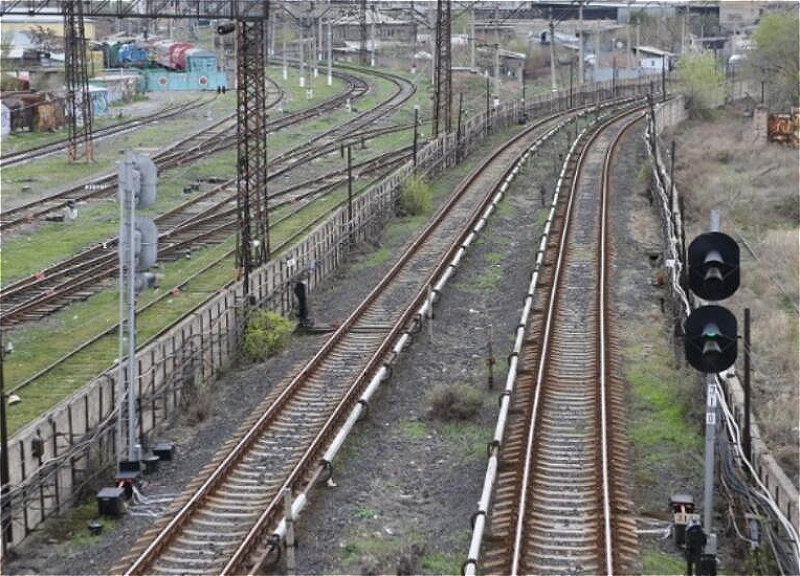
On the South Caucasus, a major game surrounding transport routes is once again unfolding. The statement by Russian Deputy Prime Minister Alexei Overchuk about negotiations between Moscow and Yerevan on restoring railway sections connecting Armenia with Azerbaijan and Turkey serves as a clear signal that infrastructure is once more becoming a tool of geopolitical positioning.
Formally, the discussion revolves around restoring just a few kilometers of tracks. However, behind this seemingly purely technical issue lies a much broader and more complex geopolitical context.
Beneath the rhetoric of "unblocking communications" and Armenia's "trust" in Russian experience and technology—against the backdrop of noticeably cooling Russian-Armenian relations in recent years—lies a pragmatic calculation. Moscow seeks to prevent the formation of new transport configurations without its involvement and to maintain influence over key nodes of regional logistics, especially amid the activation of alternative projects and the growing presence of external players in the transport agenda of the South Caucasus.
Adding further intrigue to this configuration is the recent statement by the Speaker of the Armenian Parliament, Alen Simonyan, who directly stated that he does not envision Russia's participation in the TRIPP project, describing it as an Armenian-American initiative. In doing so, Yerevan has effectively outlined the boundaries of what is acceptable for Moscow in the emerging transport architecture of the region.
Against this backdrop, Russia, for its part, openly expresses interest in establishing direct railway connections with the Nakhchivan Autonomous Republic, Turkey, Iran, and access to key seaports, positioning itself as one of the central beneficiaries of the future unblocking of regional communications.
This naturally raises a key question: to what extent does such an initiative align with Azerbaijan's strategic interests, and does it carry the risk of substituting the principle of sovereign control over routes with external management—especially considering that Baku has already established itself as an indispensable link in the regional transit system and an independent decision-making center?
We addressed these and other questions to Azerbaijani political analyst Ilgar Velizade, who noted that the Armenian side had previously raised the issue of restoring certain railway sections with the Russian side—specifically with "Russian Railways" and its subsidiary structure, "South Caucasus Railway," which operates in Armenia. According to him, this company, under a concession agreement, effectively manages the majority, if not all, of the republic's railway infrastructure.
As the expert emphasized, Yerevan has long been pressing the Russian side on the restoration of these sections, but clear and concrete responses from Moscow were not forthcoming. According to his assessment, the situation began to change only after steps to create the TRIPP corridor started being implemented at an accelerated, forced pace. It was then, apparently, that Moscow realized further delay could lead to a loss of control over critically important railway segments—primarily those connecting Armenia's infrastructure with Turkey and Azerbaijan.
Velizade pointed out that otherwise, the restoration of these sections could have been undertaken by other entities, including American companies or investors directly attracted by the Armenian side. In such a scenario, these segments would fall entirely under Yerevan's control, without any Russian involvement. According to the political analyst, these considerations were key in the decision to initiate negotiations and subsequently implement the railway infrastructure restoration project.
Speaking about the TRIPP project, the expert noted that the situation here looks different. He explained that "Russian Railways," as likely hinted at in Alexei Overchuk's statements, does not plan to use either the TRIPP corridor or the Zangezur Corridor—as was discussed a few years ago—for railway connections with Turkey and the Nakhchivan Autonomous Republic, and further on to Iran.
According to Velizade, the discussion involves a fundamentally different configuration of routes. The restored sections are intended to be integrated into Armenia's overall railway network, after which communication could be established either with access to Georgia or through Azerbaijan's territory—in the event of restoring railway communication along the Gazakh-Ijevan line.
Thus, as the political analyst believes, this is not about including Russia in TRIPP as an independent international project, but rather an attempt to build an alternative logistical configuration using existing infrastructure and railway assets controlled by it. By bypassing TRIPP, the Russian side gains the opportunity to connect its territory with Armenia and Turkey through Azerbaijan, using routes that do not directly involve either the Zangezur Corridor or the TRIPP project itself.
From the perspective of Moscow's current logic, the expert noted, at this stage, it is unlikely ready to use the TRIPP corridor for the transit of its own goods. The reason, according to him, is pragmatic: such a step would mean direct or indirect support for a project backed by the United States of America, and consequently, an increase in American influence in one of the region's key transport and logistics segments. This is why Russia is betting on alternative routes that allow it to maintain autonomy in decision-making and minimize dependence on external initiatives.
"As for the question of benefits for Azerbaijan, the logic here is quite obvious. Azerbaijan generally benefits from transit across its territory in any direction. This applies to routes related to the Zangezur direction as well as transit through the main territory of the country with access to Georgia, and in the future, direct communication with Armenia.
However, in the case of Armenia, the key condition remains the complete unblocking of all communications. Without a comprehensive resolution of this issue, it is impossible to speak of full-fledged transit. Nevertheless, the logic of current processes suggests that this stage may also be achieved in the foreseeable future.
While some actors will be engaged in the construction and restoration of infrastructure—whether American entities within the framework of TRIPP or the Russian side on specific sections—parallel to this, a political solution to unblocking regional communications will likely be found. In this sense, infrastructure projects can serve as a catalyst for broader agreements that align with Azerbaijan's interests as a key transit hub in the region.
As a result, any of the scenarios under consideration proves beneficial for Azerbaijan. In any case, its transit potential increases, and the country objectively solidifies its role as a territory where various transport routes converge. Essentially, this is about a real crossroads of regional and interregional cargo flows, which are then redistributed in different directions.
On one hand, this strengthens Azerbaijan's function as a logistics hub, and on the other, it creates a sustainable competitive advantage in the emerging Eurasian transport and logistics network. It is the combination of geography, infrastructure, and political agency that makes Baku an indispensable link in these processes.
Therefore, regardless of which routes and within which projects the cargo will pass, the key reality remains unchanged: they will inevitably pass through Azerbaijan's territory, enhancing its strategic role in the region.
In the current configuration, it is Azerbaijan that becomes the crossroads. Despite all the rhetoric surrounding Armenia's 'Crossroads of Peace' project, in reality, it is Azerbaijan that becomes the true crossroads of regional and interregional routes—not declaratively, but in practice, with concrete infrastructure content, economic impact, and geopolitical significance," concluded Velizade.