Bern Against Reality: Why Switzerland is Reviving the Karabakh Agenda
In international politics, there are states that have spent decades crafting a convenient image for themselves—neat, trustworthy, and meticulously polished down to the last detail.
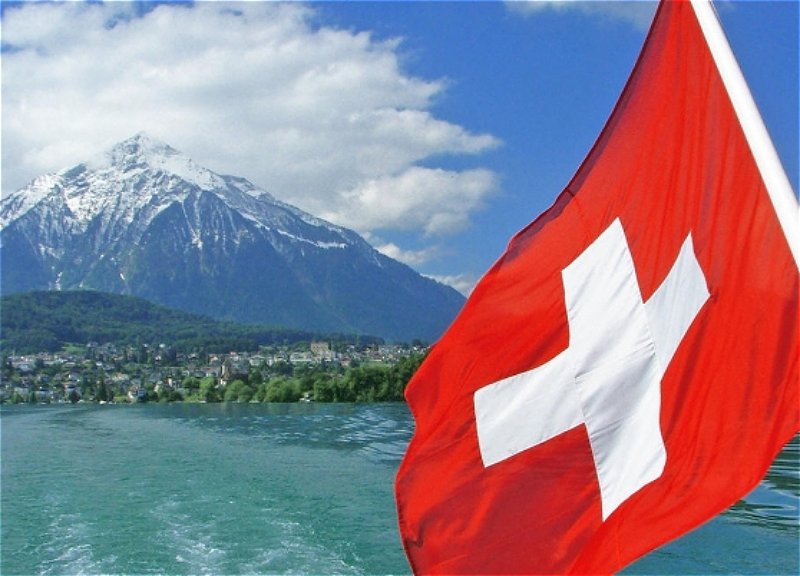
White facades, banking impeccability, a flag with a cross, and the ever-present word "neutrality," uttered as if it were the highest moral category rather than a pragmatic foreign policy construct. This is exactly how Switzerland operates. It positions itself as a platform for dialogue, a mediator without emotions or interests, a country where conflicting parties can supposedly leave their disputes at the door and return to rational conversation. However, a closer look at Bern's actions on the Azerbaijani-Armenian front reveals a rather contradictory reality behind this polished facade.
Following the 44-day war, which concluded with the signing of a trilateral statement by Baku, Yerevan, and Moscow on November 10, 2020, and the anti-terrorist measures of 2023, Azerbaijan restored full sovereign control over its territories. The issue of the so-called "Nagorno-Karabakh" lost its political and legal basis, a reality cemented by military outcomes and Armenia's official recognition of Azerbaijan's territorial integrity within the 1991 borders. Under such conditions, a mediator genuinely interested in regional stability would focus on advancing a peace treaty, border demarcation, and the unblocking of communications.
Instead, a group named "Swiss Peace Initiative for Nagorno-Karabakh" has been established in the Swiss parliament. The very name is an attempt to resurrect a term that lost its political relevance after 2023. This is not a humanitarian initiative but a parliamentary humanitarian fantasy, creating the illusion of a continuing "status issue." The attempt to revive outdated terminology appears as political infantilism—as if repeating an old name could bring back a bygone construct. In international politics, such gestures are not seen as romantic naivety but as deliberate destructive interference.
After 2023, speaking of "Nagorno-Karabakh" as a standalone political entity means ignoring reality and questioning Azerbaijan's sovereignty. As is well known, there is no "Nagorno-Karabakh"; there is the Karabakh region of Azerbaijan. At a time when Baku and Yerevan are engaged in complex negotiations for a peace treaty, such an initiative objectively bolsters revanchist circles within Armenia. It fosters a sense of external support for forces that continue to deny the war's outcomes and subsequent events in the context of Azerbaijani-Armenian normalization. This is no longer neutral mediation but participation in exerting political pressure.
The content of statements from participants in the "Swiss Peace Initiative for Nagorno-Karabakh" deserves particular attention. Their rhetoric about "status," "security of the Armenian population" in the context of a separate political entity, and the "need for international guarantees" largely aligns with the line promoted by Russian officials and pro-government media after 2020. Specifically, between 2021 and 2023, Russian representatives repeatedly spoke of the "uncertainty of Karabakh's status" and the need to discuss it in the future, despite the fact that the trilateral statement of November 10, 2020, made no mention of status. Attempts to portray Azerbaijan's restoration of control as a "humanitarian crisis" were also widely propagated by Russian state media. When similar formulations are echoed in the halls of the Swiss parliament, the coincidence is hard to dismiss as accidental. It appears as a deliberate return to a discourse that objectively complicates the negotiation process.
The situation surrounding the International Committee of the Red Cross, headquartered in Geneva, warrants separate discussion. After the Azerbaijani side uncovered instances of ICRC transport being used to smuggle goods from Armenia into the then-separatist-controlled city of Khankendi and took steps to halt such activities, the issue of the organization's transparency came into the public domain. Bern's response did not involve acknowledging the issues or conducting an internal review. Instead, political pressure on Baku began, accompanied by rhetoric about "humanitarian restrictions." The connection between this episode and the subsequent activation of the parliamentary initiative is quite evident: instead of recognizing the problem and adjusting operations, a path of political pressure was chosen. This choice speaks volumes about priorities.
Swiss diplomacy has traditionally relied on the tactic of artificial parity. For decades, it preferred to speak of a "conflict between two sides," avoiding direct acknowledgment of the occupation of Azerbaijani territories, a fact recognized by international law and UN Security Council resolutions. This approach was presented as balance, though in essence, it meant a refusal to make a clear legal assessment. The million Azerbaijani refugees and internally displaced persons never became a central topic of parliamentary discussions, while the concept of "self-determination" for the separatist administration regularly received political support on European platforms. Today, this logic is being reproduced once again. Under the pretext of protecting the rights of the Armenian population, the idea of a separate entity, which no longer exists in the legal field, is being promoted.
The appeal to neutrality rings especially loud when Bern explains its activism. However, historical experience shows that Swiss neutrality has always been paired with hard calculation. During World War II, the Swiss National Bank conducted large-scale operations with gold from Nazi Germany, much of which came from the looted reserves of occupied countries and the property of Holocaust victims. Economic cooperation ensured stability for Bern and provided Berlin with access to financial instruments amid isolation. Later, findings by an independent expert commission led by Jean-François Bergier confirmed that Switzerland profited from its dealings with the Third Reich.
This historical digression is not intended as moralizing. It demonstrates that behind the facade of neutrality, pragmatism bordering on cynicism has often been concealed. Today, as Switzerland once again cloaks itself in the rhetoric of humanitarian concern, it is hard not to see a repetition of a familiar pattern: formal distancing while being factually involved in processes beneficial to certain political groups. Back then, it was economic calculation; today, it is political.
But this time, Bern has miscalculated. The conflict between Azerbaijan and Armenia is over, with both sides officially recognizing each other's territorial integrity within the framework of the 1991 Almaty Declaration. The artificially created political entity known as "Nagorno-Karabakh" has ceased to exist, and attempting to bring it back into the international agenda is not mediation but an attempt to revise an already established reality, one that even Yerevan acknowledges.
Meanwhile, there are plenty of conflicts in the world where mediation is genuinely needed. Switzerland does not need to look far—the war between Ukraine and Russia is unfolding much closer to its borders than the South Caucasus. If Bern is so eager to demonstrate its peacekeeping activity, it would be logical to direct efforts where the fire continues, rather than where states have resolved their issues independently and are moving toward comprehensive peace without external assistance.
Going along with destructive and revanchist forces in Armenia and the Armenian diaspora is not about peace but about attempting to preserve the conflict in a political form and return the region to a state of instability. Azerbaijan, for its part, is doing everything to prevent such a scenario in the future. Baku considers this chapter definitively closed and not subject to revision.