Azerbaijani-Armenian Dialogue in Tsaghkadzor: Participants' Opinions
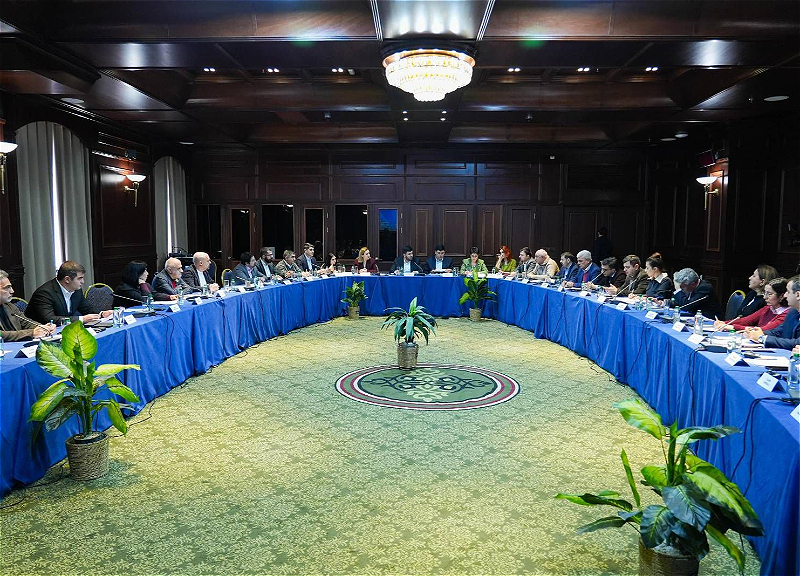
On February 13–14, 2026, a bilateral roundtable was held in Tsaghkadzor, Armenia, as part of the 'Bridge of Peace' initiative, bringing together representatives of civil society, expert communities, and media from Azerbaijan and Armenia.
In addition to the core members of the initiative, the meeting saw participation from an expanded group of representatives from both sides, reaffirming the commitment to an inclusive and sustainable dialogue platform.
The Azerbaijani delegation arrived in Armenia by land through a delimited and demarcated border section near the Azerbaijani village of Ashagy Askipara and the Armenian village of Voskepar, completing all necessary procedures. This crossing was perceived by participants as a significant practical measure to build trust and a clear reflection of the gradual normalization of relations between the two countries.
Discussions focused on the current stage and potential directions for the development of Armenian-Azerbaijani relations, the implementation of the peace agenda endorsed at the Washington Summit on August 8, 2025, and its importance for the region.
Participants exchanged views on the evolving regional security architecture and the economic opportunities arising from the peace process.
A separate session was dedicated to cooperation between dialogue participants, including joint projects, public communication strategies, and mechanisms for inter-societal interaction.
Significant attention was given to confidence-building, public diplomacy, and the development of practical recommendations aimed at supporting societal rapprochement. Additional discussions addressed regional security, borders, and transport connectivity, during which both sides presented their visions and expectations.
On the second day, participants explored the benefits of sustainable peace and the potential socio-economic advantages of establishing inter-societal ties. Public expectations in both countries and ways to ensure tangible outcomes of the peace process for citizens were also discussed. As part of the program, participants met with high-ranking Armenian officials, including Secretary of the Security Council Armen Grigoryan and Deputy Foreign Minister Vahan Kostanyan.
These meetings provided an opportunity to exchange views on the role of civil society in supporting the peace agenda and the ways in which public initiatives can complement official efforts to promote peace.
What were the general impressions of the participants from the meetings, was a candid and substantive dialogue achieved, and do the expectations of societies on both sides of the border align today regarding peace, security, and economic cooperation? The participants themselves provided answers to these questions.
Ayten Gahraman – Advisor at the Baku International Multiculturalism Center:
The dialogue was professional and undoubtedly constructive. Discussions took place both within thematic sessions and in the format of detailed, in-depth exchanges on specific issues.
Moreover, the discussions were not limited to the designated topics on which representatives of civil societies from both sides spoke during the sessions. Additional statements were made during the dialogue, prompting immediate, lively, and substantive responses.
I want to emphasize that all these speeches and remarks were extremely focused and constructive. In my opinion, this is a positive signal and an important factor in advancing the peace agenda. It is also crucial that the dialogue was not declarative: it was not about formal statements but about a serious working process, during which issues of real concern to both sides were addressed step by step.
You know, in total, we spent about 35 hours in the region, and a significant portion of that time—8 to 10 hours a day—was dedicated to intensive discussions on truly important issues that concern both sides.
Our cooperation in shaping a new regional architecture takes on special significance. This involves a phased, step-by-step construction of a comprehensive and sustainable system of political, economic, and humanitarian ties. In my view, such a consistent and multi-layered approach creates a solid foundation for lasting and sustainable peace.
Parallel to this, it is important to reduce mutual distrust and build a long-term foundation for peace in the South Caucasus. Creating a new system of regional interaction will institutionally закрепить the results of the peace process between Azerbaijan and Armenia, which is currently progressing on track 1.
From this perspective, the recent meeting held particular importance.
Regarding the role of civil society, it can influence the reduction of confrontational rhetoric.
Additionally, civil society can soften the tone of public discourse, promote a more nuanced, balanced, and less conflict-driven understanding of the past and present conflict, thereby contributing to a more sustainable atmosphere for peace.
Of course, civil society cannot and should not replace the interstate peace process or real political and diplomatic negotiations. However, it can significantly reduce confrontational rhetoric and support humanitarian dialogue formats—as was the case during the meetings on February 13–14.
This was not a symbolic event or a declarative action but a full-fledged humanitarian dialogue in which civil society took an active and responsible stance. In this context, civil society serves as a crucial auxiliary factor in the peace process, capable of reducing hostility and fostering a more sustainable atmosphere of trust.
Thus, while track 1 shapes official statements, sets the agenda, and develops a kind of roadmap—the path along which the interstate peace process evolves—civil society occupies a conditional 'track 1.5.' It is on this platform that the peace agenda gains additional momentum and practical substance, building on the agreements reached between Armenia and Azerbaijan at the state level.
Fuad Abdullayev – Leading Specialist at the Center for Analysis of International Relations:
First of all, I want to note that this trip to Armenia was not just another working visit for me but a deeply personal and, in many ways, transformative moment. I became a regular participant in the 'Bridge of Peace' initiative at the end of 2025, when one of the meetings was still held in Baku, so I did not take part in our group’s first trip to Armenia.
The first trip in such a format is always a challenging test and a special responsibility, requiring balance and collective accountability for every word spoken.
Perhaps the most significant moment of this trip was the very act of crossing the border. The Azerbaijani delegation arrived in Armenia by land through a delimited and demarcated border section near the Azerbaijani village of Ashagy Askipara and the Armenian village of Voskepar, completing all necessary procedures, which gave the entire trip not only practical but also strong symbolic significance.
I would call this a real achievement of the peace agenda because when you walk this path, your perception of what is happening changes. There is a physical sense of the ice beginning to melt. It is in such moments that the peace agenda ceases to be a set of theses on paper and becomes a lived, tangible experience.
I want to remind you that this time, in addition to the ten permanent participants of the 'Bridge of Peace' initiative, other representatives of civil society, experts, and media also joined. Moreover, unlike previous meetings held in Yerevan, the current discussions took place in Tsaghkadzor, which also set a different format and atmosphere for the dialogue.
During the conference, participants communicated in both Russian and English, and it was an extremely direct, candid conversation. We did not try to smooth over sharp edges or shy away from difficult topics. The agenda included precisely those issues that truly concern our societies—the real barriers to peace.
During the discussions, it became evident that, in the main, the expectations of people on both sides of the border largely align: everyone wants peace and the dividends that are only possible under conditions of sustainable stability. This primarily concerns economic interaction and security for our peoples.
Additionally, I want to note that the entire visit took place in a very intensive, packed working mode, which added dynamism and practical focus to the dialogue.
Rusif Huseynov – Co-founder and Director of the Topchubashov Baku Analytical Center:
Overall, the meeting was held in a constructive atmosphere based on mutual respect. From the outset, the parties reached a common understanding: instead of fixating on contentious and divisive issues, focus on future-oriented matters that can bring mutual benefit. Of course, this did not mean complete alignment on every single point. There were some disputes, but they were conducted in a respectful format, and each side had the opportunity to clearly and substantively articulate the concerns of their society.
The method of arrival in Armenia—through a delimited section of the state border between the two countries—held particular significance. On one hand, it became a symbolic act in the context of the normalization process and the issue of delimitation, and on the other, it had a very practical dimension. This step clearly demonstrated that citizens of the two states are already able to cross the border freely in a fairly large group, and the necessary border crossings and procedures have been established on the ground. That is why our entire team attached special importance to this moment.
As for the 'Bridge of Peace' initiative, at the current stage, our timeline covers the period until May–June. This is due to the upcoming elections in Armenia in June and the start of an active election campaign in May, which objectively complicates substantive work. In this regard, we plan to hold several more meetings before May–June, convey the peace message to a wider audience in both societies—including through media, analytical centers, and the expert community—and, if possible, implement a number of joint projects.
Gulbeniz Ganbarova – Chairperson of the Public Association 'Association of Women in Rural Areas':
I am convinced that during the peacebuilding period in the regions, a huge role will be played by people affected by war and conflicts, those who want a safe future for our children, the integrity of our families, and the opportunity for rural residents to cultivate borderlands without fear.
War has inflicted incurable wounds on us—thousands of martyrs, veterans, and servicemen brought us a historic victory, but this is not yet lasting peace. A war can be started by one country, fighting a specific enemy and achieving a certain result, but peacemaking is a much more complex process with many sides. One state cannot create peace alone; peace is a joint investment in the development and prosperity of our region.
President Ilham Aliyev stated in his recent interview with France 24: 'Peace with Armenia has been achieved; now we are learning to live in conditions of peace.' The trip organized under the 'Bridge of Peace' project is another step on this path. I believe it will make a significant contribution to strengthening mutual trust, expanding professional cooperation, and the gradual normalization of Azerbaijani-Armenian relations.
Ilyas Huseynov – Head of Sector at the Center for Social Research:
It should be noted that another trip by representatives of civil society and participants of the 'Bridge of Peace' initiative was successful, constructive, and carried clear symbolic significance. For the first time, participants of the initiative crossed the land border into Armenia, which in itself became an important historic step.
This step served as tangible confirmation of real progress in the normalization of relations, the strengthening of border security, and the practical implementation of agreements on border delimitation and demarcation. Already today, as participants in the peace process, we can observe concrete and tangible results of the agreements reached.
The event took place in Tsaghkadzor, where the parties discussed a wide range of political, economic, and humanitarian issues related to the development of the situation after August 8, 2025—the date of the initialing of the peace agreement between Azerbaijan and Armenia. It should be emphasized that the processes launched after this date are developing quite dynamically.
In particular, the first economic fruits of interaction have already been recorded: economic cooperation has begun, with petroleum products and grain supplied to Armenia through Azerbaijani territory. This is still an initial but extremely important stage, demonstrating the potential for deepening mutually beneficial relations.
Separate attention during the discussions was devoted to regional infrastructure projects, primarily the TRIPP route. In this context, issues of opening communications, transport arteries, and developing logistics infrastructure were considered. It is also important that a consolidated opinion and mutual understanding on security issues emerged among civil society representatives from both sides.
During the dialogue, sensitive issues related to public expectations and monitoring of the peace process were also addressed. The Azerbaijani side was able to convey its political agenda to partners in a correct and constructive manner, once again underscoring the importance of direct exchange of views.
The 'Bridge of Peace' initiative undoubtedly effectively promotes the peace narrative and contributes to building trust. Peace is a complex and lengthy process that requires time for normalization, stabilization of relations, and the establishment of communication between societies.
However, even today, it is evident that the first, albeit gradual, yet consistent steps are yielding concrete results. In the long term, this process is of fundamental importance for the sustainable development of the entire region.