Armenia Before June Elections: A Game of Fragmentation or a New Power Configuration?
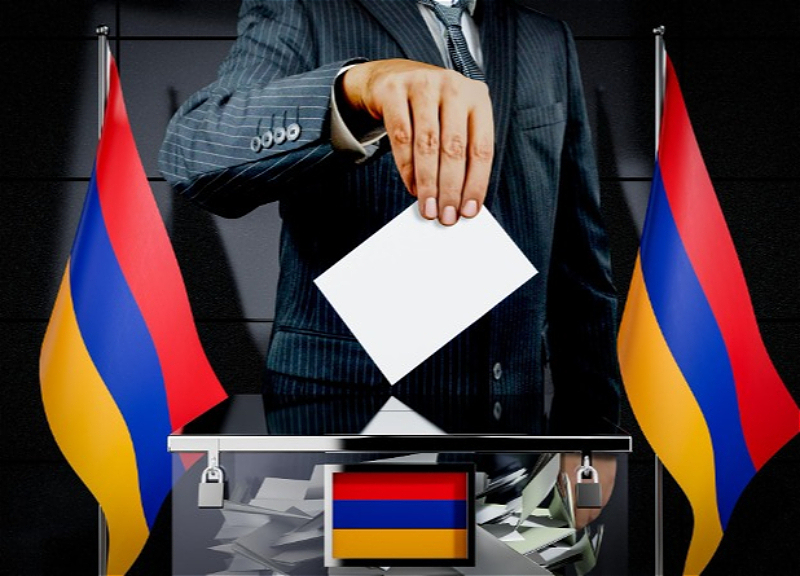
The statement by the Speaker of the Armenian Parliament, Alen Simonyan, that the second president, Robert Kocharyan, may not surpass the electoral threshold in the upcoming parliamentary elections, is not just another episode of domestic political debate.
This is a clear signal. And it is directed not so much at Kocharyan himself, but at the entire opposition and external observers.
The assertion that the 'Armenia' bloc is effectively controlled by the ARF 'Dashnaktsutyun,' with the rest being 'satellites,' reveals the strategy of the ruling power: to highlight the fragmentation of the opposition and its inability to provide leadership. In public politics, such statements are rarely accidental. They reflect the confidence of Prime Minister Nikol Pashinyan’s team in their own position, at least at this stage of the campaign.
Opposition: Competition Instead of Consolidation
Today, the Armenian opposition landscape is fragmented. Kocharyan’s bloc, the political group around the third president, Serzh Sargsyan, Gagik Tsarukyan’s 'Prosperous Armenia' party, and new projects like 'Strong Armenia' are all vying for the same protest electorate.
However, the opposition’s problem lies in the absence of a unifying idea. The negative perception of former presidents remains significant. A society that has endured war, a change of political era, and several crises shows fatigue with the old elites. This is essentially what Simonyan points to when he suggests that a significant portion of voters who supported the 'Armenia' bloc in 2021 may redistribute their sympathies today.
If 2–3 opposition forces do make it into parliament, it will signify not a strengthening of an alternative to the ruling power, but a dispersion of the protest resource.
Ruling Power: Betting on Peace and Manageability
The ruling 'Civil Contract' party, led by Prime Minister Nikol Pashinyan, retains institutional advantages: 1) control over executive power; 2) a parliamentary majority; 3) administrative resources; 4) support from a segment of society focused on a peace agenda and normalization of relations with Azerbaijan and Turkey.
After the crisis of the 44-day war, Pashinyan’s team managed to stabilize the political system, winning the snap elections of 2021. They have bet on stability and a peace agenda. Simonyan’s thesis that 'there is war in the north, war in the east, and we are building peace' is not mere rhetoric. It is a key line of the pre-election strategy.
Following the events of 2020–2023, Yerevan has actively promoted the idea of normalizing relations with Azerbaijan and Turkey, diversifying foreign policy, and gradually moving away from a state of perpetual conflict. For a portion of society, this agenda becomes an argument in favor of maintaining the current leadership.
Ultimately, 'Civil Contract' remains the most organized and structured political force in the country, which is a significant starting advantage.
Geopolitical Context: Moscow, Brussels, Washington
Undoubtedly, the upcoming elections cannot be viewed outside the external context.
Russia, traditionally perceived as the main guarantor of Armenia’s security, is experiencing its own geopolitical turbulence. Yerevan’s relations with Moscow have become more complex and pragmatic.
At the same time, dialogue with the European Union and the United States is intensifying. The EU has activated a civilian mission in the region, while Washington acts as a mediator in the Armenian-Azerbaijani dialogue. Pashinyan’s foreign policy diversification is seen by the West as a step toward greater independence for Armenia.
Observations indicate that the current Armenian leadership is objectively less focused on revanchist rhetoric than representatives of the former political establishment. In this sense, the retention of Pashinyan’s team may be viewed as a factor of relative predictability in peace treaty negotiations.
Western analytical centers (Carnegie Europe, International Crisis Group, etc.) have noted several trends in recent years: 1) the gradual institutionalization of Pashinyan’s power; 2) a reduced likelihood of a forceful comeback by old elites; 3) the growing role of a peace agenda in public discourse; 4) an increase in Armenia’s geopolitical reorientation.
At the same time, factors of uncertainty are also highlighted: 1) socio-economic difficulties; 2) security and the status of regional communications; 3) potential domestic political crises; 4) the factor of the Armenian Church (amid Simonyan’s sharp statements about Garegin II).
The Church and Internal Turbulence
Simonyan’s harsh remarks toward the Catholicos of All Armenians, Garegin II, indicate that tensions within the country persist. The Armenian (Gregorian, no matter how often it is renamed) Church traditionally holds significant public influence, and conflicts between the Church and the state can become an additional mobilizing factor for the conservative electorate.
However, at the moment, this factor has not yet crystallized into an independent political force.
Possible Scenarios
The first scenario—retention of a majority by Pashinyan’s team—is the most likely outcome if the opposition remains fragmented.
The second scenario involves a relative weakening of the ruling power without a change in leadership. The ruling party loses some seats but forms a stable configuration through coalition agreements.
The third scenario, consolidation of the opposition, appears the least likely at this stage: the contradictions between Kocharyan, Sargsyan, and other centers of influence are too deep.
What Are Pashinyan’s Chances?
At the moment, the chances of Nikol Pashinyan’s team retaining power appear high. Several key reasons support this conclusion: 1) fragmentation of the opposition; 2) the absence of a new charismatic alternative leader; 3) societal fatigue with confrontation; 4) a focus on a peaceful and pragmatic foreign policy.
However, Armenian politics has repeatedly demonstrated its capacity for sharp turns. Socio-economic issues, emotional factors, and unexpected alliances—all of these could shift the balance during the campaign.
Simonyan’s statement is not just a jab at opponents. It is a demonstration of the ruling power’s confidence that Pashinyan’s main rival today is not a united opposition, but time and societal expectations.
The June elections will show whether the current course toward peace and geopolitical reorientation will become Armenia’s long-term strategy—or whether the country will once again enter a phase of internal political revanche.
Author: Namik Aliyev, Doctor of Law, Professor, Ambassador Extraordinary and Plenipotentiary, Head of Department at the Academy of Public Administration under the President of the Republic of Azerbaijan