From the ashes to the dawn: how Karabakh overcomes silence and ruins
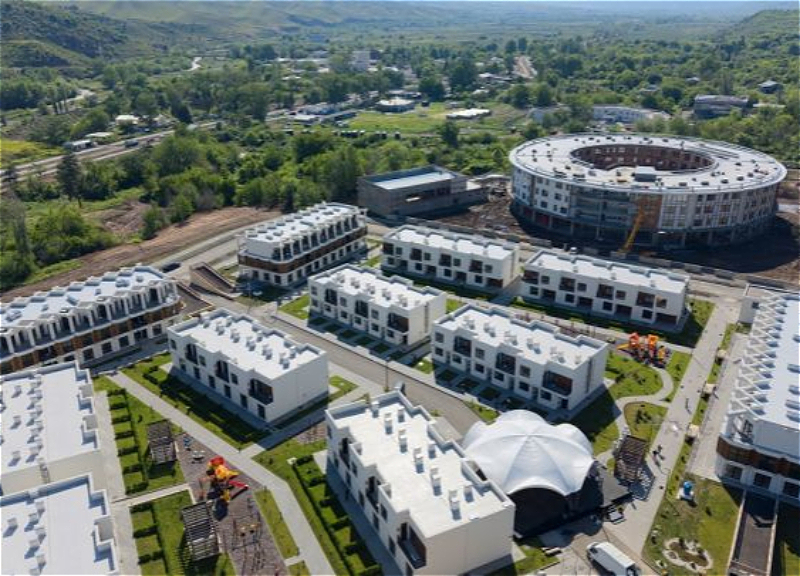
Today life is returning to the liberated lands of Azerbaijan, and this process can no longer be stopped.
A few years have passed, but the appearance of Karabakh and Eastern Zangezur is changing rapidly, and where dead silence reigned until recently, today the voices of children, the noise of construction equipment, and the sounds of reviving cities can be heard. Azerbaijan is consistently and on a large scale restoring these territories, turning them into modern, high-tech regions.
Families of former internally displaced persons, who for decades lived with the dream of home, are finally returning to their native hearths — to new residential complexes and “smart” cities and villages. Today these lands are coming to life and flourishing, becoming completely different from how they appeared in the first days after liberation — devastated and reduced to dust over nearly 30 years of occupation and hiding the ubiquitous threat from mines and unexploded ordnance.
However, to appreciate the greatness of the current construction, it is necessary to remember from what ashes these lands are rising.
When driving through the reviving districts, the contrast between past and present is striking. What opened up to people immediately after the war was not just destruction, but some kind of unnatural silence in a place where life should have been in full swing for decades. In these territories, the war took the form of a particularly protracted, methodical, and quiet destruction of everything living and man-made. These were not random shell hits; it was a deliberate strategy to turn a flourishing region into a dead zone where nothing should remind of those who had lived here for centuries. In international practice, there are dry terms for this, such as urbicide or ecocide, but behind them lie burned forests, desecrated shrines, and cities wiped off the face of the earth, from which not even foundations remained. Understanding what Azerbaijan faced begins with realizing the fact that destruction here was elevated to the rank of state policy of the occupiers.
If one looks at the figures provided by the Ministry of Culture of Azerbaijan and international missions, the scale of the cultural pogrom is staggering. Of the 67 mosques that officially operated in these lands before the conflict began, only three survived fully or partially. The remaining 64 were wiped off the face of the earth or, even more frighteningly, deliberately turned into cattle pens to inflict maximum insult on the religious feelings of Azerbaijanis. But the war was waged not only against religion. In total, more than 700 state-protected historical and cultural monuments were located in the occupied territories. By the time of liberation, inspection teams found that 95 percent of them had been subjected to vandalism, looting, or complete liquidation. Not only mosques disappeared, but also ancient Albanian temples, whose appearance was artificially altered to falsify the history of the region; unique Bronze Age burial mounds and medieval cemeteries were destroyed. Museums that housed tens of thousands of priceless exhibits, including carpets, jewelry, and ancient manuscripts, were totally looted. Today these valuables surface at international auctions or gather dust in private collections, deprived of their homeland.
A special tragedy unfolded in the sphere of ecology, where the damage is practically irreversible. The nature of the region was subjected to barbaric exploitation that cannot be justified by any military needs. According to environmental monitoring data, more than 60 thousand hectares of forest fund were destroyed during the years of occupation. This is a huge figure, comparable to the territory of a small European state. Enormous damage was inflicted on unique nature reserves. Quite recently, on May 10, 2026, at a meeting with families who had moved into the first residential complex in the city of Zangilan, President Ilham Aliyev stated directly: “Eliminating the consequences of the occupation is also a very complex process. Mines, poisoning of lands by the occupiers, ecocide. This Besitchay was a world-famous reserve. They say it was the second largest plane tree grove in the world, a reserve of ancient plane trees. One could say half of it was destroyed by the Armenian state. Some trees were burned, and others were cut down and sold in markets. In total, 60 thousand hectares of our forest fund were destroyed by the wild occupiers. The main part of them falls on the Kalbajar and Lachin districts, but there are also some in Zangilan. This is both robbery, and hostility, and cruelty — and completely groundless. The Azerbaijani people did nothing bad to the Armenian people. The reasons for their hatred toward us should probably be studied by psychiatrists, psychologists, and doctors. Until political forces living with a sense of hatred toward Azerbaijan exist in Armenian society, we must remain vigilant.”
These words emphasize not only the scale of the ecological catastrophe but also the deep psychological rift caused by unmotivated aggression against nature itself.
Urbicide, or the “killing of cities,” became another dark page in this history. The city of Agdam, which was called the “Hiroshima of the Caucasus,” is the most vivid example. Before the war, about 40 thousand people lived here; factories, theaters, and schools operated. After liberation, a desert of broken stone opened to the eye. Residential blocks were dismantled by hand to use bricks and rebar for building defensive lines or for sale on the black market for building materials. A similar fate befell Fizuli, Jabrayil, and Gubadli. Utility networks, water pipelines, and power lines were cut out and removed. This was an attempt to create an environment to which return was impossible, to deprive people of any hope of returning home. Water security was not spared either. The Sarsang reservoir was used for years as a tool of pressure. In winter, water was deliberately released, flooding lowland villages, and in summer, during the growing season of agricultural crops, it was cut off, dooming Azerbaijani farmers to drought. Pollution of the Okhchuchay River with mining industry waste turned it into an ecological disaster zone, where the content of heavy metals exceeds the norm by dozens of times, destroying all river flora and fauna.
Today, when modern schools, hospitals, and airports are being built on the site of ruins, the scale of what was done by the occupiers becomes even more obvious against the backdrop of construction. Restoring 60 thousand hectares of forest is a task not for one year or even one decade. Demining hundreds of thousands of hectares of fertile land, which were deliberately turned into deadly traps, requires colossal resources.
However, the most difficult thing remains overcoming the consequences of culturicide — filling the spiritual void that formed in place of destroyed monuments and desecrated mosques. The past cannot be returned in its original form, but it can and must be documented so that future generations and the international community know the true price of this occupation. This is a crime against humanity and the Earth itself, which has no justification and requires not only the physical restoration of the territories but also long work to restore justice in the legal field. The memory of the destroyed plane tree groves and cities wiped off the face of the earth will forever remain in the national code as a reminder of how important it is to preserve peace and build on one’s native land, in spite of any attempts to destroy it.