
30 drones per minute: Israel creates super-efficient laser system to destroy UAV swarms
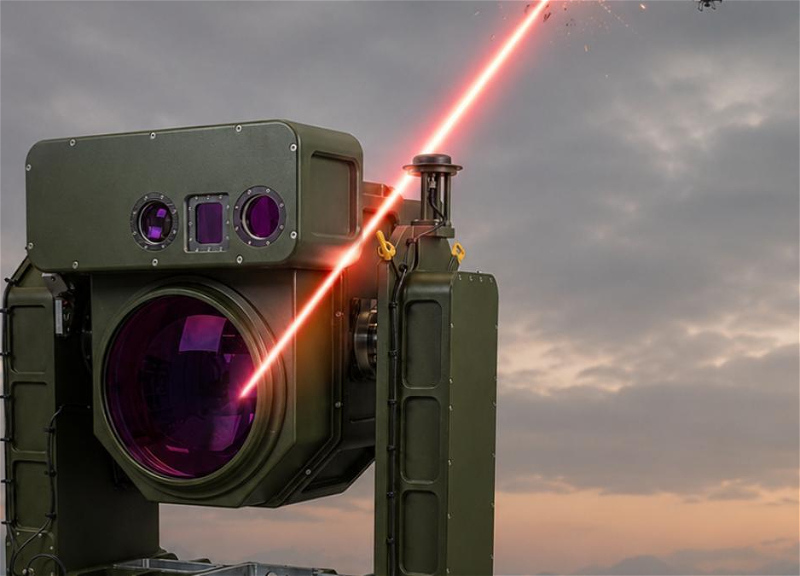
The well-known Israeli technology company Esh-Tech has developed and presented an innovative tactical anti-drone system DroneLight capable of revolutionizing the counter-unmanned aerial systems (C-UAS) field.
The main feature of the new system is the use of pulsed laser technology, which has proven to be many times more effective, energy-efficient, and cheaper than traditional continuous-wave systems.
The system will be officially presented to the public at the international defense exhibition Eurosatory, which will take place in Paris from June 15 to 19.
Swarm hunter
The main advantage of DroneLight is its ability to effectively counter mass drone attacks. The system can destroy more than 30 UAVs per minute within a radius of up to 1 kilometer. It takes only one to two seconds to neutralize a single aerial target.
Unlike standard lasers that heat the target’s skin with a continuous beam for a long time, the Israeli system fires ultra-powerful pulses lasting 10 milliseconds at a frequency of 5 Hz. The laser literally “pierces” the drone: a series of 5-10 through micro-holes with a statistical success rate of nearly 100% is enough to instantly burn out the UAV’s internal electronics, camera, or battery.
Energy savings and integration on armored vehicles
Because the laser is active only 5% of the total target-acquisition time, engineers managed to drastically reduce power consumption—the system requires only 4 kW instead of the 20 kW standard for the military sector. This eliminated the need for bulky cooling systems.
The total weight of the equipment (approximately 800 kg, including the optical head and control unit) allows easy integration onto light wheeled or tracked armored vehicles. Targeting can be performed through any external radar, acoustic, or electro-optical sensors.
Artificial intelligence against bad weather
Another breakthrough is the use of AI to monitor atmospheric pressure and humidity between the laser and the target. The camera scans the space at 1,000 frames per second, and the neural network analyzes the “optical transparency” of the air. If the atmosphere is unstable, the AI automatically adjusts micro-pauses between shots, firing the pulse exactly when interference is minimal. This increases the laser’s penetration capability by more than 50%.
When will it enter service?
The project is currently in the final pre-operational readiness stage. According to Esh-Tech CEO Erez Riahi, the company has already secured a portfolio of advance orders from several foreign clients, and the deployment of the first combat systems in real-world conditions is scheduled for September of this year. In addition to the land-based version, developers are actively designing a modification for naval forces.
The market price of DroneLight is estimated at only one-quarter (25%) of the cost of existing laser analogs, making it one of the most commercially promising short-range air-defense systems.
Source: www.defenseromania.ro