
"New" Armenians in Turkey: the diaspora's "creeping advance," Western support, and political risks
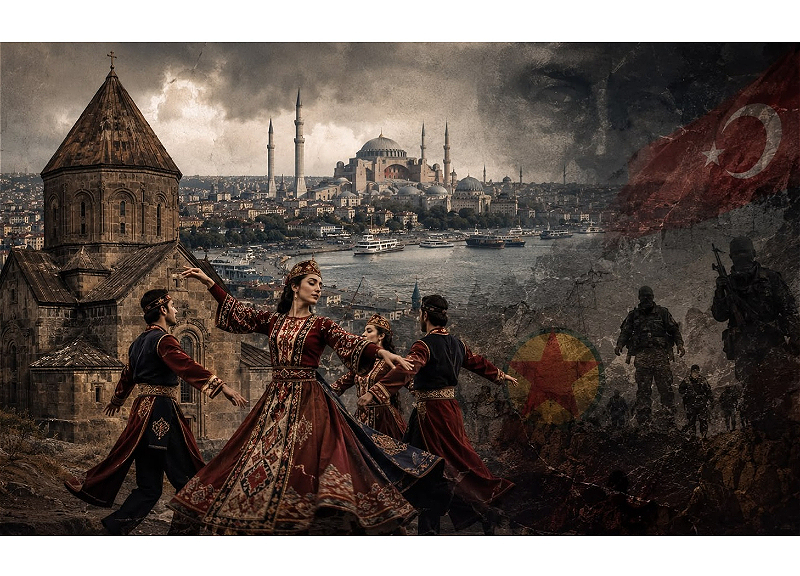
While diplomats in Ankara and Yerevan weigh every word in official statements, a completely different game is under way on the ground.
Along the perimeter and in the very depths of Turkey's eastern provinces, a quiet expansion of "soft power" is unfolding. Humanitarian projects, the restoration of churches, and EU grants are merging into a single system that, imperceptibly but persistently, is attempting to rewrite the region's political and social landscape.
If one sets aside the verbal gloss about "overcoming historical trauma" and "building bridges," a highly pragmatic and far from safe picture emerges. In eastern Anatolia, under the guise of humanitarian dialogue, an extensive ethnopolitical and social infrastructure is being laid down step by step — relying on the institutions of the Armenian diaspora, the involvement of local municipalities, and generous Western funding.
"Crypto-Armenians" — who are they?
The backbone of this process appears to be the work of non-governmental structures, including some with a rather curious background. The most telling example is the France-based NGO Yerkir Europe. The organization, which since 2008 has firmly established itself in Diyarbakır and has also expanded its activity in Dersim, Muş, Van, Harput, and Malatya, is engaged in far more than the restoration of facades.
Its key target audience consists of the so-called "crypto-Armenians" and "new Armenians." What is at stake is the activation of "ethnic self-awareness," the search for "lost roots," and the introduction of the theme of "historical belonging" into everyday life.
It is quite revealing how this is presented in practice. This summer, an event dedicated to Armenian folk dances was held at the Church of St. Giragos in Diyarbakır. At first glance, an innocent folklore evening. But one of the leaders of Yerkir Europe, Armen Ghazaryan, stated outright: this is only a test step, to be followed by a large-scale program to "bring back forgotten dances" to the region. As can be seen, culture here serves as the ideal "icebreaker." It does not require hanging out political banners, but by stealth — through songs, dances, and the linguistic environment — it is aimed at reformatting the identity of the local population.
Far more interesting is the political lining of the process. The restoration of the Church of St. Giragos and the preparations for repairing the Church of St. Sarkis are proceeding with direct financial and organizational collusion with local municipalities controlled by the pro-Kurdish DEM Parti, in whose orbit radical elements are also present.
What is taking place is a situational but extremely dangerous rapprochement — the Kurdish political infrastructure of eastern Turkey is converging with the Armenian agenda of latent separatism. Two historically complex ethnopolitical themes are being carefully reduced to a common denominator, forming a potential front of pressure on the central authorities in Ankara. And this is no longer talk about folklore and dances; the political diagnosis here is utterly precise — what is involved is the systematic laying of long-term risks to the territorial integrity and internal stability of the Turkish state.
From Karabakh to Anatolia: the templates of the "restorers"
Here it is worth recalling a critically important detail that the loud advocates of "humanitarian dialogue" prefer not to dwell upon. It concerns the background of the key implementers.
The French NGO Yerkir Europe, which today so actively promotes the "return of forgotten identity" in Diyarbakır and Malatya, has a very specific profile behind it.
From 1990 to 2015, this structure was one of the operators of illegal settlement programs on the formerly occupied lands of Azerbaijan and sponsored pseudo-scientific "archaeological research" that had one clear goal — rewriting the history of the region and falsifying its cultural image.
Today the same people, with the same well-tested templates, are moving into Turkey's eastern provinces. And to count on the idea that their goals in Anatolia have suddenly become purely altruistic or educational is not merely a mistake. It is a manifestation of extreme political naivety, for which states usually pay with their own stability.
The fact that an organization with such experience is today operating freely in Turkey should, at the very least, raise serious questions for Turkish analytical services. The technologies do not change — what was being tested yesterday in the occupied territories of Azerbaijan is today being carefully imported into Anatolian regions under the guise of "preserving cultural heritage."
The Hrant Dink Foundation and the "humanitarian" conveyor belt
If Yerkir Europe works "on the ground," then the Hrant Dink Foundation has taken on the processing of the elite, the expert community, and youth. Its instruments are more elegant, but with far greater potential for influence and with an eye to the long term. While the former engage in "field" work and the creation of a social environment, the foundation forms an intellectual stratum for which the cross-border agenda becomes a professional norm. Its arsenal includes several key directions:
- The "Journey to the Roots" project — systematic work with the foreign diaspora. By bringing its representatives to Istanbul and the Anatolian provinces, the foundation turns personal family memory into public discourse and a factor of permanent presence.
- Long-term scholarship programs — covering dozens of organizations in Turkey and Armenia. This involves the exchange of specialists, joint academic research, and the creation of sustainable professional networks.
- The "Turkey–Armenia Travel Fund" — a grant mechanism ensuring regular contacts among journalists, scholars, students, and civic activists.
Officially, all of this functions under the banner of "developing civil society" and "people's diplomacy." In reality, a flexible network of influence is being built.
The difference is fundamental. A state's diplomatic course can be adjusted by a decision of the leadership or a change in the political situation. But horizontal social ties, nurtured on grants, reinforced by joint publications and years of regular travel, continue to operate autonomously. They gradually form within Turkish society an environment ready to perceive historical and ethnopolitical claims not as a threat to sovereignty, but as a "difficult but necessary dialogue."

Officially, all of this is called "strengthening civil society." In reality, a network of influence is being created.
The church as an ethnopolitical hub
Against this backdrop, activity around Armenian religious heritage has sharply increased. In a short time, the churches of St. Nigoghayos in Beykoz, St. Karapet in Üsküdar, and the Holy Trinity in Malatya have been restored or reopened in Turkey, and funds are being raised to repair the Karasun Manuk church in İskenderun.
Undoubtedly, preserving architectural monuments and ensuring freedom of worship is the natural duty of any normal state. The Turkish authorities, including the Ministry of National Education, willingly engage in dialogue with the Armenian Patriarchate, discuss programs for teaching language and religion in schools, demonstrating breadth of outlook and fidelity to democratic standards.
However, there is a line beyond which a religious site ceases to be merely a place for prayer.
In diaspora conditions, the church has always been the main institution of communal consolidation. When youth clubs, language courses, venues for secular events, and permanent contacts with foreign foundations form around a church, it inevitably turns into an ethnopolitical hub. The question is not whether historical buildings should be restored — of course they should. The question is what kind of infrastructure takes shape around them and to what extent the state is able to control its long-term goals.
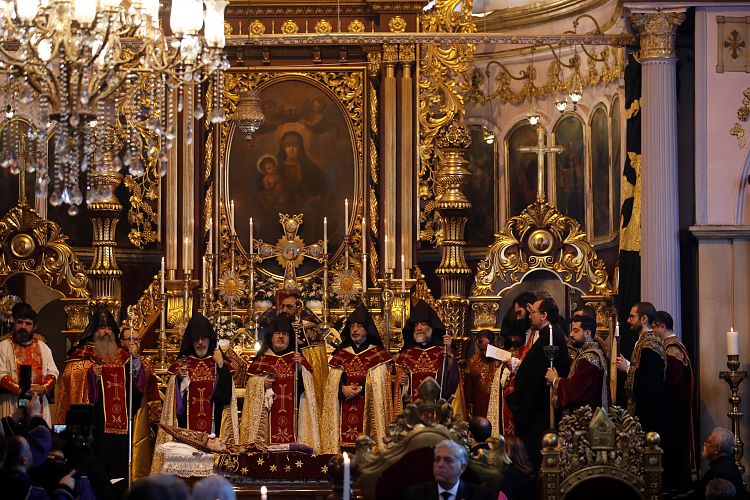
If the state leaves these processes without transparent oversight, then beneath the domes of restored churches an infrastructure of latent separatism begins to ripen.
The Western orchestra: grants and dangerous games with "shared heritage"
The main sponsor of this process is the European Union. Brussels is allocating serious resources, rapidly institutionalizing the normalization process and attempting to make it irreversible.
The funding scheme is structured as flexibly as possible. Within the framework of EU programs to support the normalization of relations, grants ranging from 10,000 to 60,000 euros are allocated, with an implementation period of up to 11 months (the current pool is earmarked for the 2026–2027 period). The sums are not gigantic for large organizations, but when they flow simultaneously in dozens of streams through the Eurasia Partnership Foundation, TEPAV, Anadolu Kültür, and the Hrant Dink Foundation, a powerful synergistic effect arises.
The financial and institutional network covers several key spheres at once:
- The media space: Programs such as the media dialogue in Kars or the "Media Bus Tour" bring together groups of journalists, editors, and bloggers from both countries. The goal is to shape the desired informational optics and softly neutralize critical assessments of normalization in the Turkish press.
- Academia and cultural heritage: Within the framework of ICOMOS meetings attended by European diplomats, the idea of jointly restoring the cathedral in Ani with the involvement of Armenian specialists is being promoted.
- The business community: At meetings of entrepreneurs in Kars, who enter through the Alican–Margara crossing point, million-dollar trade prospects are highlighted. The economy serves as an attractive battering ram — local business is already beginning to demand the lifting of entry restrictions and the swiftest possible opening of the borders, without giving thought to the ethnopolitical costs.
At the same time, the term "shared heritage," which Western structures so actively employ, is far from neutral in this context. Amid an unresolved historical dispute, promoting the idea of "shared heritage" around the architectural monuments of Anatolia amounts to a soft legalization of historical and cultural claims. First declare a monument "shared," involve external institutions in its restoration and management, and then build an international agenda around it — this is a "soft method" of legalizing historical and territorial claims.
The Anatolian triangle: risks for Ankara
The geography of these processes speaks for itself. Kars, Diyarbakır, Malatya, Van, Muş, Dersim — this is the most sensitive belt of eastern Turkey, with a very complex social and ethnic fabric. The process now unfolding under the label of "civil diplomacy" carries entirely concrete long-term challenges for Ankara:
- Ideological: An institutional base is being created for legitimizing Armenian historical claims inside Turkey itself, by the hands of Turkish NGOs and citizens, and with European money.
- Social: A stratum of so-called "new Armenians" and "crypto-Armenians" is being formed, whose loyalty to the central government is called into question in favor of ethno-confessional identity.
- Political: A dangerous interweaving of Kurdish radical circles with Armenian diaspora structures is taking place, which in the longer run creates a potential unified vector of pressure on Ankara.
- Regional: The experience of organizations that operated on the formerly occupied lands of Azerbaijan is being imported into Turkey's eastern provinces, creating risks for the internal stability of the entire country.
Not to close off, but to seize the initiative
The emerging situation does not mean that Turkey must immediately lower an "iron curtain," wind down negotiations, and see a spy in every foreign tourist or restorer. Taking up an entrenched defense, sliding into total suspicion, or applying a heavy-handed clampdown is precisely the scenario the opponents are waiting for in order to accuse Ankara of infringing minority rights and of authoritarianism. But the opposite mistake — displaying carelessness and believing in "pure culture" — may prove too costly.
Turkey is a strong, self-confident state. But confidence also requires the utmost focus and hard-headed pragmatism.
The normalization of relations with Armenia is necessary if it serves the country's national interests and leads to stability in the region. But this normalization must remain strictly mutual, transparent, and must not turn into an instrument of one-sided influence.
A vacuum never remains empty — if the state itself does not formulate a clear, distinct policy regarding its cultural heritage, its work with national minorities and communities, and cross-border cooperation, then this niche is instantly filled by external structures with their own carefully calculated geopolitical score. In this particular case — Armenian diaspora structures with a well-known agenda and Western grant-givers.
Ankara needs to introduce targeted, transparent monitoring of the financial flows coming into NGOs and church funds — while the matter still concerns only the eastern provinces. What is required is a rigorous audit of organizations, including those with a "Karabakh past," and the prevention of any attempts to transform cultural evenings into ethnopolitical rallies.
Dialogue is needed. But Turkey must conduct it on its own terms, from the standpoint of its own sovereignty, without allowing its regions to be turned into a testing ground for other people's geopolitical experiments.