The Kremlin's back alley against sovereignty: why Baku issued a warrant for Moscow's "armchair hawks"
The attempts by certain circles in Moscow to come to terms with Azerbaijan's sovereign, independent, and principled foreign policy long ago progressed from the stage of political annoyance into a phase of clinical hysteria.
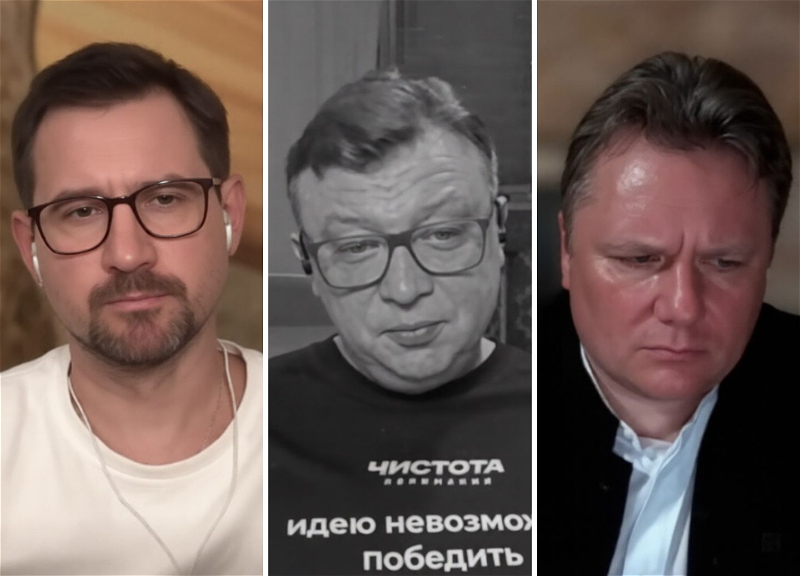
The inability to influence Baku in the customary language of ultimatums and geopolitical blackmail results in propaganda mouthpieces being periodically released from the dark corridors of Staraya Ploshchad. And now this entire informational bacchanalia has acquired a fully official legal status: the Prosecutor General's Office of Azerbaijan has placed three citizens of the Russian Federation on the international wanted list — Alexei Chadayev, Ivan Knyazev, and Semyon Uralov.
A court in Baku arrested this trio in absentia, and the country's law enforcement agencies have sent the corresponding materials for their apprehension. However, it is important to understand: this is not merely about run-of-the-mill bloggers or "experts on call." This is about the institutional degradation of Russian analytical thought, which has slid into direct support for terrorism and chauvinistic calls for the destruction of an independent state.
On-air impunity: from nonsense about "legal succession" to "targeted liquidations"
So what exactly have these armchair "strategists" done wrong? The answer is provided by the materials of the criminal case opened by the Prosecutor General's Office of Azerbaijan, as well as by the very nature of their on-air revelations.
Behind the screen of deliberations about "geopolitics," their streams concealed banal extremism, carefully packaged in the format of podcasts. The first signal was the July 14, 2026, episode of the program "Clarity of Understanding" on Semyon Uralov's YouTube channel. In the company of Alexei Chadayev, an adviser to the Minister of Transport of the Russian Federation, and Ivan Knyazev, a host on the Moscow 24 television channel, the author of the broadcast effortlessly deprived Azerbaijan of its right to independence. In all seriousness, the experts broadcast the outlandish imperial thesis that the status of independent states allegedly "means nothing" to Moscow, since the Russian Federation considers itself the "legal successor of the USSR" and has the right to judge everyone according to its own laws. A kind of legal nihilism of the highest order: to conjure up a nonexistent empire in one's imagination and, on that basis, to deny the borders of neighboring countries.
During the broadcast, the "experts" moved on to criticizing the speech of Azerbaijani President Ilham Aliyev at the Shusha Global Media Forum. Any statements by the Azerbaijani leader — whether support for Ukraine's sovereignty, an emphasis on the restoration of territorial integrity, or the topic of the de-occupation of territories — are interpreted by the speakers exclusively in a negative light and presented as an attack on Moscow's interests.
Gradually, this critical rhetoric shifts to a discussion of the immediate circle of the Azerbaijani leadership: the participants begin to analyze the origins and ethnic roots of key representatives of the country's elite, using biased formulations that divide the leadership along national lines and attempt to undermine their connection with the state.
In parallel with this, the discussion touches upon the Azerbaijani diaspora in the Russian Federation, in relation to which the speakers propose distinguishing between citizens of countries participating in Eurasian integration projects and residents of other states. Promoting the thesis of the "dual loyalty" of Azerbaijanis living in Russia and calling official Baku's position unfriendly, they call for forcing regional associations to publicly condemn the course of the Azerbaijani authorities, which in fact amounts to an attempt to use diaspora structures as an instrument of political pressure.
Against this backdrop, these hapless experts begin to attribute to Baku the waging of a "cognitive war" against Russian society, while presenting the Karabakh topic through the prism of harsh political assessments, positioning Azerbaijan itself as a "long-term threat to Russia's security." The conversation goes far beyond the diplomatic field, moving on to radical proposals for changing the country's political structure, revising its borders, removing the government, and even conducting military operations, calling into question Azerbaijan's statehood and independent status.
Touching upon the "Lezgin factor," the participants of the broadcast in fact move on to discussing a potential revision of borders and the destabilization of the country. Particularly dangerous is the fact that the critical rhetoric escalated into direct calls for extremism and violations of international law. On the air, the speakers definitively crossed the permissible boundaries, replacing chauvinistic attacks with open calls for terrorism and armed aggression against Azerbaijan.
The program's participants openly spoke of moving from words to deeds, calling for strikes on key infrastructure and, most critically, for the conduct of "targeted liquidations" and the physical elimination of representatives of the country's leadership who determine its independent course.
At the same time, the promotion of theses about the Russian Federation's alleged "right" to judge the leadership of a sovereign state according to its own laws definitively moves such discussions out of the expert-analytical plane and into the realm of public support for the use of force and unlawful actions.
From the standpoint of international law and the criminal code of any civilized country, such statements are not merely "freedom of speech," but a most grave crime. Chadayev, Knyazev, and Uralov have been charged in absentia under articles concerning public calls for terrorism, encroachment on territorial integrity, and incitement of national hatred.
Who are these "heroes"? A portrait of Kremlin puppets
To understand the full depth of the fall, it is worth taking a closer look at the individuals on Baku's wanted list.
Alexei Chadayev — a man listed as an adviser to the head of the Russian Ministry of Transport, has for many years wandered from one quasi-Kremlin project to another. Having sold off the remnants of his reputation for petty fees, Chadayev has come to imagine himself the chief physician of geopolitical psychiatry. But instead of expert analysis, he delivers banal cave-dweller chauvinism, seasoned with dreams of recreating an empire at the cost of the blood of neighbors. The attempts of an official of a Russian state body to call for the "elimination of individuals" in a third country are direct proof of how deeply professional unfitness has taken root in Russian agencies.
Semyon Uralov — a so-called "political consultant" who found his calling in working through talking points against the independent states of the post-Soviet space. A man with the ambitions of a political technologist but with the argumentation level of a primitive provocateur, he has turned his media channel into a breeding ground for stoking xenophobia and promoting terrorist methods.
Ivan Knyazev — a host on the state television channel Moscow 24. A middling propagandist whose main task is to earn his salary from the budget of the capital's taxpayers by nodding his head in time with the extremist ravings of his guests and echoing calls for murder.
This trio represents a classic example of the "blind instruments" that certain Russian structures use to inject the dirtiest, most chauvinistic and unlawful narratives, at a time when it is still considered improper for officials to say such things directly.
A diplomatic demarche and the reaction of the media community
In Azerbaijan, the reaction to the increasingly frequent insulting and threatening statements in the Russian information space directed at the state, its people, and its leadership came at both the media and the highest diplomatic levels.
The Press Council issued a statement in which it emphasized that such regular attacks violate professional norms, harm friendly ties, and — given the strict regulation of the media in the Russian Federation — effectively amount to their approval at the state level.
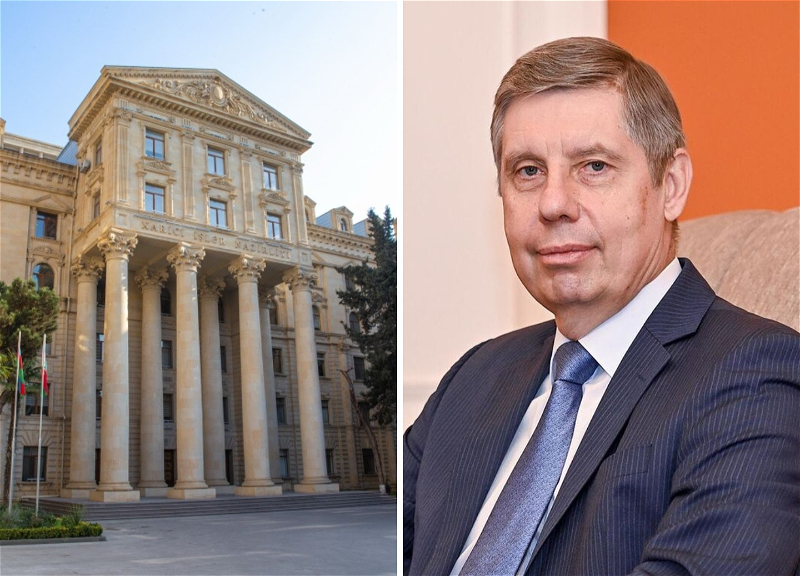
In connection with the situation, the Russian ambassador was summoned to Azerbaijan's Ministry of Foreign Affairs. A resolute protest was expressed to him over a series of provocations in the Russian media, where interference in internal affairs and calls for violence were discussed. The Azerbaijani side demanded that official Moscow immediately put a stop to the aggressive rhetoric in the information space.
At the same time, Baku's position rests on specific legal obligations bearing the Kremlin's signature.
Point 11 of the Declaration on Allied Interaction directly obliges Baku and Moscow to resolutely suppress on their territory any activity directed against each other's sovereignty, independence, and territorial integrity.
When calls for the use of force, the revision of borders, and "targeted liquidations" of Azerbaijan's leadership are voiced openly in the Russian media space, this ceases to be a private opinion or "freedom of speech." This is a direct and systematic violation of a fundamental document bearing the signature of the Russian Federation's leadership. In demanding the immediate cessation of this aggressive rhetoric, Baku is calling on its partner to strictly observe the allied commitments it has undertaken.
The imperial phantom and the new reality of the South Caucasus
The statements of Chadayev, Uralov, and Knyazev are not an accidental outburst. This is a marker of the deep resentment and helplessness of certain towers of the Kremlin, which simply cannot digest a simple fact: the South Caucasus is no longer Moscow's backyard.
In Baku, there is also an awareness that behind these information attacks stand certain influential groups in the Russian Federation interested in undermining bilateral relations, and there is an expectation that Moscow will take timely measures to put an end to their destructive activity.
The Press Council's statement is a clear signal: Azerbaijan does not intend to tolerate such provocations and at this stage is conveying its position through the media community. At the same time, Baku has sufficient political and diplomatic levers to give a more tangible response if this rhetoric is not stopped.
Azerbaijan, under the leadership of President Ilham Aliyev, has built a powerful, self-sufficient, and independent state. Baku itself decides with whom to build a strategic partnership, how to ensure its security, and what foreign policy line to pursue. The victory in the 44-day Patriotic War and the complete restoration of sovereignty over the entire territory of the country definitively broke the former geopolitical matrix in which Moscow was accustomed to acting as the sole "moderator" and "arbiter."
When the familiar system of control collapses, empires are left with only two instruments: either to recognize the new reality and build respectful, equal relations, or to unleash aggressive media provocateurs in the hope of intimidating Baku. The choice, as we can see, has been made in favor of the second.
But Moscow has poorly absorbed the lessons of history. Azerbaijan has never spoken and will never speak under pressure. The language of ultimatums, threats, and on-air terrorism does not work with regard to Baku — it only accelerates the final dismantling of the remnants of Russian influence in the region.
The placement of Chadayev, Knyazev, and Uralov on the international wanted list is a tough and clear signal to the entire Russian "propaganda workshop": for every word spoken, for every call for terrorism and encroachment on Azerbaijan's sovereignty, one will have to answer before the law. International warrants are only the first step. Criminal elements calling for murders and the destruction of states should know: the legal noose has a tendency to tighten, regardless of which Moscow offices they try to hide in.