Pr does not cancel crimes: why the West is again being sold the image of Ruben Vardanyan
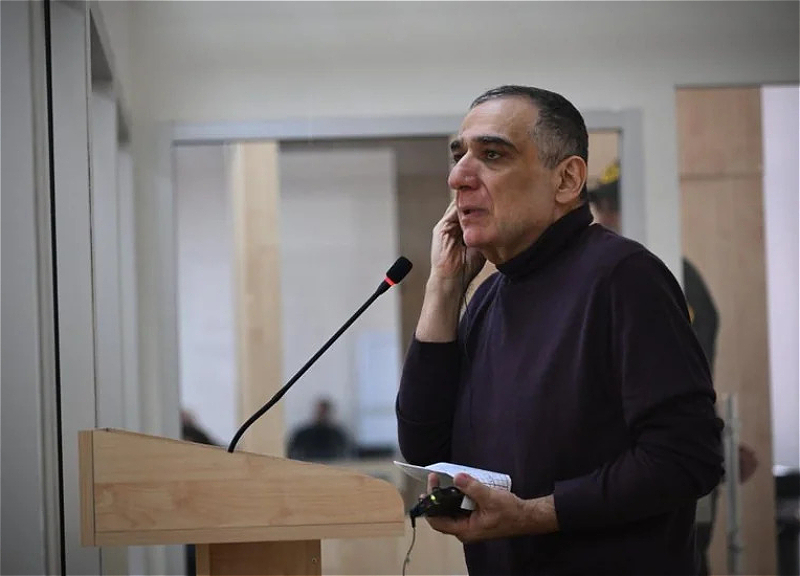
A new wave of media activity, sparked by public statements from Veronika Zonabend, the wife of Ruben Vardanyan who is being held in Baku, vividly demonstrates how modern public relations tools attempt to substitute legal realities with an emotional narrative.
Addressing international organizations and official Yerevan with calls to facilitate visits and organize a broad campaign in defense of her husband, Zonabend pursues an obvious goal: to return the topic to the current global agenda and impose on the audience the image of an “innocently suffering political prisoner.” However, behind the glossy facade of philanthropy and patronage that hired PR agencies built for Vardanyan over the years lies a vast record of activities aimed at undermining the sovereignty of states, financing illegal armed formations, and servicing shadowy financial flows.
The international community is increasingly asking why proven facts that served as the basis for the verdict of the Baku military court are deliberately left outside this humanitarian rhetoric. The trial of the former so-called “state minister” of the liquidated separatist regime in Karabakh ended with a sentence of 20 years in prison. The court found him guilty on a range of the gravest charges, including crimes against peace and humanity, war crimes, terrorism, financing of terrorism, as well as complicity in waging aggressive war and the violent seizure of power. This legal outcome was the logical conclusion of the long-term destructive role Vardanyan played in the South Caucasus, acting as a key beneficiary and sponsor of the prolonged occupation of Azerbaijani lands.
To understand the true reasons for the collapse of Vardanyan’s political adventure, it is necessary to analyze in detail his background, formed in Russia during the era of initial capital accumulation. For a long time, the West viewed him as an enlightened businessman, founder of the investment company Troika Dialog and co-founder of the Skolkovo business school. However, behind this respectable image lay an extensive network of offshore schemes that formed the basis of the high-profile international investigation Troika Laundromat, published by the Organized Crime and Corruption Reporting Project (OCCRP) together with leading global media outlets. Experts and investigative journalists reconstructed in detail the scheme through which billions of dollars were withdrawn from Russia, money was laundered, and the secret interests of the Russian elite were financed. Companies under the management of Vardanyan’s structures serviced financial flows that were later linked to the concealment of assets of individuals close to the Kremlin. The fact that Vardanyan’s name appeared in Western sanctions lists and U.S. Congressional reports as a person whose activities directly contributed to strengthening Russia’s state-capitalist system completely refutes the thesis of his independence. Moreover, his financial institutions and connections were mentioned in the context of servicing structures involved in providing resources that directly or indirectly supported the continuation of geopolitical confrontation, including the conflict around Ukraine. By decree of the President of Ukraine, Vardanyan was placed on the sanctions list and in the Myrotvorets database, and was also declared wanted “for supporting Russian aggression against Ukraine.”
Faced with the threat of a complete freeze of his international assets in the West and realizing the inevitability of harsh personal sanctions, Vardanyan undertook a maneuver that many political analysts described as an attempt at political legalization through radical nationalism.
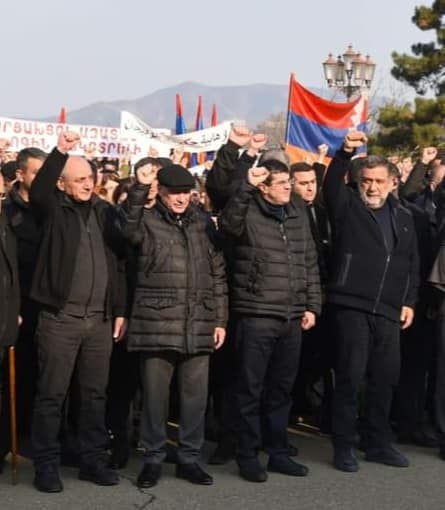
His sudden renunciation of Russian citizenship in 2022 and illegal entry into the territory of Azerbaijan via the Lachin corridor, which was then under the control of the temporary Russian peacekeeping contingent, were not acts of desperation or pure charity. It was a planned move. Having taken the post of so-called “state minister” in the puppet separatist entity in Khankendi, Vardanyan immediately adopted an ultraradical position. He openly called on the local Armenian population to engage in prolonged confrontation, torpedoed any attempts at direct integration and peaceful dialogue between Karabakh Armenians and the central authorities of Azerbaijan. Instead of seeking compromises, the billionaire used his resources to finance illegal armed formations, purchase equipment for fortifications, and maintain the viability of a regime that for more than thirty years existed through ethnic cleansing, occupation, and the destruction of cultural heritage. His tenure at the helm of the unrecognized structure exacerbated the humanitarian and military situation, turning the region into a hostage of the ambitions of external players whose interests Vardanyan represented. Azerbaijani justice clearly qualified these actions as a direct encroachment on the constitutional order of the state and the sponsorship of terrorist cells.
The current campaign launched by Veronika Zonabend attempts to steer the international discussion away from these irrefutable facts into the realm of human rights protection. Vardanyan’s supporters are counting on the short memory of the Western layperson, hoping that large-scale investments in lobbying groups in Washington, Paris, and Brussels will help obscure the criminal nature of his activities. However, attempts to portray Vardanyan as a victim of political repression run into the ironclad legal formulations of the Baku military court’s verdict. The trial was based on strict adherence to the norms of international humanitarian law and national legislation, establishing a direct causal link between the oligarch’s financial injections and the suffering of the civilian population and loss of life. In appealing to the Armenian authorities, Vardanyan’s defense also encounters internal contradictions within Armenian society itself, where many clearly understand that the oligarch’s appearance in Karabakh was aimed at preparing a springboard for a subsequent seizure of power in Yerevan itself in the interests of revanchist forces and their external patrons.
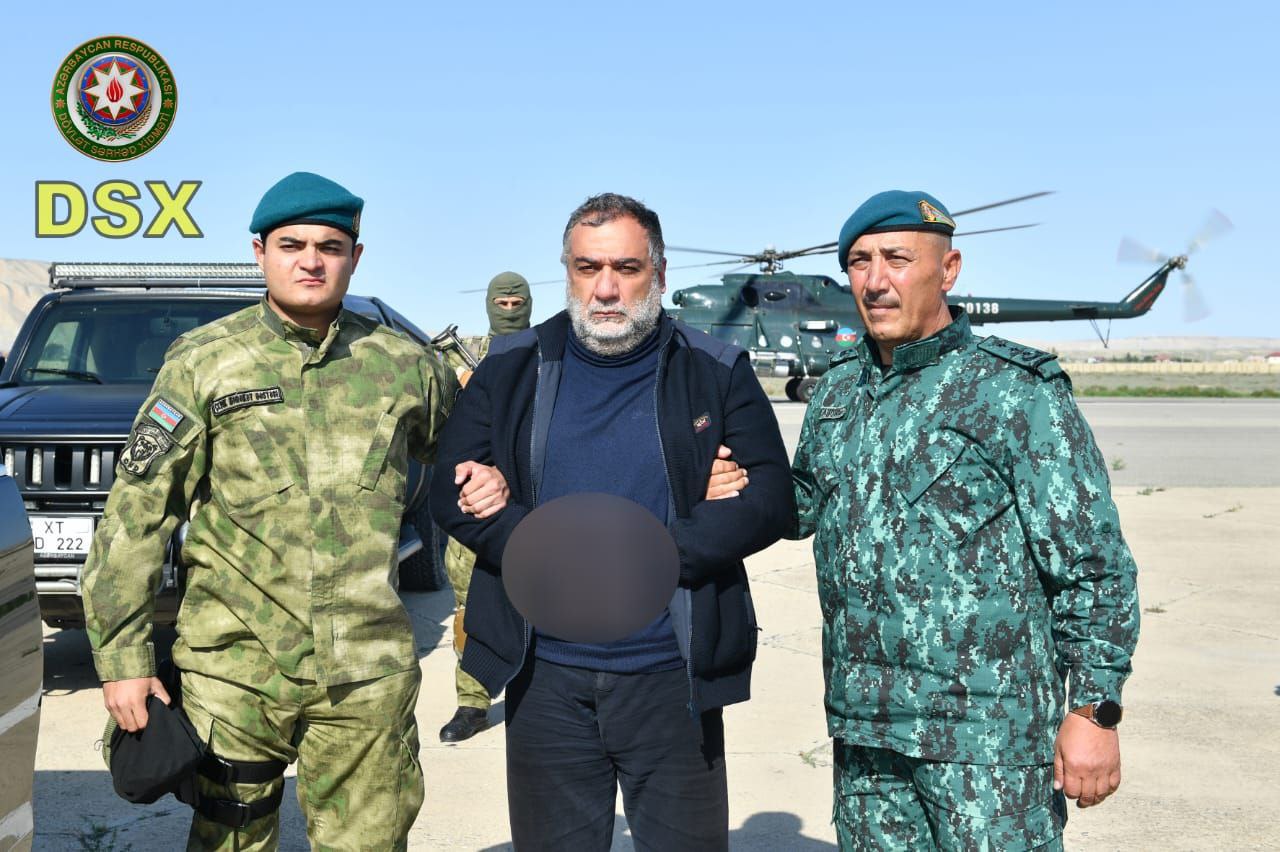
Thus, imposing on the world community the image of Vardanyan as a martyr looks cynical against the backdrop of the real scale of the crimes he committed against peace and humanity. His periodic return to the information agenda is not a surge of family concern but a pragmatic and coordinated media maneuver by lobbying groups. After the Baku military court in February 2026 put an end to the process by sentencing Vardanyan to 20 years in prison, his defense lost internal legal tools, leaving only the attempt to turn the case into an “international scandal.” The artificial nomination of Vardanyan for the Vaclav Havel Prize and publications in the Western press are intended to solve three key tasks: to exert diplomatic pressure on Baku ahead of major international forums, to force Yerevan to make this issue part of the peace track, and, most importantly, to save the oligarch’s foreign assets from final confiscation by legitimizing his past activities under the guise of a “humanitarian mission.” However, information manipulations deliberately ignore the key principle of law—the inevitability of punishment for financing aggression, separatism, and terror. The oligarchic past, steeped in transnational money-laundering schemes and attempts to keep sovereign Azerbaijani lands under occupation, makes Ruben Vardanyan a figure whose isolation is dictated solely by the requirements of the law. For the Azerbaijani state, this media noise has no force, and any attempts at external pressure under the cover of human rights slogans will be shattered by Baku’s firm position, which has proven in practice its ability to defend its sovereignty and legal order against hybrid threats of any scale.