A hidden threat: August once again showed how mines continue to affect peaceful life in the liberated lands
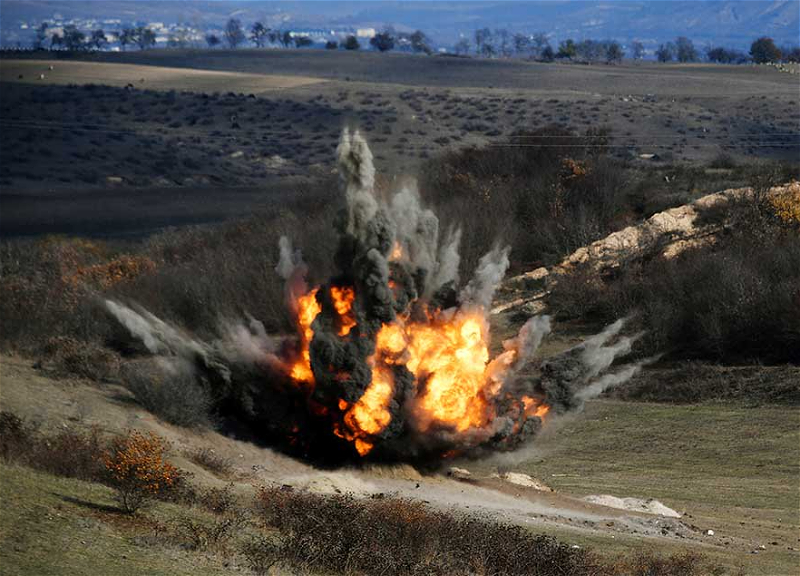
On August 14 at around 3:30 a.m., 73-year-old Kamran Suleymanov was brought to a hospital in Ganja.
He was blown up by a mine the previous evening while grazing livestock in an uncleared area of the Kalbajar village of Sariyel. The condition of the victim, who underwent amputation of the right ankle joint, is currently assessed as moderately severe…
The first half of August once again showed how far the consequences of the war extend — the fighting is over, but the land in the liberated territories of Azerbaijan still has not become completely safe.
In just two weeks, several mine incidents occurred there, as a result of which people were injured. In one of the cases, the explosion occurred directly during demining operations.
Read on the topic:
Mines against peace: why Azerbaijan continues to pay the highest price
According to updated statistics from the Prosecutor General's Office of Azerbaijan on citizens affected by mine explosions in the country's territories liberated from occupation, as of August 14, 2026, since the end of the Patriotic War on November 10, 2020, 436 people have been affected as a result of explosions on mines laid by Armenia. Of these, 73 people were killed and 363 sustained injuries of varying severity.
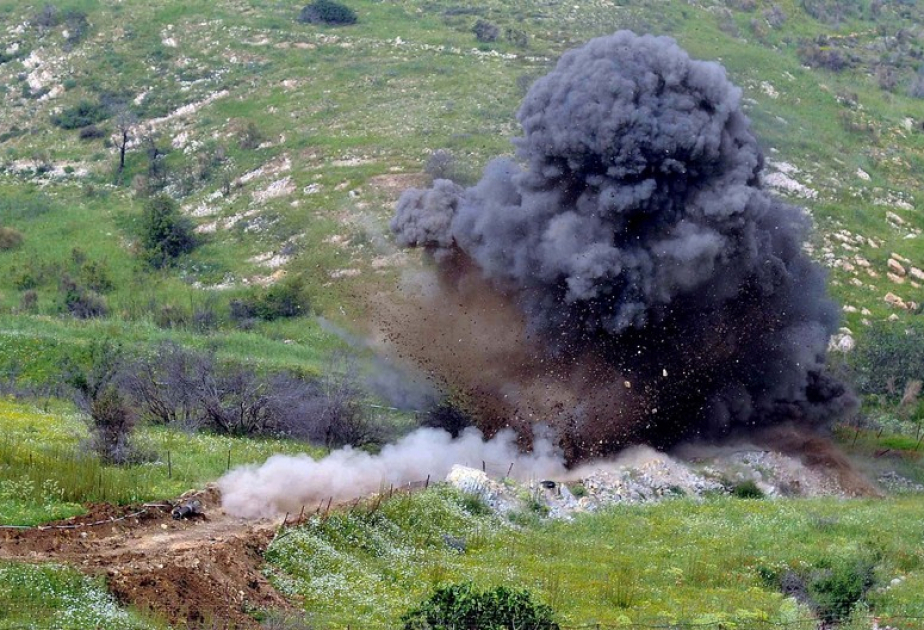
Behind each of these figures stands a person whose life changed in an instant. But behind these statistics lies a problem of a far greater scale. Mines continue to affect how quickly people can be returned to the liberated territories, infrastructure can be restored and these lands can be turned into a space of normal life.
President of Azerbaijan Ilham Aliyev compares the mine threat to the horror caused by weapons of mass destruction. For a country where about 12% of the territory remains contaminated with mines and unexploded ordnance, such a comparison speaks for itself.
According to official data, over nearly 30 years of occupation, more than 1.5 million mines were laid on the territory of Azerbaijan. Roads, cemeteries and other civilian facilities were mined, including areas beyond the former line of contact. Between 2020 and 2023, the Armenian side created new mined zones extending up to 500 kilometers. After the September 2023 anti-terror operation, more than 500,000 mines were discovered in the liberated territories.

That is precisely why the problem is not limited to demining individual plots. This concerns the systematic clearing of a vast territory, where any road, field or construction site may potentially conceal a deadly danger.
Armenia's failure to provide accurate maps of minefields significantly complicates demining. Specialists have to survey the territory practically from scratch, which substantially slows the restoration of the liberated lands.
Today Azerbaijan is simultaneously rebuilding settlements, laying roads, creating new infrastructure and returning former internally displaced persons. However, the speed of this process directly depends on how quickly the liberated territories can be made safe.
A mine is a weapon that continues to kill and maim people years after the end of hostilities. Against this backdrop, not only the work of sappers but also public awareness takes on special importance. ANAMA, the Ministry of Internal Affairs and the Prosecutor General's Office once again call on citizens and everyone visiting the liberated territories to move exclusively along verified and permitted routes, to pay close attention to warning signs, not to touch suspicious objects, not to enter unfamiliar areas and not to trespass into fenced-off sections.
In conditions where part of the liberated lands still requires surveying, it is precisely compliance with these requirements that can prevent a tragedy before specialists reach the site.
However, public education and law enforcement work can only reduce the risk. Only complete demining can eliminate it. According to Azerbaijan's estimates, the complete demining of the territories may require nearly 30 years and about $25 billion.
Such a duration and cost of demining show that the mine threat has not only a humanitarian but also an economic dimension. A mined territory effectively falls out of full economic use until it is recognized as safe. This means that construction cannot be fully carried out there, communications cannot be laid, agricultural production cannot be expanded, and movement cannot be free.
Azerbaijan is investing considerable funds in the restoration of the liberated territories while simultaneously conducting large-scale work to clear them of mines. In fact, the country has to solve two tasks in parallel — to build a new future and to defuse the legacy of the past.
It is here that the need for international support arises. Demining is a costly, lengthy and technologically complex process that matters far beyond the directly affected areas. The safety of the liberated territories is directly linked to the possibility of people's return, the restoration of the economy and the long-term stability of the entire region.
The mine threat does not disappear together with the end of the war. As long as the land remains mined, the war continues to leave its mark on peaceful life.
That is why demining in Azerbaijan is not simply part of postwar reconstruction. It is the condition for the very concept of "liberated territory" to mean land where it is once again possible to live safely.