The door is open, but there is a condition: what does Baku expect from Europe?
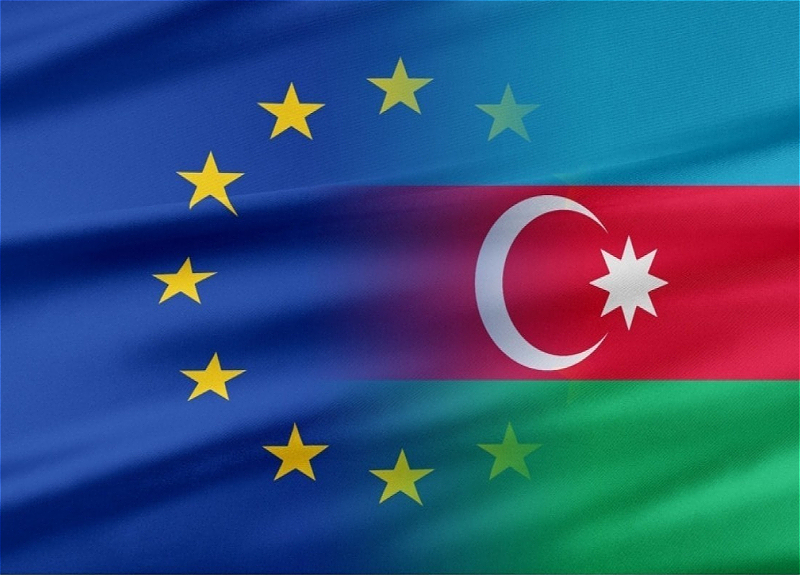
Azerbaijan states constructive interaction with European structures, however expects from them an equal, mutually respectful and unbiased approach.
In Baku they are convinced that full restoration of cooperation is possible only with the rejection of politically motivated decisions and the readiness of European institutions to reconsider their position toward Azerbaijan.
At the same time it is necessary to note that Baku draws a distinction between European structures: while relations with some are gradually entering a trajectory of reset, the crisis in interaction with others still persists.
The relevance of this topic is also confirmed by the close attention paid to it in political and expert circles in Europe. This is evidenced by the question addressed to Azerbaijani President Ilham Aliyev during the IV Shusha Global Media Forum. In his response the head of state outlined in detail Baku’s position regarding prospects for interaction with European institutions. He in particular emphasized that there is a big difference between relations with the European Commission, the European Parliament and the Parliamentary Assembly of the Council of Europe (PACE).

“As for the European Commission, we had difficult times, especially under the previous commission, largely because of the destructive role of the former head of European diplomacy Mr. Borrell, who in fact destroyed, almost destroyed relations between the European Commission and Azerbaijan. And now it is becoming obvious why this happened. He was closely connected with some corrupt individuals, including the former judge of the International Criminal Court Mr. Ocampo, who publicly admitted in his comments that Mr. Borrell received money from him, and the funds for Mr. Ocampo came from a Russian-Armenian oligarch who is now under house arrest in Armenia. Thus these were major links of the anti-Azerbaijani group that existed in the European Commission. It is good that Mr. Borrell is now out of politics – I hope forever,” the Azerbaijani leader said.
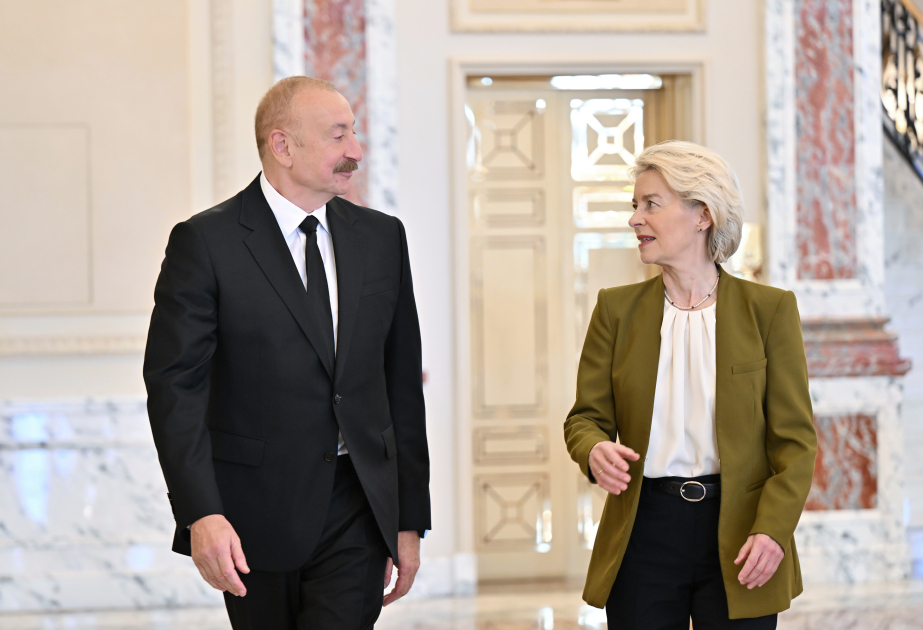
However, according to the head of state, with the arrival of the new composition of the European Commission the situation began to change, and Baku’s relations with Brussels entered a phase of reset. The President of Azerbaijan emphasized that the parties had demonstrated a mutual desire to renew dialogue and had already achieved certain results in this direction: “With the new Commission our relations began to improve, especially after we saw the presence of a great mutual desire for a reset, and we supported this process. I can only report that over the past few months of this year a number of important visits from Brussels have taken place: in March – President of the European Council Mr. Costa, in May – head of European diplomacy Ms. Kallas, in July – President of the European Commission Ms. Ursula von der Leyen. And from the public statements both on their part and on my part, everyone can see that both sides are satisfied with the level of cooperation. The areas of partnership that you outlined are certainly important, but the framework of our bilateral interaction is much broader.”
Separately the head of state dwelt on the situation around PACE, noting that a serious crisis persists here. The main reason for this was biased approaches on the part of the Assembly. This is what the president himself says about it: “Until the liberation in September 2023 of 100 percent of our territories from separatist Armenian occupation forces Azerbaijan was never under any sanctions in PACE. In September 2023, when we exercised our legitimate right to self-defense and liberated the territory from the remnants of the separatists, the Parliamentary Assembly of the Council of Europe decided to punish Azerbaijan. In January 2024 it questioned the credentials of the Azerbaijani delegation and also deprived it of the right to vote. This happened not because of the so-called human rights issues. If that had been the case, it would probably have been done much earlier. It was precisely punishment for our actions to restore sovereignty. After that the Azerbaijani delegation made a very wise decision – to stop participating in the sessions: if we have no right to vote, then why should we be there?”
Azerbaijan also does not recognize the decisions of the European Court of Human Rights, because, according to the president, “we did not participate in the voting for the judges,” and “we do not know who these people are.”
The protracted crisis reached such a point that Baku was forced to consider the issue of further membership in the Council of Europe. The head of state emphasized that the matter had already been about a possible withdrawal from the organization: “For more than two years we have been facing discrimination. I can openly say that our government seriously considered the possibility of a complete withdrawal from this structure – not only freezing our membership in PACE, but also withdrawing from the Council of Europe as a whole. However, the Secretary General of the Council of Europe Mr. Alain Berset approached me and asked not to do this. And in order to find a way to improve the situation, I suspended this process.”
Despite the steps taken to preserve the possibility of constructive dialogue, the situation has not changed since then. President Ilham Aliyev emphasized that instead of seeking a compromise, PACE continues to put forward demands toward Azerbaijan that Baku considers unacceptable: “PACE is putting forward very strange and ultimatum-like demands toward Azerbaijan that are absolutely unacceptable. It was not we who caused the destruction of relations – they did it. They deprived us of the right to vote without any legal grounds.”
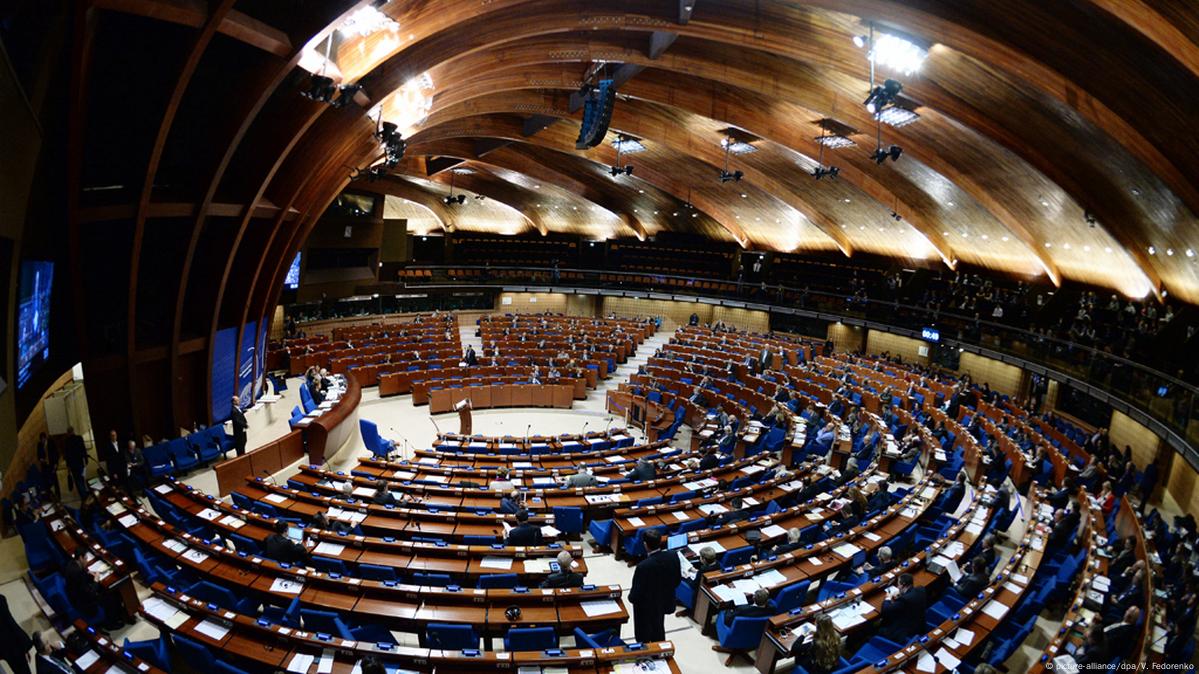
As the main condition for restoring full-fledged interaction with PACE the head of state named the restoration of the Azerbaijani delegation’s right to vote. According to him, this step should become the starting point for Baku’s return to work in the Assembly – “it is necessary that they restore the right to vote of the Azerbaijani delegation, and only after that will the Azerbaijani delegation return.”
“Everything must be exactly as I said, and not the other way around!” the Azerbaijani leader stated.
“We have done nothing wrong to them. Consequently, it was they who took this unjust step and it is they who should take a step back, find the courage within themselves and admit that they made a serious mistake,” he noted.
The head of state recalled that over the years since Azerbaijan’s accession to the Council of Europe, both the organization itself and the political context in Europe have changed. Baku’s expectations were connected primarily with support in solving the country’s main problem – restoring its sovereignty: “Azerbaijan voluntarily joined the Council of Europe in 2001. At that time it was a different organization, and Europe as a whole was different then. We joined in the times of that Europe with certain aspirations and hopes that membership would help us solve our main problem – to settle the Karabakh conflict and restore sovereignty.”
President of Azerbaijan Ilham Aliyev sharply outlined the possible scenario for the development of the situation in case of continued biased approaches on the part of European institutions, up to the country’s withdrawal from the Council of Europe: “You know, I have repeatedly expressed my point of view on this matter: if Azerbaijan completely withdraws from the Council of Europe, practically no one in the country will notice it. Thus our presence or absence there changes little for us.”
“Being there is perhaps better – I don’t know, maybe. We do not seek confrontation, especially given that not only the Parliamentary Assembly of the Council of Europe, but also the European Parliament regularly makes attacks against us and again without any grounds. I believe this is a kind of obsession with Azerbaijan. Over five years they have adopted 13 resolutions directed against Azerbaijan, and none of them has any significance for us and affects nothing here. Of course, it is better to build normal relations with these institutions rather than be in a state of confrontation. But, I repeat, this was not our choice,” Ilham Aliyev said.
As can be seen, Baku’s position consists not in refusing interaction with European institutions, but in demanding a revision of the very approach to this interaction.
Azerbaijan demonstrates readiness for dialogue and cooperation, however believes that sustainable relations can be built only on the basis of equality, mutual respect and rejection of the politicization of the bilateral agenda.
Thus Baku sends a clear signal – Azerbaijan does not seek a rupture of relations, but also does not intend to accept a format of interaction based on unilateral demands and political pressure. In other words, the door for dialogue remains open, however the next step, Baku believes, should be taken by the European side.