Azerbaijan on the global energy market: response to new challenges of global energy
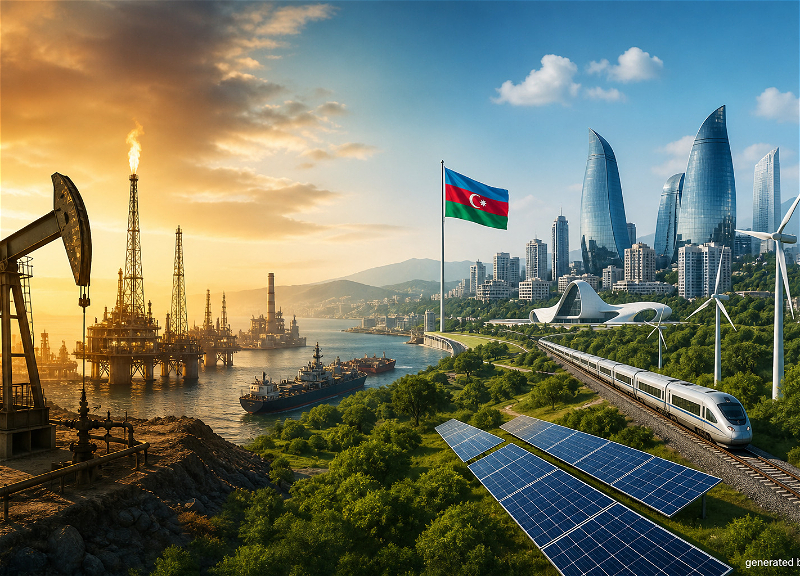
The last several years have substantially changed the global energy map.
Against the backdrop of the crisis caused by the Russian-Ukrainian conflict, issues of supply reliability, route diversification, and energy security have become decisive for many states, primarily European ones. In these conditions, Azerbaijan has significantly strengthened its position as one of the key suppliers of natural gas and an important element of the new energy architecture of Eurasia.
Today the country is consistently expanding its export geography, investing in transport infrastructure, and simultaneously developing the renewable energy sector. This approach allows it not only to respond to growing international demand but also to shape a long-term strategy for the development of the energy complex.
In recent years Azerbaijan has noticeably expanded its presence on the European gas market.
Azerbaijani President Ilham Aliyev spoke about this at the IV Shusha Global Media Forum: "Yes, this year we began gas supplies to Germany and Austria, and this is part of our overall strategy to expand our presence on the global and, especially, European gas market. The European market is a premium market, a market with the best prices. Therefore, we are extremely interested in increasing our export capacities. Yes, we supply gas via pipelines to 16 countries and in terms of the geography of pipeline gas supplies we rank first in the world. And this volume will grow further. We are still negotiating with some European Union member states to begin supplies and increase their volumes."
Gas supplies to sixteen states testify not only to Azerbaijan's high degree of integration into international energy markets but also to the scale of the created transport system. In terms of the geographic reach of pipeline exports, the country holds leading positions, ensuring supplies both to South Caucasus states and to the Balkans, Central and Southern Europe.

The change in the geopolitical situation in Europe has noticeably increased the importance of Azerbaijan as a reliable supplier of energy resources. For European states seeking to reduce dependence on certain import sources, the stability of supplies and the reliability of partners have acquired particular significance. It is these qualities that are today viewed as one of Azerbaijan's main competitive advantages.
"And in the conditions of the modern energy market, gas from a reliable source—from Azerbaijan, which is also a predictable and alternative source of supplies—has, perhaps, greater importance than ten years ago," the head of state emphasizes.
Since 2022, demand for Azerbaijani gas has increased significantly. The European Union began to more actively seek reliable suppliers capable of ensuring long-term supply stability. As a result, cooperation between Baku and European capitals has acquired a strategic character, and energy interaction has become one of the most important components of the political dialogue.
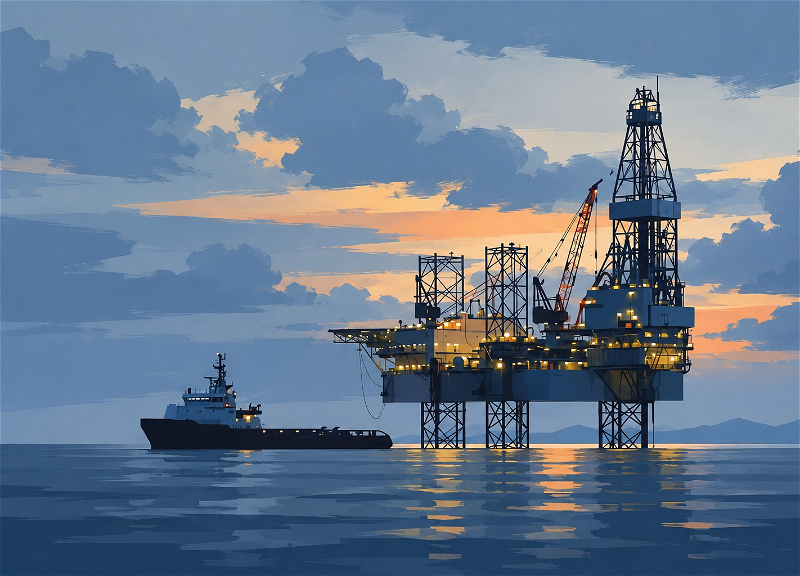
The growth in demand coincided with the expansion of the country's resource base. Azerbaijan is implementing new projects, creating conditions for further growth of exports.
The Azerbaijani leader notes in this regard: "We have potential to increase production and exports. Just a few months ago we launched natural gas production at a new field—from the deepwater layers of the ACG field. Production at existing fields will grow in accordance with the work program and investment portfolio."
An additional factor in energy growth is the development of renewable energy. Large-scale projects in solar and wind generation make it possible to gradually reduce domestic consumption of natural gas in electricity production. The freed-up volumes can be directed to exports, which increases the efficiency of using national energy resources.
Speaking about active work on renewable energy sources, Ilham Aliyev emphasizes: "In addition, active work is underway on renewable energy sources. They already allow us to save significant volumes of gas and will allow us to save even more, since by 2032 we plan to obtain 8 gigawatts of energy from renewable sources. And this will give us the opportunity to save several billion cubic meters of gas that we currently use for electricity production. That is, this entire volume will also become available to consumers. Thus, we have two important factors: gas, the volumes of which are growing, and the market. Therefore, we need to modernize and improve what lies between them, in particular transport infrastructure."
However, the expansion of supplies rests not only on increasing production—developing export infrastructure is no less important. The existing system of main gas pipelines was designed in different geopolitical conditions, when volumes of European demand were significantly lower.
Azerbaijani President Ilham Aliyev speaks about this as follows: "Our gas infrastructure was designed and built based on the scenario that existed before the Russian-Ukrainian conflict of 2022. The throughput capacity of the pipelines was determined on the basis of our production profile, forecast indicators, and the strategy of how quickly to extract gas at the fields. After all, it can be extracted over 10 years or over 100 years, and it was important for us to determine what is more profitable—to stretch the process and keep this curve relatively stable over decades or to invest more and extract more gas. However, with the start of the Russian-Ukrainian conflict, demand for Azerbaijani gas rose sharply, and the European Commission asked us to do the maximum possible to accelerate the increase in production, and we did so. By the way, these figures were announced during the visit of the President of the European Commission: since 2022 we have increased gas supplies to the European Union by 65%, and this indicator will grow."
At the same time, despite the obvious interest of European consumers, infrastructure expansion faces financial constraints. European climate policy has significantly reduced opportunities to attract investment in projects related to fossil fuels, even when it comes to ensuring energy security. President Ilham Aliyev also draws attention to this problem: "Thus, expanding the existing transport infrastructure is necessary, but the EU's 'green agenda' remains a stumbling block. Also, European banks are not ready to finance projects related to fossil fuels. Hence the question arises: where to attract funds to increase the throughput capacity of pipelines?
And one more question—perhaps even more important—is long-term contracts. This is exactly what we discussed with Ms. Ursula von der Leyen: we need long-term contracts, because substantial increases in production require large-scale investments. And if at some point we are told: 'Thank you, goodbye, we no longer need your gas,' what then will we do? These are the two key factors."
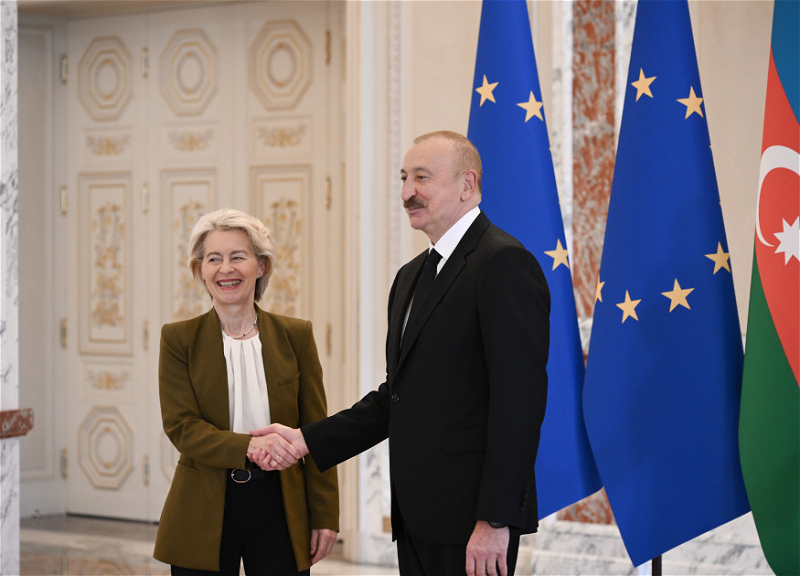
For any large energy project, long-term commitments are a necessary condition for investment payback. That is why the expansion of production and transport infrastructure cannot be considered separately from issues of long-term cooperation between suppliers and consumers.
Another important direction is the diversification of export markets. Whereas previously the main attention was devoted to the European direction, today Azerbaijan is actively developing other regions as well. An example of the expansion of export geography and a demonstration of the ability to respond promptly to changes in the structure of global demand was the start of gas supplies to Syria. As the head of the Azerbaijani state noted: "In addition, diversification is important, since we have begun supplying gas to markets that could not even have been foreseen—for example, to Syria, and we can further expand supplies to neighboring regions where demand is very high. Therefore, it is extremely important for us in relations with European partners to have long-term contracts, as well as to work jointly on expanding the existing gas transport system."
Azerbaijan's strategy today already goes beyond traditional gas exports. The country is consistently developing the renewable energy sector, viewing it as a future source of export revenue alongside natural gas. According to President Ilham Aliyev, "energy security will undoubtedly continue to remain one of the dominant global trends."
"Although for our country this issue can be considered already resolved, as I have already said, demand for our energy resources, including renewable energy sources, will grow. We have enormous potential in the field of renewable energy. Just here in Karabakh, we have already commissioned hydroelectric power plants with a total capacity of 340 megawatts, and solar power plants with a total capacity of another 340 megawatts will be commissioned within one year. Therefore, the export of electricity to the European market is one of the main topics on our agenda, since, again, the European market needs additional energy resources. We have additional capabilities," the Azerbaijani leader said.
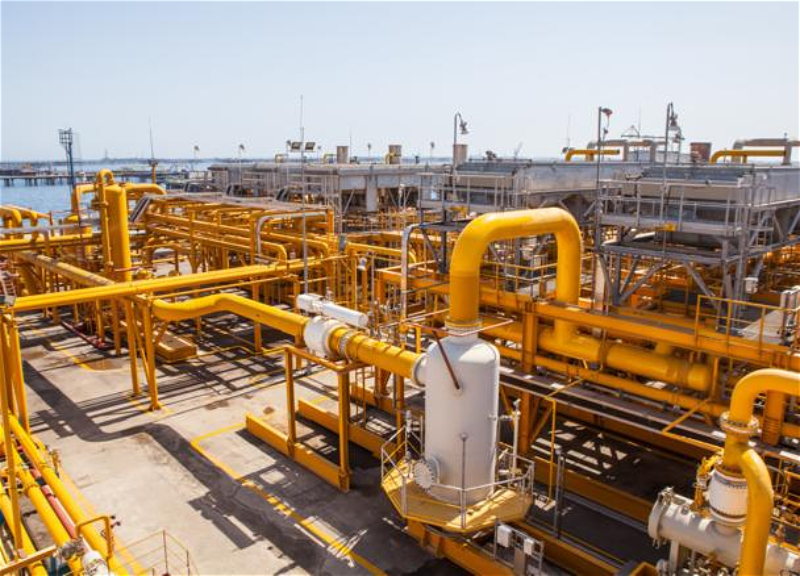
Azerbaijan's energy potential today is determined not only by the volumes of hydrocarbon reserves. No less significant a role is played by the diversification of export directions, the modernization of transport infrastructure, and the development of renewable energy sources. Such a combination allows the country to strengthen its position amid the global transformation of energy markets.
As is evident, against the backdrop of persistently high demand for reliable and predictable sources of energy resources, Azerbaijan continues to expand its presence on international markets. Further development of production, export infrastructure, and projects in the sphere of 'green' energy will allow the country to significantly strengthen its role as one of the key participants in the new architecture of Eurasian energy security.