From Moscow to Capitol Hill: the campaign in support of Ruben Vardanyan - VIDEO
The outlet AnewZ has published an article by Alistair Sutton, "From Moscow to Capitol Hill: the campaign network around Vardanyan."
The article examines the structure of the campaign in support of Ruben Vardanyan — from the family foundation to lobbyists in the United States — showing how private legal and humanitarian initiatives are transformed into a global information strategy.
We present the article to our readers:
"Public registries and open data point to a multi-layered structure encompassing the campaign's information center (created by the foundation), international lawyers, registered lobbyists, diaspora activists and professional communications agencies. There is nothing secretive or scandalous about the existence of this network. The problem is that the true provenance (origin/source) of the information being disseminated is often hidden from the audience.
International advocacy and defense campaigns rarely operate under the open label of a "lobbying campaign." They arrive in the guise of family appeals for help, lawsuits, congressional briefings, humanitarian missions, expert reports or opinion columns. Each individual element may be sincere. Taken together, however, they form a structured and disciplined system.
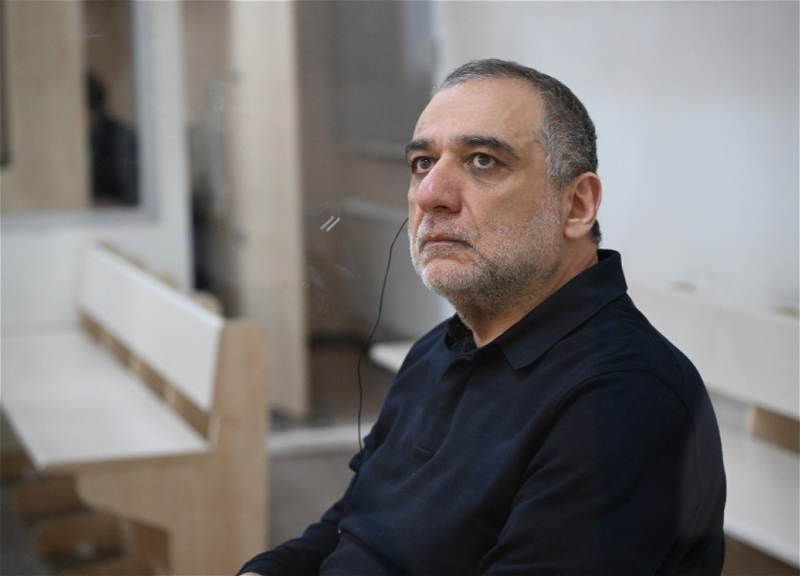
Open-source data (OSINT) shows how such a system operates around Ruben Vardanyan — a businessman, philanthropist and former state minister of the unrecognized Armenian administration in Karabakh. He was detained by Azerbaijan in September 2023. On February 17, 2026, the Baku Military Court sentenced him to 20 years in prison, finding him guilty on a number of charges, including terrorism and war crimes. His family and a group of lawyers reject the charges brought against him and the verdict itself. Amnesty International has expressed serious concern about respect for the right to a fair trial.
This dispute is not a secondary matter. That is precisely why it is so important to know the provenance of the information (origin/source). Open-data analysis (OSINT) cannot replace a court or establish guilt straight from a web browser. But it can answer narrower and more concrete questions: who owns the platform broadcasting a given statement; who paid for the registered lobbying; which officials were targeted; who arranged the media contacts; and how the same wording migrated between the legal, political and editorial spheres.
The campaign has a disclosed center
It is worth starting with the website Free Armenian Prisoners — the campaign's main resource, regularly cited in statements, petitions and press releases. The site portrays Vardanyan as a political prisoner held unlawfully. However, its own Terms of Use contain a key disclosure: the website is provided by the Ruben Vardanyan Charitable Foundation. The same page states that all information on the site is published by the provider (the foundation).
This does not make the site's statements false. But it does make them the statements of an interested advocacy platform, rather than the conclusions of independent monitoring. This distinction is often lost as soon as a statement spreads through news feeds or begins to be described simply as the position of an "activist group." The brand becomes visible, while the institutional origin fades into the background.
The site is something more than just an archive. It invites visitors to sign a petition, appeal to President Ilham Aliyev and write letters to ambassadors. It provides a ready-made narrative, mobilization tools, news updates, legal documents, interviews and a list of supporters. From a communications standpoint, it is the campaign's own media hub.
One lawyer, several arenas
The next level is simultaneously legal and political. A registration under the U.S. Lobbying Disclosure Act, effective January 10, 2024, names the Washington law firm Perseus Strategies as registrant and Vardanyan's son, David, as the client. The client's activity is described as advocacy aimed at securing his father's release. Jared Genser and Brian Tronic were initially listed as lobbyists. Later reports mention Zara Salman alongside Genser, and subsequently Yumei Lin.
The stated amounts are quite specific. Perseus reported lobbying income of $30,000 for the first quarter of 2024, $20,000 for the first quarter of 2025, $20,000 for the second quarter and $5,000 for the third. In total, the declared amount is $75,000. These are figures for lobbying income, not a full account of spending on lawyers, PR or the campaign as a whole. A termination report ended the engagement on March 31, 2026, and recorded no lobbying activity for that quarter.
The filings state that the work concerned U.S. political and economic interests, as well as human rights and humanitarian issues related to Azerbaijan and the release of political prisoners. They record contacts with the Senate and the State Department in 2024, which in 2025 expanded to include the House of Representatives and the National Security Council.
The firm Perseus itself explains its method. Its public description says that the company combines international law, political advocacy and media engagement. Its list of services includes liaising with senior officials, promoting resolutions or bills, coalition building, issuing press releases, arranging interviews and placing opinion columns. In other words, this overlap is not accidental. It is a working model.
There is nothing unlawful about such a model. Registered lobbying is legal, and disclosure mechanisms exist precisely so that the public can review them. These same records set limits on the conclusions that can be drawn: the named client was David Vardanyan, not the government of Armenia or the foundation, and the registration did not list affiliated organizations contributing above the statutory threshold or foreign entities controlling the work. The data point to an integrated campaign supported by the family. They do not confirm the existence of a hidden state operation.
Legal arguments become political material
The legal campaign has made use of several international mechanisms. Vardanyan's team filed appeals with UN procedures and publicized allegations of mistreatment. However, these records did not always work in the campaign's favor. In Opinion No. 46/2024, the UN Working Group on Arbitrary Detention concluded that his case did not constitute arbitrary detention. Supporters later challenged the objectivity of that opinion, alleging a conflict of interest involving the chair of the Working Group. No public UN document found in the course of this review indicates that the opinion was withdrawn or replaced by the time data collection was completed.
In July 2026, Armenian lawyer Siranush Sahakyan stated that she had filed a complaint with the European Court of Human Rights (ECHR), alleging violations of eight articles of the European Convention. This is an important procedural step, but the complaint itself only records allegations; it is not a court ruling on them.
The same lawyers also appear on political platforms. In September 2025, the Armenian National Committee of America (ANCA) and the Armenian Legal Center organized a briefing on Capitol Hill, whose speakers included Genser and Sahakyan. The event promoted the issues of the release of prisoners and sanctions legislation. This is a documented point of intersection between the legal level and the level of diaspora advocacy. It is not proof that these organizations were contractors of the family. Alignment of positions is not the same as direction or control.
Reputational capital turns into political reach
Vardanyan ended up in custody possessing a solid international network of connections formed through business and philanthropy. The Aurora Humanitarian Initiative lists him as one of its co-founders alongside Vartan Gregorian and Noubar Afeyan. This history matters, because prominent supporters do not appear out of nowhere. They are linked to years of humanitarian projects, institutions and personal relationships.
A syndicated release in December 2023 reported that more than 150 humanitarian, business and political figures had called for the release of the Armenian prisoners. The release highlighted former heads of state, Nobel laureates and business leaders. It also mentioned Afeyan's many years of cooperation with Vardanyan.
A signature under an appeal confirms support, but not the fact of payment, direction or awareness of all the campaign's decisions. Nevertheless, the PR value of this is obvious: a family case turns into a high-profile headline about a global coalition. The reputation of individual signatories becomes convertible political capital. Responsible journalism should point out existing institutional ties where relevant, without diminishing the sincerity of the signatories' own views.
The professional communications level
The trail of press releases makes the communications level obvious. In the December 2023 release, Nia Jackson of Edelman Global Advisory and Anahit Hakobyan of H/Advisors are listed as press contacts alongside Free Armenian Prisoners. The family's April 2024 statement about Vardanyan's hunger strike was distributed through the same newswire ecosystem; in it, the source is listed as Free Armenian Prisoners, and the media contact as Jere Sullivan of Edelman Global Advisory.
These data confirm professional PR support at specific moments. On their own, they do not reveal who hired these firms, the size of the fees, the full scope of work, or whether these relationships continue now. No such contracts or payment schedules were found in the public materials examined.
The campaign then closes the distribution chain. The "Key Materials" page brings together legal explanations, supportive columns, news releases and interviews with family members, lawyers and allies. This is standard advocacy practice. But that is precisely why the campaign's archive should not be taken for a neutral evidentiary base: it was created to reinforce one particular interpretation and to mobilize action around it.
Language matters. The terms "political prisoner," "hostage," "unlawful detention," "fabricated trial" and "ethnic cleansing" are not interchangeable with neutral description. Some of them may reflect real legal or moral assessments; others remain contested characterizations. Repeated many times over on a website, in a press release, at a briefing and on an opinion column page, a disputed label can take on the appearance of an independently confirmed fact. But it is still the same statement, broadcast through different channels.
A humanitarian mission as a communications event
A recent example is Veronika Zonabend's proposal to send an international women's humanitarian delegation to Baku. In a statement published on July 8, 2026, Vardanyan's wife indicated that she had sent open letters to Azerbaijan's human rights commissioner, the president of the International Committee of the Red Cross, the prime minister of Armenia and the European Union's foreign policy chief. The stated goals are to visit the detained Armenians, meet with the ombudsman and hand over permitted items from the families.
The humanitarian goal deserves to be taken seriously. So does the resulting PR effect. Four open letters create four decision points for institutions and generate a public trail even before a visit takes place. Consent opens access; silence or refusal become arguments in the next cycle of the campaign. These two functions may well coexist. A humanitarian initiative does not cease to be humanitarian because it is strategically calculated, and it does not cease to be strategic because it is humanitarian.
A map of public data — what open sources confirm
(This map records disclosed connections. It does not mean that every participant is funded, directed or controlled from a single center.)
- Campaign center: The Terms of Use of Free Armenian Prisoners name the Ruben Vardanyan Charitable Foundation as the site's provider and state that the provider publishes all information on the site.
- Law + lobbying: U.S. filings record the registration of Perseus Strategies on behalf of Vardanyan's son, David. Declared lobbying income for the quarters indicated totals $75,000.
- Advocacy (promotion): The filings mention the U.S. Senate, the House of Representatives, the State Department and the National Security Council; diaspora groups held public briefings featuring Vardanyan's lawyers.
- Communications: In syndicated releases, staff of Edelman Global Advisory and H/Advisors are listed as media contacts; the campaign website collects materials containing words of support and interviews.
Where the evidence ends
This network is real in the ordinary, verifiable sense of the word: named individuals and organizations are connected through a foundation-provided platform, registered lobbying, legal representation, public briefings, philanthropic ties and professional media contacts.
The open data examined do not prove that every supporter, civil society organization or media outlet received money, was directed or was even coordinated from a single center. They do not prove that every article on the campaign's list was produced to order. They do not confirm control by the government of Armenia. Finally, the campaign map by itself does not resolve the question of the lawfulness of Vardanyan's sentence and does not negate independent criticism of the judicial process in Azerbaijan.
These limitations are not a weakness. This is the discipline that OSINT analysis requires. A connection must be called a connection; a contract, a contract; a shared message, a shared message. The temptation to turn this map into a conspiracy theory is just as misleading as the temptation to ignore this map altogether.
The missing label
Thus, the main journalistic question is not whether Vardanyan should have defenders. Every detainee has the right to legal representation, contact with family, humane treatment and a fair trial. The question is whether audiences are told when a statement comes from the foundation bearing his name, from his son's registered lobbyists, from affiliated diaspora groups or from a professionally distributed campaign press release.
Both a guilty verdict in Azerbaijan and serious criticism of respect for fair trial rights can be part of a single picture. Rights advocacy can be simultaneously principled and strategically organized. These assertions do not contradict each other. What should be unacceptable is a situation in which professional repetition many times over turns an interested party's conclusions into fact without any indication of their true source.
A petition counts supporters. A lobbying report records influence work. A press release records distribution. None of this in itself proves the truth of the case in question. Journalism's first duty is to show the chain of provenance of a statement: who made it, who paid to promote it, who amplified it and what counterarguments remain. In a contested case, the provenance of information is not a marginal footnote. It is part of the story itself.
The views expressed in this article belong to the author. This OSINT review uses publicly available data and does not assert wrongdoing by any of the individuals or entities mentioned."