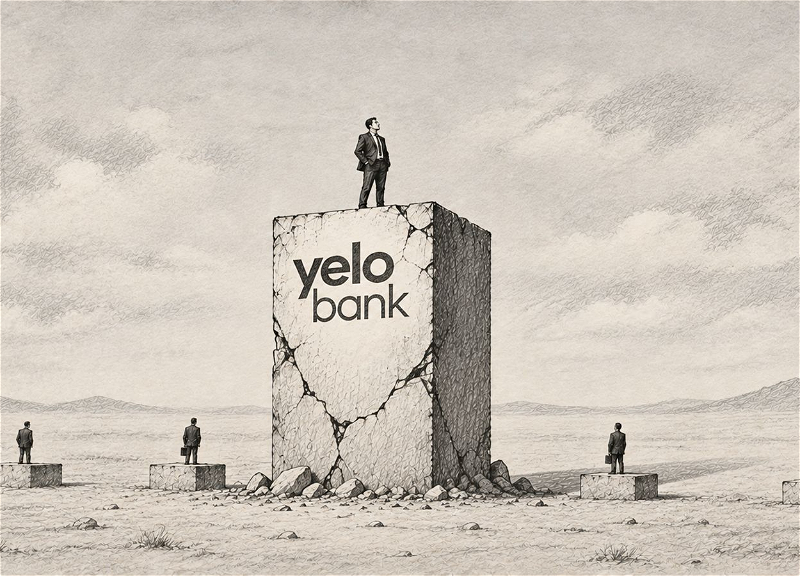
Some banks need to die: understanding Azerbaijan's experiment
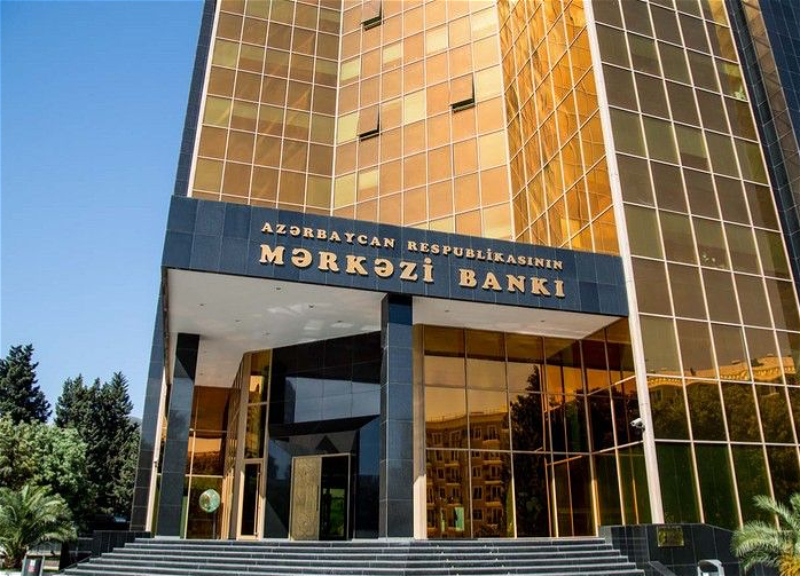
While neighbours endure repeated bailouts and currency crises, Baku has quietly built one of the region's most resilient financial systems.
In the decade since oil prices collapsed, almost all major economies on Europe's eastern periphery have grappled with the same fundamental question: how to build a financial system that serves the real economy rather than draining it.
Azerbaijan's answer, examined here through fresh data published by the Central Bank of the Republic of Azerbaijan, with Turkey and Kazakhstan providing cautionary contrasts, suggests that sometimes destruction is the prerequisite for construction.
Kazakhstan chose bailouts—billions of dollars over more than a decade—and still has, as its own president once called it, a "sick" banking sector.
Turkey let politics override economics, leaving its central bank with back-to-back losses totalling roughly $43 billion across 2023–2024.
Azerbaijan took a third path. It contracted its banking sector by more than a quarter, revoked licenses, and allowed weak institutions to fail. The results, visible in Central Bank data through November 2025, tell a surprising story.
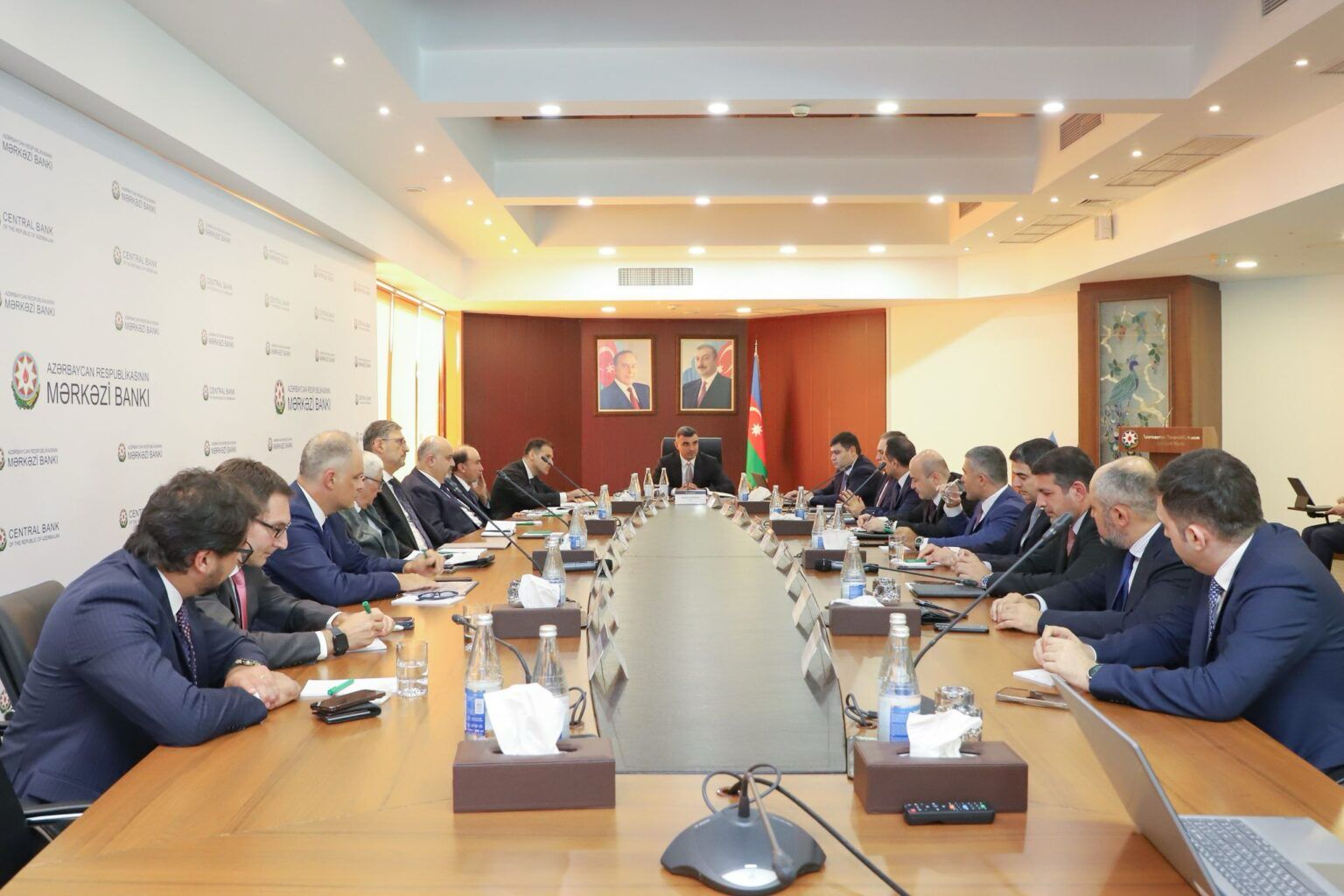
In the photo: Central Bank Governor Taleh Kazimov meets with members of the Presidium of the Azerbaijan Banks Association (Baku, Azerbaijan, 25 June 2024).
The numbers are counterintuitive. Between 2019 and November 2025, Azerbaijan cut its number of banks from 30 to 22. Yet over the same period, the total loan portfolio nearly doubled, rising from 14.9 billion manat to 29.7 billion manat. Non-performing loans, the bane of post-Soviet banking, stayed in the mid-2% range throughout 2025 (roughly 2.5–2.8%)—a figure that would be enviable in far wealthier economies.
The banking sector's net profit reached 1.06 billion manat through November 2025, up from chronic losses earlier in the decade.
This is not how emerging-market banking stories typically unfold. The standard playbook—visible across Latin America, South Asia, and much of the former Soviet Union—involves governments propping up failing banks to avoid short-term pain, only to create zombie institutions that crowd out productive lending for years afterwards.
Kazakhstan offers a textbook example. A 2024 IMF assessment found that despite pouring billions into the sector, the state's footprint had "grown considerably," with bank defaults "often addressed through government bailouts" rather than orderly resolution.
The result: business lending has collapsed as a share of total credit, falling from 58% in 2011 to just 17% a decade later, even as the government runs programme after programme aimed at supporting small enterprises.
Turkey's trajectory has been more dramatic but equally instructive. Years of politically-directed monetary policy—President Erdogan famously believes high interest rates cause inflation—culminated in a currency crisis that saw the lira collapse from the high-teens to the high-30s per dollar between 2023 and 2025. The central bank posted an $18 billion loss in 2024, following a record $25 billion loss in 2023, largely from desperate schemes to defend the currency. Inflation peaked above 85%. A belated return to orthodoxy under Finance Minister Mehmet Simsek has stabilised the patient, but the Turkish financial system remains in intensive care, with banking sector assets shrinking from 103% of GDP in 2018 to 89% in 2023.
Azerbaijan faced its own challenging moment in 2015, when the oil price collapse forced two sharp devaluations of the manat and exposed the rot in a banking sector that had grown fat on petrodollars. The response, however, diverged sharply from regional peers. Rather than bail out failing institutions, regulators revoked licenses and forced consolidation.
The number of banks with foreign capital fell from 14 to 9. Several lenders had their licenses revoked. The short-term cost was real: some depositors not covered by the state deposit insurance program lost money, and credit initially contracted. But the surviving institutions emerged leaner and better capitalised.
The composition of lending reveals the deeper transformation of the Azerbaijani banking sector. In 2019, loans to large enterprises dominated the portfolio. By November 2025, credit to small and medium enterprises had risen from 6.4 billion manat to 7.4 billion manat—a 17% increase that, while modest, reflects a system beginning to reorient toward the non-oil economy. Sectoral data shows credit flowing to construction, transport, trade, and the nascent ICT sector, precisely the areas Azerbaijan's diversification strategy has targeted.
Whether this reflects genuine commercial judgment by banks or quiet government direction is not easy to discern, but the NPL ratios suggest that credit has been reasonably well allocated.
The financial inclusion metrics indicate that the system is reaching further into the population. The number of unique term depositors rose from roughly 107,000 in late 2023 to over 190,000 by November 2025—a near-doubling in two years. Bank branches have held steady at around 500, while ATM numbers have grown from 2,647 in 2019 to 3,462.
The stable manat-dollar peg, maintained since 2017, has supported confidence, though it also represents a vulnerability should oil prices collapse again.
International observers have noticed. Fitch and Moody's upgraded Azerbaijan to investment grade in 2025—BBB- and Baa3, respectively—citing disciplined fiscal management and robust external buffers. The 2024 IMF Financial Sector Assessment Program found the banking system "broadly resilient against severe shocks" and "well-capitalised."
Combined reserves at the central bank and sovereign wealth fund (SOFAZ) reached $83.5 billion by December 2025. Inflation stood at 5.7% by the end of 2025, a fraction of Turkey's rate and within the central bank's target band.
Of course, none of this makes Azerbaijan a perfect model of liberal economic governance. State-owned enterprises retain an outsized role in the non-oil economy. The business environment still has room for development, according to international indices. Capital markets remain thin, and the IMF has pointedly urged reforms to "reduce the footprint of the state" and improve SOE performance. Oil and gas still dominate in export revenues, leaving the economy vulnerable to the same commodity shock that triggered the 2015 crisis.
Yet the banking-sector data suggest something important: that it is possible, even in a resource-dependent economy with still-limited institutional capacity, to clean up a financial system without resorting to the endless bailouts that have trapped so many of Azerbaijan's peers.
The formula appears to have been political will to allow failures combined with competent technocratic execution of the cleanup—a combination rarer than it sounds.
The test will come with the next challenges. Oil prices may fall again; the green energy transition will squeeze hydrocarbon revenues over the medium term.
But Baku appears to be preparing rather than hoping. In a January 2026 interview, President Ilham Aliyev outlined Azerbaijan's positioning as a connectivity and green energy hub: 8 gigawatts of renewable capacity planned, pipeline gas flowing to 16 European countries, and the Zangezur corridor finally unlocking direct land routes to Turkey and beyond. The slimmed-down banking sector is intended to finance this transition, not merely survive it.
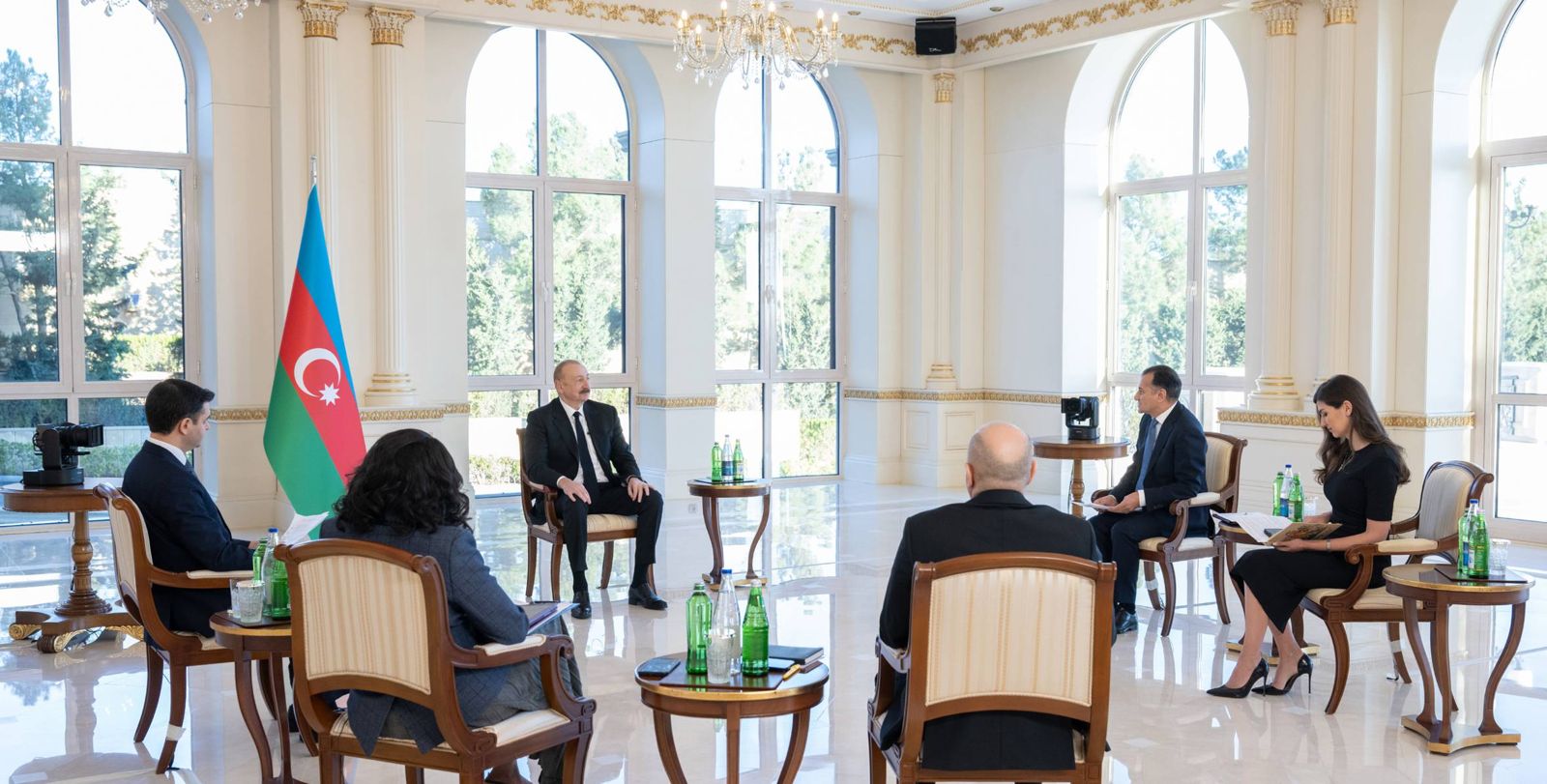
In the photo: President Ilham Aliyev gives an interview to representatives of Azerbaijani television channels (Baku, Azerbaijan, 5 January 2026).
Whether the vision materialises remains to be seen. But in a neighbourhood where financial dysfunction is the norm, Azerbaijan has at least built a system capable of channelling capital toward something other than bailouts and currency defence.
Sometimes the best thing a government can do for its banks is to let some of them die—so the survivors can fund what comes next.
Author: First News Intelligence Unit
Read in other languages:
Иногда банкам нужно дать умереть: уроки азербайджанского эксперимента
Bəzi banklar “ölməlidir”: Azərbaycan eksperimentinin dərsləri