Boris Navasardyan for 1news.az: Opposition Unable to Offer Armenia a Clear Alternative
On the eve of the upcoming parliamentary elections, Armenia is entering another political cycle amid prolonged internal polarization, a trust deficit, and persistent uncertainty surrounding the peace agenda in the region. The struggle for power increasingly takes the form of emotional and value-based confrontation, while a significant portion of society—particularly the youth—shows alienation from the traditional political scene. Against this backdrop, the ruling team is betting on the themes of peace and stability, while the opposition seeks a formula for consolidation, yet fails to provide a convincing response to the key challenges of the time.
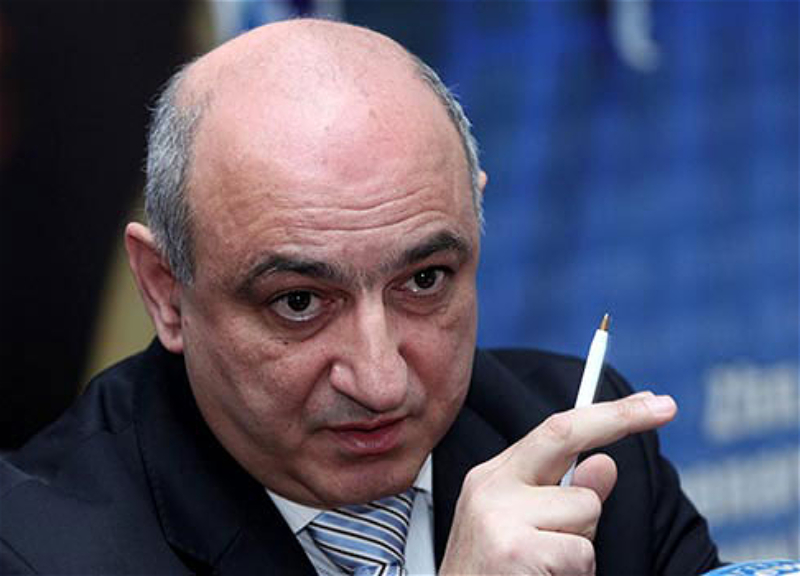
For insights into the political and social sentiments Armenia is approaching the elections with, the feasibility of opposition unification scenarios, the role of external actors, and whether the election outcome could impact the Armenian-Azerbaijani peace agenda, 1news.az spoke with Armenian political analyst and participant in the 'Bridge of Peace' initiative, Boris Navasardyan.
- In what political and social conditions is Armenia entering the parliamentary elections?
- Armenian society has been living in an atmosphere of sharp ideological and political polarization for the past several years. It seems that conflict in the struggle for power is a deliberate choice by all leading political forces, which—at least at this stage—have no intention of abandoning confrontational tactics. Lacking a clear advantage over their rivals, they aim to consolidate their own electorate rather than win over voters from competitors. For instance, the ruling 'Civil Contract' party does not shy away from creating new lines of conflict, such as opposition to the hierarchs of the Armenian Apostolic Church. However, in recent months, there has been interest in the approximately 60 percent of citizens who are either opposed to all political forces or simply uninterested in the upcoming parliamentary elections. This primarily concerns the youth, who are most prone to 'absenteeism.' This is precisely why we see a new image of Nikol Pashinyan in the media and social networks, replacing his bicycle with attributes like percussion instruments to attract the sympathies of young voters. Back in the 2017 elections, a similar tactic worked in favor of then-Prime Minister Karen Karapetyan. Opposition figures are trying to find a response to this unexpected move by 'Civil Contract' and its leader, but so far, they seem unable to find the 'key' to the youth vote.
- Robert Kocharyan recently stated at a press conference that an 'exceptional situation' has emerged in the domestic political sphere and that the opposition shares 'similar approaches' on fundamental issues, which supposedly allows for the formation of a large pre-election bloc. How realistic is such a scenario, and what can the authorities do to prevent an unfavorable election outcome?
- The idea of uniting the opposition into a large bloc is gradually giving way to a trend more aligned with the current political landscape. This was, in particular, mentioned by the second President of Armenia, Robert Kocharyan, at a recent press conference. Forming a unified list of Pashinyan’s opponents is unlikely to result in the votes of those favoring a change in power simply adding up. There is a high likelihood that voters inclined to support, for example, the third President Serzh Sargsyan or the party of Russian billionaire Samvel Karapetyan, would not be willing to also vote for Kocharyan, and vice versa. Therefore, it appears that opposition leaders will prefer to run in the elections with three or four separate lists and, once in the National Assembly, decide on a common candidate as an alternative to Pashinyan. Such a plan could be disrupted by the reluctance of other, less influential opposition parties to accept the proposed conditions and join larger lists. By drawing away part of the electorate but failing to surpass the electoral threshold (4 percent of participating voters), they could 'scatter' anti-Pashinyan votes.
However, the main factor is, of course, the agenda of the ruling 'Civil Contract,' which includes promises of peace, further 'expropriation' of illegally acquired property, and prosperity through large-scale foreign investments. At the moment, the opposition fails to counter this agenda with convincing arguments. Moreover, many Armenian citizens see a change in power as a threat of renewed conflict with Azerbaijan. Messages coming from the leadership in Baku and Ankara play a certain role in this perception. Additionally, for Armenian voters, it is significant that Pashinyan’s government enjoys evident support from the US, EU, and other international players. Criticism of Yerevan, often voiced from Russia, has a much lesser impact on our public.
- Could the return of former presidents and old political elites play a decisive role in these elections? Isn’t their renewed activity perceived as a sign of a lack of new ideas and personnel in Armenian politics?
- In fact, after the 'Velvet' Revolution of 2018, there has been no opposition capable of challenging Nikol Pashinyan other than representatives of the former political elites. In my opinion, the 'Our Way' movement, led by Samvel Karapetyan’s nephew Narek Karapetyan, has also failed to establish itself as a 'third force.' Even if, on a personal level, he is not associated with Armenian leaders of the pre-Pashinyan era, the political priorities of this movement, which is preparing to transform into a party, lack originality. Even if one takes seriously the statements of another Karapetyan family member about 'Our Way' plans to establish a ministry of sex to address the issue of 'women’s dissatisfaction,' such ideas only alienate the vast majority of society rather than strengthen its electoral base. Other parties aspiring to the status of a 'third force' clearly lack not only the resources needed for a successful election campaign but also the ideas to form a new political pole.
- What role do external actors—Russia and the West—play in the electoral process and agenda formation?
- I have partially answered this question already, so I will only add that only those external signals that align with the agenda of peace and stability in the region can have a real impact on the mindset of Armenian citizens. Any hints at a 'bright future' through confrontational scenarios have no prospects in shaping pre-election sentiments in Armenia.
- Can the election results accelerate the peace process and lead to regional stabilization, or does the country risk a new wave of internal polarization and foreign policy uncertainty?
- Continuing from the previous question, I emphasize that no responsible and serious political force will advocate for abrupt changes in Yerevan’s regional and foreign policy. As the elections approach, there is a gradual retreat by key players from radical positions. At the same time, polarization persists and even intensifies at the rhetorical and emotional levels. This atmosphere is likely to remain on the political stage in the post-election period as well, but I believe Armenian society at large has developed a certain immunity to toxic outbursts from the parliamentary podium or polarized media broadcasts. Therefore, the threat of destabilization is not currently visible. As for the pace of advancing the peace agenda, the situation is as contradictory as it is clear. On one hand, a change in power is a healthy phenomenon for a country like Armenia, which has chosen a democratic path of development. This is especially true given the visible signs of authoritarianism and personalist governance methods in our domestic political life. On the other hand, Nikol Pashinyan’s team has gone through a difficult process of 'adjustment' in negotiations with Baku and overcoming deep mutual distrust. The arrival of someone else could, at best, slow down the normalization of Armenian-Azerbaijani relations, and at worst, trigger a new round of tension between Yerevan and its neighbors to the east and west. As noted earlier, I believe this awareness will play a decisive role in the electoral behavior of the country’s citizens.