Energy Architecture of the Zangezur Corridor: Nakhchivan Becomes a Strategic Hub of the Region
By consistently implementing large-scale infrastructure projects of geo-economic significance, Azerbaijan is shaping a new energy architecture for the region, expanding the "green energy zone" and strengthening the strategic role of the Zangezur Corridor.
These initiatives simultaneously stimulate the country’s economic growth and enhance its international status as a reliable supplier and transit hub for electricity.
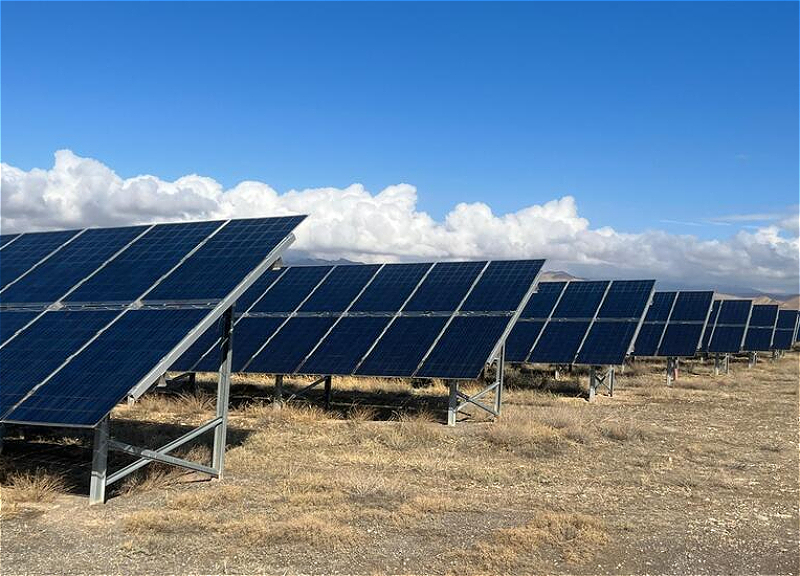
One of the key roles in this strategy is assigned to Nakhchivan as a critical link in the Zangezur Corridor. A practical expression of this role was the recent signing of contracts at the Ministry of Energy of Azerbaijan for the construction of solar power plants (SPPs) in Nakhchivan with a total capacity of 50 MW.
Under these projects, the SPPs "Shams 1" (25 MW) and "Garbi Ufug" (25 MW) are creating new generating capacities, which simultaneously lay the foundation for integrating Nakhchivan into the country’s unified energy system and expand opportunities for electricity exports to neighboring regions. These decisions were made following a meeting dedicated to developing the autonomous republic as a "green energy zone."
Specifically, for the "Shams 1" SPP project with a capacity of 25 MW, an investment agreement, a power purchase agreement, and a grid connection agreement were signed between the Government of Azerbaijan, OJSC "Azerenerji," and CEI Nakhchivan LLC. A similar set of documents was concluded with Enerso LLC for the "Garbi Ufug" SPP project, also with a capacity of 25 MW. It is expected that the implementation of these projects will enable the annual production of a total of 122 million kWh of electricity. This will result in savings of 26 million cubic meters of gas and a reduction of carbon dioxide emissions by 57,000 tons.
From the perspective of the region’s energy architecture, this is not only about increasing generation but also about structurally transforming Nakhchivan’s energy balance by expanding the share of alternative energy sources. These measures reinforce the strategic vision of President Ilham Aliyev, who has identified the creation of a "green energy zone" as one of the key elements of the country’s long-term development.
"The widespread use of renewable energy sources to strengthen the energy security of the Nakhchivan Autonomous Republic, accelerate sustainable socio-economic development, and transform the region into a center for energy production and export is one of the priority directions of the strategic course set by the head of state. Currently, the share of renewable energy sources in the installed electricity capacity in Nakhchivan is 44%, and in production, it is 36.4%. The solar power plants 'Shams 1' and 'Garbi Ufug,' with a total investment volume of over 60 million manats, being the first examples of private investment in renewable energy in Nakhchivan, will make a significant contribution to shaping the 'green development' model in the region," stated Energy Minister Parviz Shahbazov at the meeting.
The head of "Azerenerji," Baba Rzayev, in turn, emphasized the importance of solar power plants in terms of enhancing the reliability of energy supply in Nakhchivan and meeting the growing demand, especially during the summer months.
The Minister of Economy of the Nakhchivan Autonomous Republic, Kazim Huseynaliyev, highly praised the role of the new projects in realizing the rich potential of solar energy in this strategically important economic region of the country. It was noted that the creation of new capacities will provide a boost to economic development and future energy exports to neighboring countries and Europe.
Collectively, the new SPPs form the foundation for long-term economic growth and sustainable energy infrastructure, while also enhancing the energy potential of the Zangezur Corridor—facilitating the integration of energy systems, improving the reliability of energy supply, and creating broad opportunities for electricity exports from Nakhchivan.
From this perspective, another strategic project is of great importance: the construction of the Zangezur power transmission line (PTL), one of the largest energy projects in the country’s history. Implemented on the instructions of the head of state, this project not only strengthens the national energy system but also lays the foundation for an international Azerbaijan-Turkey-Europe corridor, capable of significantly altering the region’s energy balance.
Under the project, in the first phase, "Azerenerji" is constructing a double-circuit high-voltage 330 kV line spanning 74 km from Jabrayil to Aghband and, in parallel, a 105-km PTL from Nakhchivan to Ordubad with a transmission capacity of 1,000 MW. A new 330 kV substation is being built in Nakhchivan on an area of 49 hectares. In the next phase, an additional 44-km line will be constructed along the Zangezur Corridor, as well as a 230-km 400 kV PTL from Nakhchivan to Turkey, with the country’s first 400 kV converter substation.
This project is of paramount importance for Nakhchivan’s energy independence. The new infrastructure will ensure the full integration of the autonomous republic into the national energy system, create autonomous capabilities for load and frequency regulation, improve the reliability of electricity transmission, and reduce the risk of emergency situations.
Moreover, the Zangezur PTL provides Azerbaijan with direct access to European energy markets, reinforcing the country’s status as a reliable energy supplier and partner for Europe. The integration of national and international energy systems creates conditions for sustainable exports, load balancing, and the development of the country’s technological potential.
The economic impact of the project is substantial—it stimulates the development of domestic energy and construction sectors, creates jobs, and introduces modern engineering solutions. At the same time, it opens opportunities for further investment in renewable generation and the expansion of the "green energy zone."
Thus, Nakhchivan is gradually transforming into a strategic center for electricity production and export, demonstrating a successful synergy of state policy and private investment. These initiatives illustrate how energy projects become tools not only for local development but also for regional geo-economic strategy.
In the long term, both new projects in Nakhchivan—the solar power plants and the Zangezur PTL—form a comprehensive strategy for Azerbaijan’s energy transformation, combining national and international priorities. They enhance energy security, create new economic and technological opportunities, and solidify the country’s role as one of the key energy hubs of Eurasia.