Diplomacy Against Escalation: Baku and Ankara Strive to Prevent a Major War
The situation surrounding Iran remains uncertain and tense, teetering between the threat of direct escalation and cautious attempts at diplomatic de-escalation.
The buildup of U.S. military presence off the coast of Iran, coupled with harsh statements from President Trump and equally sharp responses from Tehran, creates a dangerous backdrop where any misstep could trigger a chain reaction extending far beyond a bilateral confrontation.
Threats...
Iran's Supreme Leader Ayatollah Ali Khamenei has directly warned that a potential attack by the U.S. would not remain a localized incident but would lead to a regional conflict. This statement came amid the arrival of a U.S. carrier strike group, increased U.S. aerial reconnaissance in the region, and rhetoric from Washington about readiness for a military scenario if negotiations on Iran's nuclear program fail.
"Americans must know: if they start a war, this time it will be a regional war," Khamenei was quoted as saying by the Iranian agency Tasnim. He added that the Iranian people should not fear U.S. President Trump's statements about deploying large amounts of weaponry to the Middle East: "We do not start wars and do not wish to attack any country, but the people of Iran will give a strong response to anyone who attacks and harms us."
Donald Trump has repeatedly threatened Iran with intervention over its nuclear program and harsh suppression of protests. "[Trump] constantly says he has brought ships... The Iranian people will not be intimidated by such things," Khamenei stated in a Sunday address.
On January 26, the U.S. leader announced that a "massive armada" was heading toward Iran. He expressed hope that Tehran would come to the negotiating table and agree to a "fair and equal" deal, implying a complete abandonment of nuclear weapons. The American leader recalled that last June, the U.S. struck nuclear facilities in the Islamic Republic in an operation called "Midnight Hammer." He warned that "the next attack will be even worse," urging to "not let this happen."
However, on Saturday evening, en route to Florida, when asked by journalists whether he had decided on actions regarding Iran, Trump said he could not comment but added that Iran was "seriously" negotiating with Washington and expressed hope that they could reach an "acceptable" agreement. At the same time, Trump reiterated that the U.S. has "very large and powerful ships" in the region.
As part of the force buildup, the U.S. deployed the aircraft carrier USS Abraham Lincoln to the region, and last week, U.S. Central Command reported that it was operating in the Arabian Sea. In response, Iran announced plans to begin two-day naval exercises with live-fire drills in the Strait of Hormuz this Sunday—one of the world's most critical shipping lanes and a key route for energy supplies. Against this backdrop, diplomatic and military rhetoric intensifies. The U.S. warned Iran against "unsafe and unprofessional behavior" near American forces in the region, while Iran's Foreign Minister Abbas Araghchi responded: "American military forces are now trying to dictate how our powerful armed forces should conduct training exercises on our own territory."
...and Risks
The primary concern for all regional players is that the crisis could spiral out of control and draw regional states into a potential military confrontation between the U.S. and Iran.
First, the safety of navigation in the Strait of Hormuz, through which about a fifth of the world's oil trade passes, is at risk. Even limited military actions or a temporary blockade of the strait could trigger a sharp spike in energy prices and global economic consequences. The width of this waterway at its narrowest point between Iran and Oman is about 33 km. In the past, Iran has threatened to close the strait in the event of an attack.
Second, alongside potential strikes from its own territory, Iran could retaliate through proxy groups in the Middle East. This could lead to simultaneous escalations on multiple fronts, turning the crisis into widespread regional destabilization.
Third, any military actions could exacerbate internal turbulence in several Middle Eastern countries, provoking political, social, or humanitarian tensions. As a result, many states, even those allied with the U.S., advocate for restraint and diplomatic channels. Ultimately, even a localized clash between the U.S. and Iran could set off a chain reaction with far-reaching consequences.
A Clear Stance
Against this backdrop, the position of countries geographically located in zones of heightened sensitivity draws particular attention. Among these countries is Azerbaijan, which shares a border with Iran.
A phone conversation on January 31 between Presidents Ilham Aliyev and Masoud Pezeshkian served as an important signal of Baku's commitment to maintaining stability in the region. During the discussion, it was reiterated that relations between Azerbaijan and Iran are based on principles of friendship, brotherhood, and good neighborliness, with historical, ethnic, and religious ties between the peoples.
President Ilham Aliyev, expressing concern over the situation in the region, stated Azerbaijan's readiness to contribute to reducing tensions and emphasized that the country supports resolving such issues through negotiations and mutual understanding. President Masoud Pezeshkian, in turn, expressed gratitude to President Ilham Aliyev.
In this context, Baku's clear stance, articulated by Azerbaijan's Foreign Minister Jeyhun Bayramov during a phone conversation with his Iranian counterpart Abbas Araghchi on January 29, is also significant. The parties discussed the situation around Iran. Jeyhun Bayramov expressed concern over the regional tensions and noted that Azerbaijan has always urged parties to refrain from destructive actions and rhetoric. It was emphasized that emerging issues must be addressed in accordance with the norms and principles of international law, through dialogue and diplomacy. It was particularly stressed that Azerbaijan would never allow its airspace or territory to be used by any state for military operations against neighboring Iran or any other country.
Baku's unequivocal position strengthens its role as a reliable and responsible regional player capable of making a significant contribution to crisis resolution in general and to preventing potential escalation in this specific case.
Cautious Hopes
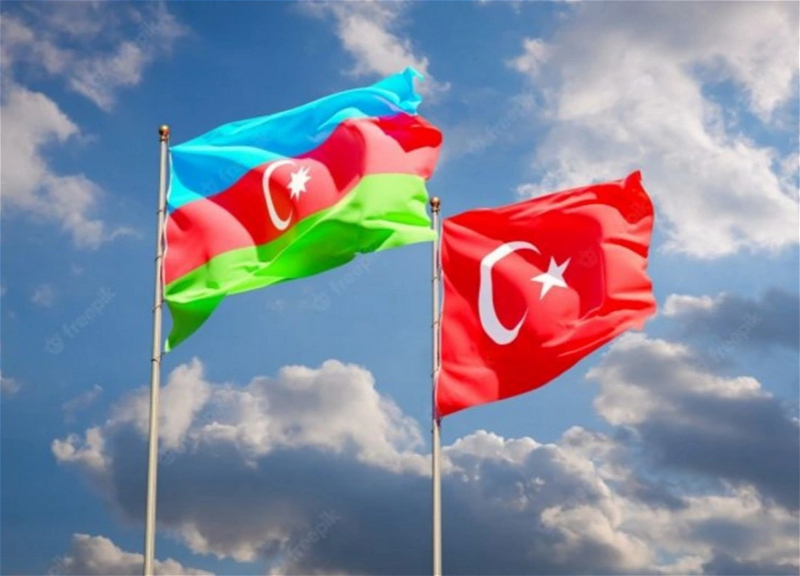
Despite the harsh rhetoric and demonstrative military preparations, a diplomatic scenario cannot yet be entirely ruled out. According to the American platform Axios, preparations are underway for a possible Iranian-American summit in Ankara, mediated by Turkey, Egypt, and Qatar, as reported by the Turkish outlet Haber7 in this article. The report claims that the Trump administration has signaled to Iran its readiness for negotiations. A senior U.S. official told Axios that the Trump administration has conveyed through various channels that it is open to talks for reaching an agreement.
According to two regional sources cited by Axios, Turkey, Egypt, and Qatar are working to arrange a meeting in Ankara this week between Donald Trump's special representative Steve Witkoff and senior Iranian officials. A representative from one of these three countries stated that the process is moving forward and that they are doing everything possible: "The three countries, which, along with the Trump administration, worked on a ceasefire agreement in Gaza, are striving to facilitate U.S.-Iranian negotiations to prevent a regional war."
White House representatives report that Trump has not yet made a final decision on a potential strike against Iran and remains open to a diplomatic solution. U.S. officials note that Trump's recent statements on negotiations are not a bluff, though Washington is uncertain whether Iran's Supreme Leader Ayatollah Ali Khamenei will grant his diplomats the authority to conclude an agreement acceptable to the U.S.
As evident, multilateral efforts reflect serious concerns among regional players about the possibility of escalation, and Turkey once again emerges as a mediating platform for peaceful resolution.
The possibility of a summit in Ankara inspires cautious optimism. In a situation where risks are extraordinarily high, even a temporary de-escalation and resumption of dialogue could play a decisive role in preventing a major war, the consequences of which would be devastating for a vast geographical area.
Farida Bagirova